The Final Reflection of Gaze-Fallow Keep
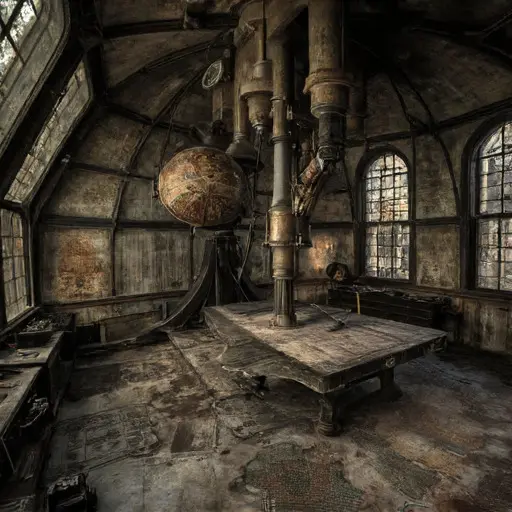
Gaze-Fallow Keep was an architectural statement of visual purity: a massive, symmetrical structure built of pale, smooth granite, characterized by numerous internal chambers designed to stabilize air pressure and eliminate atmospheric distortion for perfect viewing. Its name suggested a blend of focused looking and uncultivated/dormant ground. The house stood on a prominent, isolated rise, designed to capture the clearest view of the night sky, yet its interior was characterized by numerous dark rooms and light baffles. Upon entering the main observation deck, the air was immediately thick, cool, and carried a potent, mineral scent of aged brass, dried silica dust, and a sharp, metallic aroma. The floors were covered in heavy, smooth tiles, now slick with dust and grinding residue, amplifying every faint sound into an unsettling echo. The silence here was not merely quiet; it was an intense, visual stillness, the profound hush that enforces the memory of a light beam perfectly focused, waiting for the final, unassailable image. This abandoned Victorian house was a giant, sealed eye, designed to achieve and hold a state of absolute, unchangeable, celestial clarity.
The Astronomer’s Perfect Light
Gaze-Fallow Keep was the fortified residence and elaborate laboratory of Master Astronomer Dr. Elias Thorne, a brilliant but pathologically obsessive optical theorist and sky surveyor of the late 19th century. His professional life demanded the precise measurement of stellar parallax, the flawless grinding of perfect lenses, and the pursuit of absolute visual fidelity—an image of a star utterly free of distortion, aberration, or atmospheric blur. Personally, Dr. Thorne was tormented by a crippling fear of impermanence in observation and a profound desire to make the chaotic, fluid nature of the atmosphere and light conform to a state of pure, silent, permanent record. He saw the Keep as his ultimate lens: a space where he could finally design and polish a single, perfect, final, unmarred mirror that would visually encode the meaning of eternal, fixed vision.
The Parallax Vault
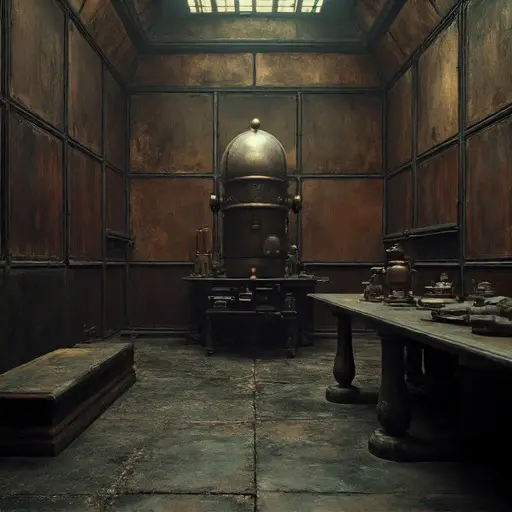
Dr. Thorne’s Parallax Vault was the engine of his obsession. Here, he worked to isolate and stabilize his final, most critical optical surfaces. We found his final, detailed Optics Compendium, bound in thick, heavily varnished steel covers. His entries chronicled his escalating desperation to find the “Zero-Aberration Image”—a reflection so perfect it had no deviation from the true source. His notes revealed that he had begun to believe the most chaotic element was the act of focusing itself, which always introduced some minor human error. His final project, detailed meticulously, was the creation of a massive, unique, internal “Master Mirror”—a final, massive, single disk of quartz, designed to be polished to absolute perfection and chemically treated to be an eternal, unmarred reflector.
The Final Image
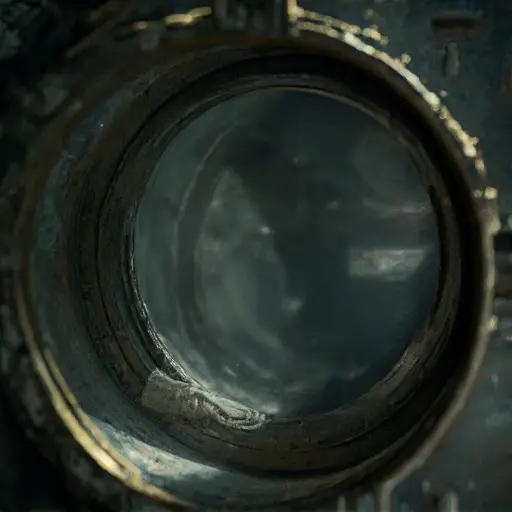
The most chilling discovery was made back in the main observation deck. Tucked carefully into the central housing of the massive telescope armature was the Master Mirror. It was a massive, single, perfectly circular disk of clear quartz, mounted in a brass frame. The mirror was utterly flawless, showing no scratch or mark, and its chemically silvered surface was pristine. However, the mirror was mounted in the housing facing inward, reflecting only the dark, dusty interior of the telescope tube. Resting beside the mirror was a single, small, tarnished polishing cloth, folded perfectly square. Tucked beneath the armature was Dr. Thorne’s final note. It revealed the tragic climax: he had successfully created his “Master Mirror,” achieving the absolute, unmarred reflective surface he craved. However, upon installing it, he realized that a reflection so perfect that it could never be blurred or distorted must be permanently shielded from the imperfect, moving, and ultimately flawed world it was meant to observe. He had achieved optical perfection only by accepting a final, fatal, self-imposed blindness. His final note read: “The mirror is perfect. The reflection is pure. But the truth of sight is in the world it shows.” His body was never found. The final reflection of Gaze-Fallow Keep is the enduring, cold, and massive mirror facing inward toward the dark, a terrifying testament to an astronomer who achieved visual perfection only to find the ultimate, necessary flaw was the removal of the very possibility of external observation, forever preserved within the static, visual silence of the abandoned Victorian house.}