The Final Paradox of Memento-Cairn Keep
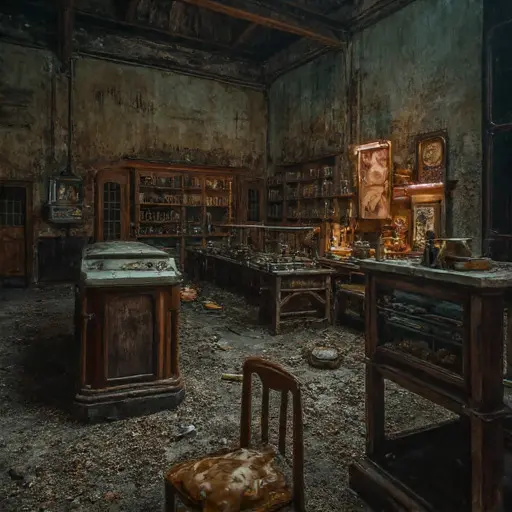
Memento-Cairn Keep was an architectural statement of permanent memory: a massive, asymmetrical structure built of dark, heavy granite, characterized by numerous internal chambers designed to stabilize organic material and isolate personal artifacts. Its name suggested a blend of memory/recollection and a stack of stones marking a grave or landmark. The house stood on a remote, exposed hill, giving it an isolated, ceremonial atmosphere. Upon entering the main preservation vault, the air was immediately thick, cool, and carried a potent, almost dusty scent of aged wood, dried chemicals, and a sharp, metallic tang. The floors were covered in heavy, smooth tiles, now slick with dust and dried residue, amplifying every faint sound into an unsettling echo. The silence here was not merely quiet; it was an intense, mnemonic stillness, the profound hush that enforces the memory of a life perfectly recorded, waiting for the final, unassailable tribute. This abandoned Victorian house was a giant, sealed monument, designed to achieve and hold a state of absolute, unchangeable, personal remembrance.
The Collector’s Perfect Memory
Memento-Cairn Keep was the fortified residence and elaborate workshop of Master Collector Dr. Elias Vane, a brilliant but pathologically obsessive memorialist and preservationist of the late 19th century. His professional life demanded the relentless acquisition of personal artifacts, the flawless stabilization of organic remains, and the pursuit of absolute biographical fidelity—a memory of a person utterly free of subjective bias or decay. Personally, Dr. Vane was tormented by a crippling fear of being forgotten and a profound desire to make the chaotic, subjective nature of human memory conform to a state of pure, silent, permanent documentation. He saw the Keep as his ultimate mausoleum: a space where he could finally design and assemble a single, perfect, final, composite artifact that would visually encode the meaning of an eternal, fixed identity.
The Stabilization Vault
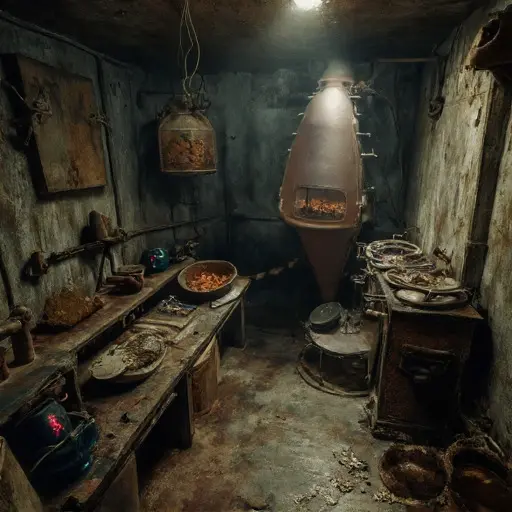
Dr. Vane’s Stabilization Vault was the engine of his obsession. Here, he worked to isolate and stabilize his final, most critical artifacts. We found his final, detailed Mnemonic Compendium, bound in thick, heavily sealed brass covers. His entries chronicled his escalating desperation to find the “Zero-Decay Artifact”—a relic so perfectly preserved it would outlast all human memory. His notes revealed that he had begun to believe the most chaotic element was the presence of human emotion itself, which introduced subjective interpretation into the act of remembrance. His final project, detailed meticulously, was the creation of a massive, unique, internal “Master Relic”—a final, massive, single block of solidified resin designed to contain the only thing he could truly certify as an absolute, permanent record: a vacuum of nothingness.
The Final Tribute
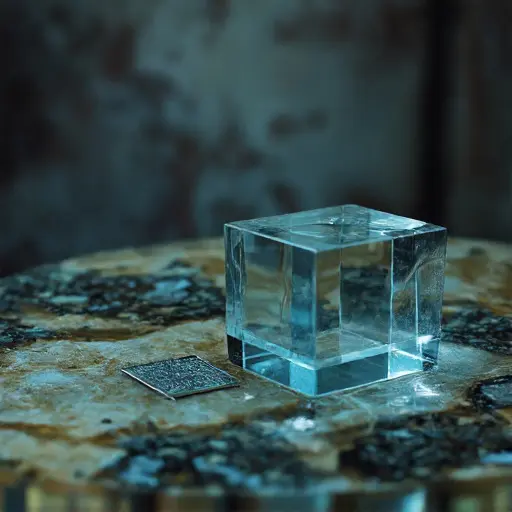
The most chilling discovery was made back in the main preservation vault. Tucked carefully onto the center of the marble embalming table was the Master Relic. It was a massive, perfectly formed, flawless cube of clear, dense resin, utterly pristine and smooth. The interior of the cube was entirely empty, a perfect, colorless vacuum, achieved through meticulous chemical withdrawal. Resting beside the cube was a single, small, tarnished brass plaque, engraved with a single, unreadable cipher. Tucked beneath the table was Dr. Vane’s final note. It revealed the tragic climax: he had successfully created his “Master Relic,” achieving the absolute, unchanging, permanent memorial he craved. However, upon viewing the final, perfect, empty cube, he realized that a memory perfectly stripped of all content, subject, and feeling is merely absolute void—a permanent record of nothing. His final note read: “The memory is preserved. The silence is absolute. But the truth of a life is in the content it leaves.” His body was never found. The final paradox of Memento-Cairn Keep is the enduring, cold, and massive cube of clear, empty resin, a terrifying testament to a memorialist who achieved perfect permanence only to find the ultimate, necessary flaw was the removal of the very organic, flawed content that defines memory, forever preserved within the silent, sterile stasis of the abandoned Victorian house.}