The Final Draft of Chroma-Quill Hall
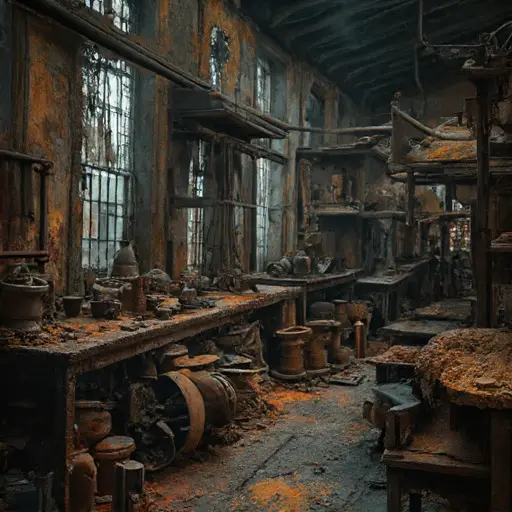
Chroma-Quill Hall was an architectural statement of artistic control: a massive, symmetrical structure built of dark, heavy brick, characterized by numerous internal chambers designed to isolate chemical fumes and stabilize temperature. Its name suggested a blend of color intensity and a writing implement. The house sat low in a valley, perpetually prone to fog, giving it a muted, monochromatic appearance that belied its internal purpose. Upon entering the main color studio, the air was immediately cold, thin, and carried a potent, almost dusty scent of aged paper, dried lacquer, and a sharp, metallic tang of iron sulfate. The floors were covered in heavy, smooth tiles, now slick with dust and dried pigment, amplifying every faint sound into an unsettling echo. The silence here was not merely quiet; it was an intense, visual stillness, the profound hush that enforces the memory of intense focus, waiting for the final, perfect stroke of the brush. This abandoned Victorian house was a giant, sealed canvas, designed to achieve and hold a state of absolute, unchangeable, chromatic perfection.
The Alchemist’s Perfect Hue
Chroma-Quill Hall was the fortified residence and elaborate laboratory of Master Alchemist Dr. Elias Thorne, a brilliant but pathologically obsessive color theorist and chemical artist of the late 19th century. His professional life demanded the precise mixing of pigments, the flawless formulation of archival inks, and the pursuit of absolute color fidelity—a hue that would never fade, never shift, and never distort. Personally, Dr. Thorne was tormented by a crippling fear of impermanence in art and a profound desire to make the fleeting, vulnerable nature of visual beauty static and eternal. He saw the Hall as his ultimate palette: a space where he could finally engineer and mix a single, perfect, final color that would visually encode the meaning of unchangeable truth.
The Fixative Chamber
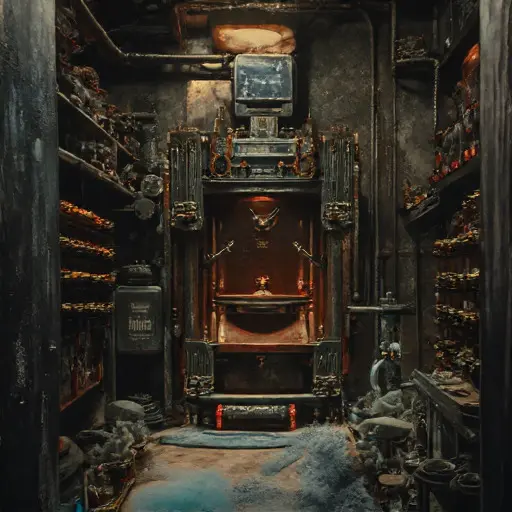
Dr. Thorne’s Fixative Chamber was the engine of his color obsession. Here, he worked to isolate and stabilize the chemical structure of his pigments. We found his final, detailed Chromatic Compendium, bound in thick, heavily lacquered covers. His entries chronicled his escalating desperation to find the “Zero-Fade Pigment”—a color so pure it would survive for millennia. His notes revealed that he had begun to believe the most perfect color was the color of absolute absence—a hue so balanced it contained all other colors but expressed none, a pure, archival white. His final project, detailed meticulously, was the creation of a massive, unique, internal “Master Pigment”—a final, massive batch of ink designed to be the ultimate, chemically perfect, Archival White.
The Final Hue
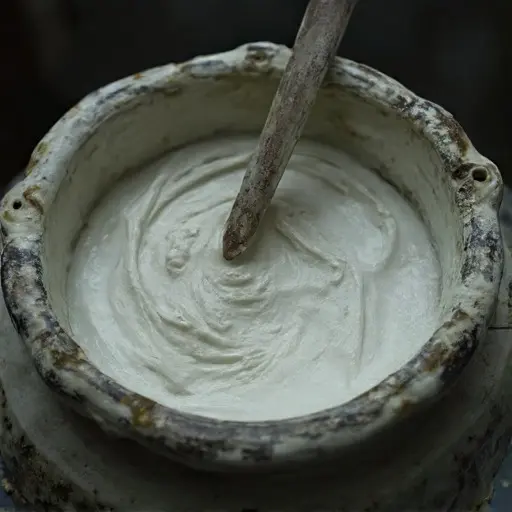
The most chilling discovery was made back in the main studio. Tucked directly beneath the grinding bench was a massive, custom-machined ceramic cistern, its lid heavy and sealed. The cistern was filled to the brim with a single, thick, smooth, flawless white paste—the Master Pigment. Tucked into the paste, sitting perfectly on the surface, was a single, small, tarnished iron dipping pen, its nib coated in the perfect white substance. Tucked beneath the cistern was Dr. Thorne’s final note. It revealed the tragic climax: he had successfully mixed his “Master Pigment,” achieving the absolute, chemically pure white he craved—the color of perfect, eternal silence. However, upon touching the ink to paper, he realized that a color that perfectly endures is a color that can never change, never convey emotion, and never truly communicate. He had achieved eternal color, but lost all meaning. His final note read: “The color is perfect. The permanence is absolute. But the only truth of art is the spectrum.” His body was never found. The final draft of Chroma-Quill Hall is the enduring, cold, and massive cistern of perfect white paste, a terrifying testament to an alchemist who achieved chromatic perfection only to find the ultimate, necessary flaw was the removal of all contrast and life, forever preserved within the silent, colorless stasis of the abandoned Victorian house.}