The Final Curtain of Sepia-Vellum Keep
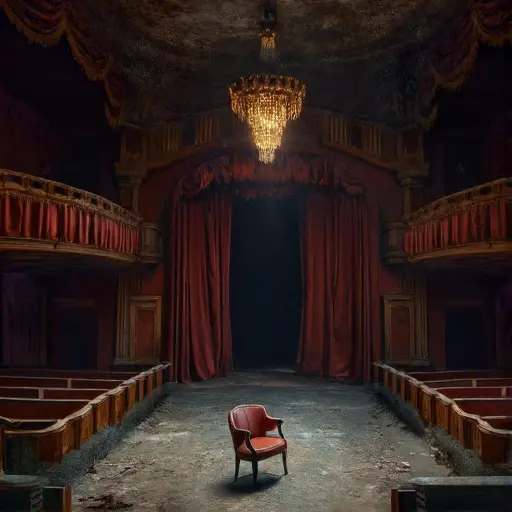
Sepia-Vellum Keep was an imposing, oddly proportioned mansion built of dark, pitted stone and featuring a massive, asymmetrical wing devoted entirely to performance. Its name suggested a blend of old, faded documentation and a heavy, fortified structure. The house was situated in a secluded, perpetually overcast dell. Upon entering the vast foyer, the air was surprisingly dry and thin, carrying a potent, almost chemical scent of old stage makeup, leather, and dried theatrical paint. The floors were heavily carpeted, silencing all footsteps, but the air felt charged, as if waiting for an audience to gasp. The silence here was not empty; it was the chilling, expectant hush that precedes a tragedy. This abandoned Victorian house was a stage built for one ultimate, terrible drama.
The Director’s Perfect Ending
Sepia-Vellum Keep was the fortified residence and personal theater of Silas Ashworth, a brilliant but pathologically controlling stage director and impresario of the late 19th century. His professional life demanded absolute control over narrative, performance, and the emotional response of the audience. Personally, Silas was defined by an extreme fear of the unpredictable and the chaos of real life, believing that only the perfectly scripted, rehearsed, and contained world of the stage held true meaning. He built the Keep as his ultimate stage, convinced he could control his own life’s narrative and ensure a perfect, dramatic ending.
The Costume Wardrobe of False Skins
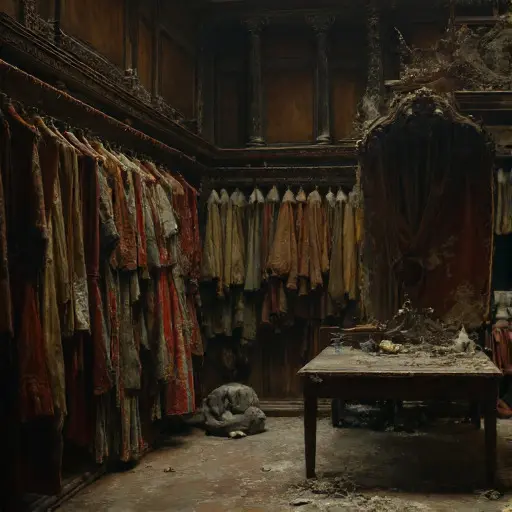
Silas’s Costume Wardrobe was a large, cold room lined with racks of extravagant, dusty theatrical outfits. Here, among the silks and satins, we found his final, detailed Director’s Journal, bound in black leather. His entries chronicled his increasing inability to distinguish between the staged drama and his real life. He began referring to his wife, Clara, and his housekeeper, Mrs. Davies, by their roles in his final, unperformed play, The Silent Protagonist. His notes revealed his final, terrifying artistic direction: the only way to ensure the perfect, emotional climax was to remove all actors from the stage, leaving behind only the profound silence of a true finale. His final entry detailed the precise lighting cue for the final curtain: “Fade to absolute zero.”
The Prompter’s Box
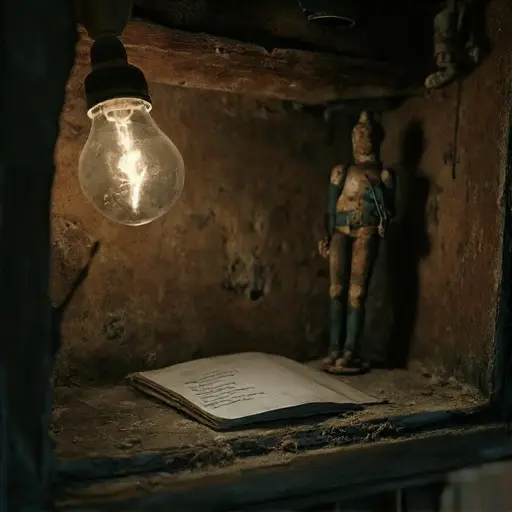
The most unsettling discovery was made in a small, concealed area adjacent to the stage: the Prompter’s Box. This was a tiny, wooden enclosure designed to feed lines to the actors. Inside, amidst scattered cue cards and broken light switches, we found a single, beautifully carved wooden toy soldier, standing upright. This was the toy of his estranged son, Arthur, who had run away years earlier, unable to live within his father’s suffocating drama. Tucked beneath the toy soldier was a final, chilling set of cue cards, written in Silas’s elegant hand. They were not lines for an actor, but stage directions for the final moments of his own life, culminating in the note: “The Director exits Stage Left. The Audience remains silent.” Silas’s body was never found. The final curtain of Sepia-Vellum Keep is the eternal, silent bow of an abandoned stage, a terrifying testament to a man who, in his desperate need for control, scripted himself out of the only reality that mattered within the abandoned Victorian house.