The Final Collapse of the Hilt-Scarp

The Hilt-Scarp, a massive, forbidding structure of rough-hewn granite and heavy, defensive detailing, was built in 1895, designed explicitly to project an image of stoic, enduring power and unwavering defense (the hilt). Its dramatic location on a steep cliff (scarp) was meant to underscore the owner’s elevated status and defiance. To step into the hall is to encounter a pervasive, chilling coldness and a silence so deep it seems to actively strain to prevent any sound.
The entire atmosphere is one of profound, inescapable melancholia, a chilling testament to the total failure of the family and the final collapse that brought their history to a desolate end.
The Controlling Patriarch, Arthur Vance
The mansion was built by Arthur Vance (1840–1905), a man whose entire existence was dedicated to controlling the lives and emotions of his family. His profession was that of a powerful, but ruthlessly traditional, textile manufacturer. Socially, he was a domineering figure whose approval was the only currency that mattered in the house.
Arthur married Lillian Thorne in 1865, a gentle woman whose chief role was to host and maintain the perfect social environment. They had two children, a son named Edward and a daughter named Clara. Arthur’s personality was defined by his crippling need for absolute emotional obedience; his daily routine revolved around dictating the lives of his children. His ambition was to ensure his children married into families that would increase his social standing and financial security, maintaining the illusion of his perfect dynasty, resting on the defensive hilt; his greatest fear was any emotional independence or defiance from his children, which he felt would lead to the final collapse of his legacy.
The house was his prison. He installed a small, dedicated, internal Call Box—a wired communications hub built into the wall of his Study—through which he could summon any servant or family member instantly, a perfect tool of emotional control.
The Defiance at the Call Box
The tragedy that caused the Hilt-Scarp to be abandoned was a devastating, final act of defiance that shattered Arthur’s control. Clara, the daughter, was secretly in love with a poor, radical journalist whom her father had expressly forbidden her to see. Edward, the son, was trapped in a forced engagement designed to secure a crucial business partnership.
In 1905, Edward decided to flee the forced marriage. He found his sister in the Drawing Room and, in a final act of solidarity, confessed his misery to her. Clara, realizing the depth of her father’s tyranny, made a sudden, courageous decision. She walked into her father’s Study, pulled the Call Box lever repeatedly, summoning her father and the entire staff, and announced her intention to run away with the journalist, simultaneously exposing her brother’s own desperate plan.
The shock of the coordinated rebellion—the beginning of the final collapse—triggered a massive, fatal stroke in Arthur. He collapsed instantly inside his Study, at the foot of the Call Box, the very tool of his control. He died instantly, surrounded by the silence of his finally empty, ruined authority.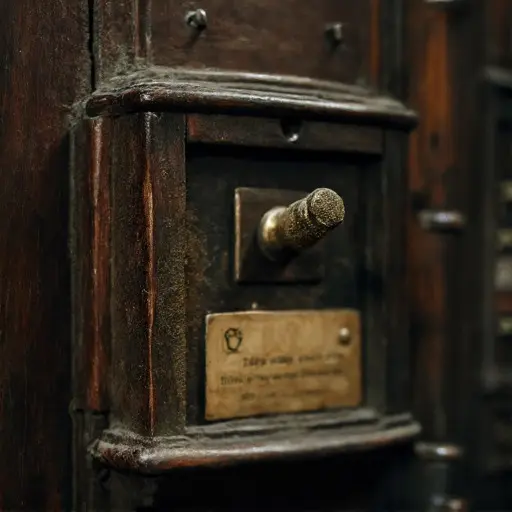
The Abandoned Watch in the Study
Lillian Vance, the widow, was left with a deceased husband, two defiant, absent children, and a house entirely saturated with the stench of tyranny. Edward and Clara both fled the city and cut all ties, unable to bear the guilt of their father’s death.
Lillian’s final act was one of silent abdication. She took only her most personal effects and walked out of the Hilt-Scarp within a week. She refused to liquidate or sell any of the heavy, immovable objects, ensuring the house would stand as a permanent monument to her husband’s destructive control. She allowed the tax payments to lapse immediately, ensuring the house’s abandonment was absolute.
In Arthur’s Study, one final, heartbreaking detail remains. It is his heavy, gold pocket watch, lying open on the dusty desk. The hands are shattered, but they stopped precisely on the time of his death, preserving the last moment before the final collapse descended.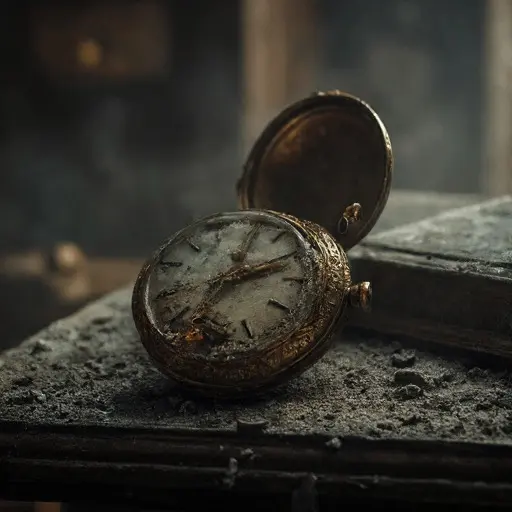
The Hilt-Scarp was eventually seized by the state but remained perpetually vacant, its dark stone façade a cold sentinel against the sky. Its ultimate silence is the cold, physical fact of the final collapse—the absolute destruction of a family by the tyranny of its own patriarch, leaving the house to silently hold the tragic memory of its final, irreversible moment.
