The Fenloren House Letters and the Dust-Bent Chair
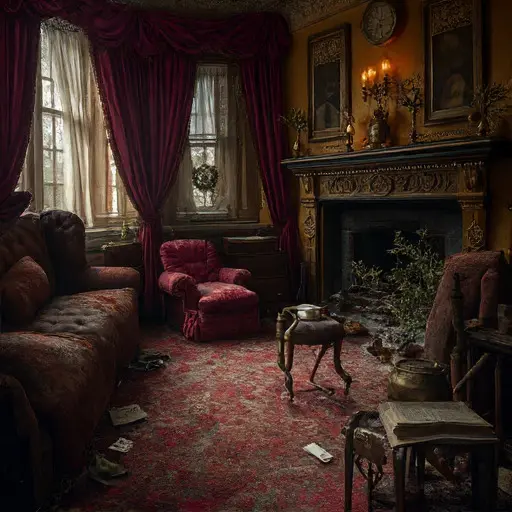
The parlour’s air carries a faint sour sweetness—old ink, collapsed fabrics, the mineral hush of long-standing dust. Nothing here suggests flight or panic. Fenloren House feels paused, its routines gently abandoned rather than broken, every object resting in the exact position last touched.
The Disciplined, Soft-Spoken Life of Corbett Alden Fenloren
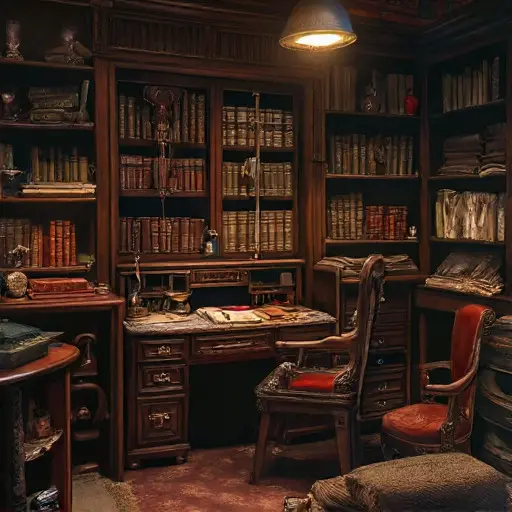
Corbett Alden Fenloren, a shipping office registrar with a reputation for careful handwriting and unwavering punctuality, lived here with his wife, Helena, and their son, Bram. Corbett’s meticulous habits—tallies aligned, receipts sorted in stacks, correspondence grouped by sender—echo through the home. In the Study, his penmanship lines the ledger pages, even in their last cramped, fading entries.
Helena’s grace lingers in dozens of small gestures: sewing needles stored by size, linens folded into perfect thirds, recipe slips annotated in gentle looping script. Bram’s childhood remains scattered in soft echoes—chalk boards smudged with arithmetic, a wooden cart missing a wheel, a small knitted blanket mended twice along the seams.
But strain eventually seeped into Corbett’s precise world. Increased demands at the shipping office tightened his handwriting, forced late evenings, and amplified the corrections littering his margins. When Helena fell ill, domestic rhythms thinned: mending paused, meals slipped from schedule, and the quiet hum of order faltered. After her passing, Bram went to live with relatives, leaving his toys and books exactly where they had rested. Corbett attempted to remain in the house, moving slower each week, until his routines scattered and he quietly stepped away—leaving Fenloren House suspended in the posture of his last efforts.
A Corridor Imprinted by Fading Footsteps
The upstairs corridor reads like a thinning rhythm. The runner rug has collapsed into loose folds, its colors dimmed into a uniform haze. A hall table holds collar studs, a broken spectacles arm, and an appointment book that ends abruptly mid-week. Pale outlines mark where portraits once hung, removed one by one in the family’s final months.
Domestic Work Stilled in Perpetuity
In the Sewing Room, Helena’s paused tasks remain untouched. A half-mended collar sits pinned beneath the treadle’s presser foot. Pincushions stiffened by time bristle with rusted needles. Spools of thread lie toppled in a small cascade, their tones faded into chalky pastels. Folded muslin stiffened at the creases waits for hands that will never return.
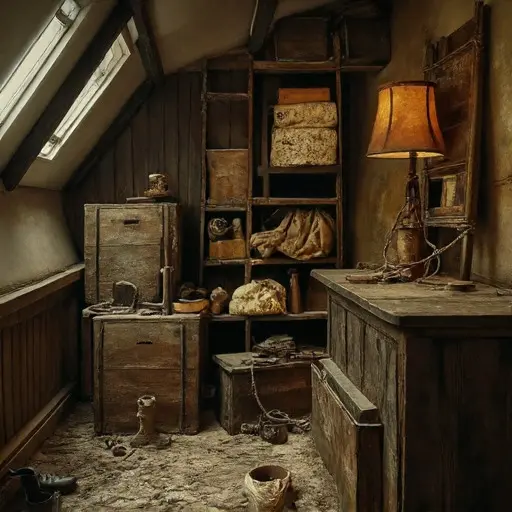
Behind the crates lies a small page in Corbett’s precise script: “Review tallies—finish tomorrow.” No date follows. Fenloren House remains entirely silent, its tomorrow long passed but never reached.
