The Farmhouse That Watched the Orchard Grow Quiet
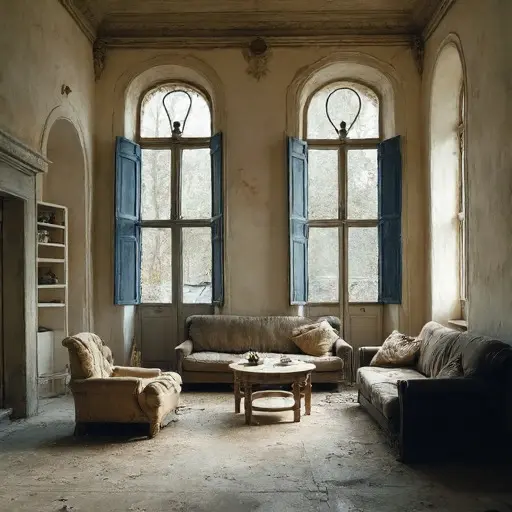
The farmhouse sits on a gentle hillside where orchards were once arranged with mathematical care, each row aligned to a promise of steady harvests and predictable seasons. Built in the late 1870s for a family of fruit growers who expanded into regional trade, the house reflected their optimism—modest in ornament, balanced in proportion, and oriented toward the land that sustained it. Its Italianate form was chosen less for grandeur than for clarity, a structure meant to oversee rather than dominate.
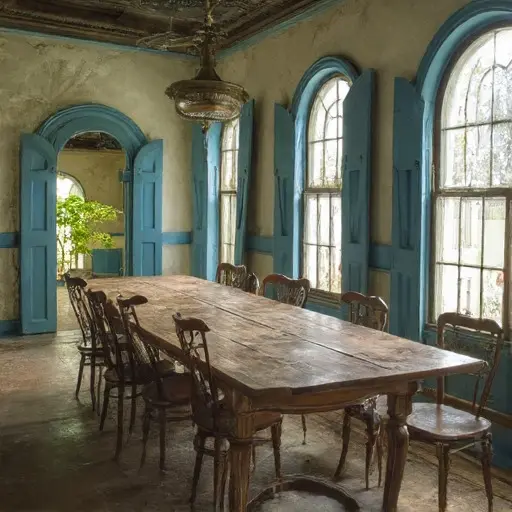
The decline arrived gradually, carried by shifts in agriculture rather than sudden loss. Markets changed, shipping routes favored larger operations, and smaller orchards became less viable. Maintenance of the terraces slowed first—stone edges loosened, gravel paths softened under windblown soil, and pruning cycles were extended until they ceased. The house remained occupied longer than it remained tended, as if human presence alone could preserve its intended order.
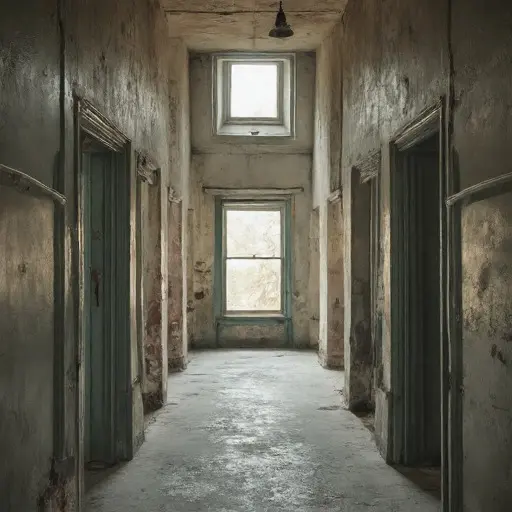
When the final residents left, there was no documented farewell. Furniture was removed in stages, then entirely, leaving only architectural order behind. No renovation followed, no reuse or conversion. The orchard continued growing unchecked, and the house remained as it was, structurally intact but no longer part of daily life.
Today, the farmhouse still overlooks the terraced orchard, its symmetry preserved in form but no longer in purpose, quietly aging as the trees around it reclaim their rhythm.