The Fallow Echo of Rusted-Lyre Keep
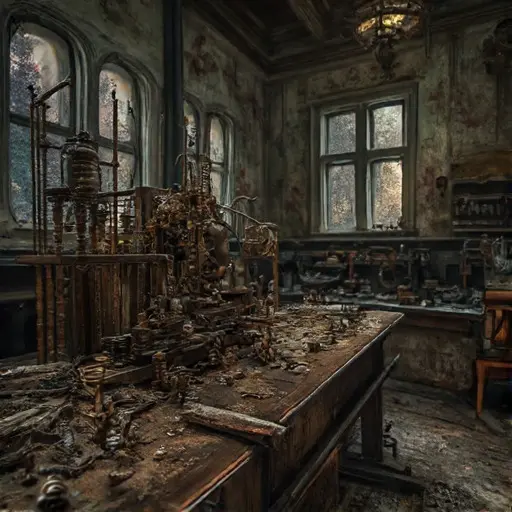
Rusted-Lyre Keep was an architectural study in mechanical melancholy: a massive, asymmetrical structure of dark red brick, characterized by numerous internal chambers designed to isolate sound and vibration. Its name suggested a blend of corrosive decay and a silent, musical instrument. The house sat low in a wet, perpetually misty valley, giving its metalwork a constant, dull sheen of oxidation. Upon entering the main workshop, the air was immediately cold, thin, and carried a potent, almost dusty scent of old machine oil, aged felt, and a sharp, metallic tang. The floors were rough, slate flagstones, amplifying every faint sound into an unsettling echo. The silence here was not merely quiet; it was an intense, mechanical stillness, the profound hush that enforces the memory of a delicate, rhythmic music suddenly halted. This abandoned Victorian house was a giant, sealed clockwork device, designed to achieve and hold a state of perfect, unchangeable, automated rhythm.
The Automaton-Maker’s Perfect Routine
Rusted-Lyre Keep was the fortified residence and elaborate workshop of Master Mechanist Alistair Vance, a brilliant but pathologically obsessive automaton-maker and mechanical philosopher of the late 19th century. His professional life demanded the precise plotting of gear ratios, the flawless assembly of complex clockwork movements, and the pursuit of absolute rhythmic synchronicity—a machine that could perform a complex task without deviation or fatigue. Personally, Master Vance was tormented by a crippling fear of human inconsistency and a profound desire to make the unpredictable, fluid nature of life rigid and dependable. He saw the House as his ultimate machine: a space where he could finally design and assemble a single, perfect, self-winding automaton that would perform his entire life’s routine, ensuring its eternal, flawless repetition.
The Chronology Chamber
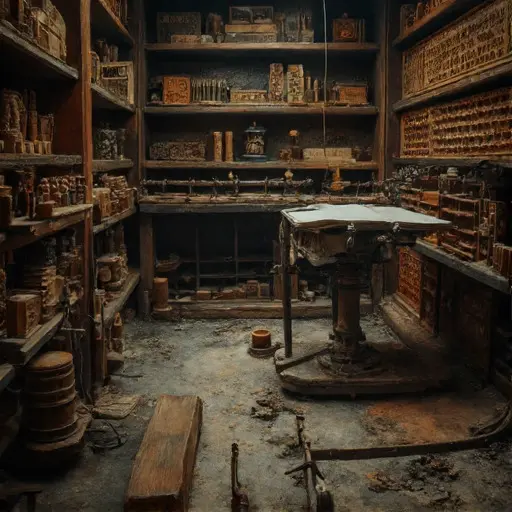
Master Vance’s Chronology Chamber was the intellectual core of his mechanical obsession. Here, he translated the chaos of human action into the rigid code of clockwork. We found his final, detailed Routine Log, bound in thick, scarred metal plates. His entries chronicled his escalating desperation to create a “Zero-Variation Routine”—a sequence of actions so perfect it could run eternally without error. His notes revealed that he had begun to view his wife, Lady Elara, who had a naturally fluid, spontaneous nature, as the ultimate, insurmountable “Rhythmic Flaw”. His final project, detailed meticulously, was the creation of a life-sized, unique “Master Automaton”—a final, massive, clockwork replica of himself, designed to walk the house and perform his entire daily life, ensuring the routine would never cease.
The Final Cog
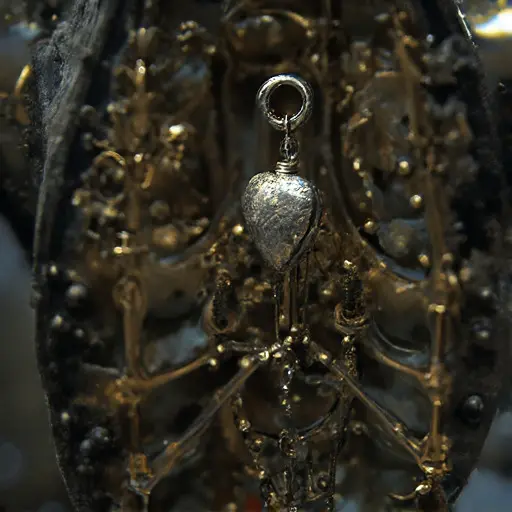
The most chilling discovery was made back in the main workshop. Lying partially assembled on the central workbench was the Master Automaton, a life-sized metal frame covered in finely detailed, unpainted mahogany panels. The figure was utterly motionless, its hands frozen mid-reach. Tucked into the hollow chest cavity of the automaton, where its mainspring would have been located, was a single, small, tarnished iron heart-shaped locket, held in place by a tightly wound, delicate spring. Tucked beneath the locket was Master Vance’s final note. It revealed the tragic climax: he had successfully engineered his perfect automaton to perform his life’s routine, but he realized that the machine contained no reason for the routine to continue, no emotion to drive the rhythm. The perfect machine was utterly hollow. He had inserted the only piece of humanity he had left—his own, final expression of love, represented by the locket he intended for his wife—into the mechanism, stopping the entire operation. His final note read: “The rhythm is perfect. The heart is the flaw. The purpose is permanently disassembled.” His body was never found. The fallow echo of Rusted-Lyre Keep is the enduring, cold stillness of the massive, unmoving automaton, a terrifying testament to a mechanist who achieved rhythmic perfection only to find the ultimate, necessary flaw was the very human heart he sought to replace, forever preserved within the mechanical silence of the abandoned Victorian house.}