The Fading Specter of Iron-Spar Row
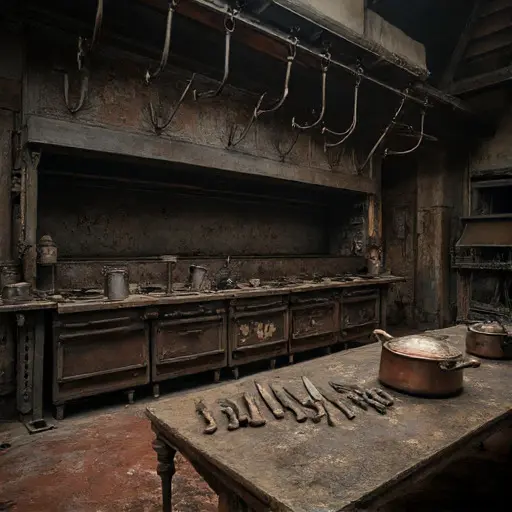
Iron-Spar Row was a colossal, grimly practical mansion built for efficiency over elegance. Its architecture was stark, dominated by repetitive, high-arched windows and dark, unadorned stone. The name suggested a rigid, almost military order, reflecting the profession of its owner. The house sat exposed on a barren hill, perpetually scoured by harsh winds. Upon entering the service entrance, the air was immediately cold, dry, and carried a potent scent of old leather, machine oil, and fine coal dust. The floors of the service corridors were hard, unyielding slate, and the silence was brittle, the kind of stillness that emphasizes the absence of expected, repetitive noise. This abandoned Victorian house was a machine built for relentless labor, now seized and frozen in time.
The Quartermaster’s Inventory of Life
Iron-Spar Row was the residence and personal storehouse of Captain Elias Thorne, a highly efficient, recently retired Quartermaster of the British Army in the late 19th century. His professional life demanded absolute precision, meticulous inventory, and the swift, emotionless categorization of all supplies—human or material. Personally, Captain Thorne was defined by an extreme case of OCD focused on order and counting, a crippling obsession that stemmed from witnessing immense battlefield loss. He saw his home as his final, most critical inventory: a controlled system to manage and count every single aspect of his remaining life, turning his home into a permanent, exhaustive logbook.
The Inventory Chamber
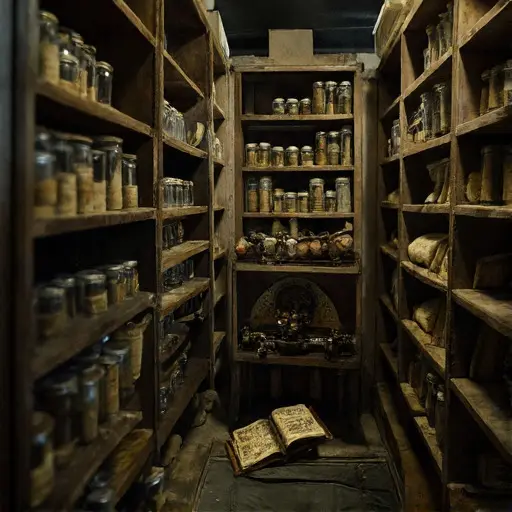
Captain Thorne’s Inventory Chamber was a small, brutally functional room in the basement. Here, among the dusty shelves and empty, labeled jars, we found his final, exhaustive ledger—a meticulous log of every single object in Iron-Spar Row, cross-referenced by location, material, and calculated remaining lifespan. The final entries were terrifying: he had begun to apply his system to his wife, Sarah, and his housekeeper, Mrs. Davis, assigning them inventory numbers and calculating their “estimated useful life” based on diet and perceived weariness. His journal revealed his ultimate plan: to create a master list of everything in the house, count it, and then destroy the list, convinced that if an item was not counted, it did not exist and therefore could not decay.
The Master Bed of Final Count
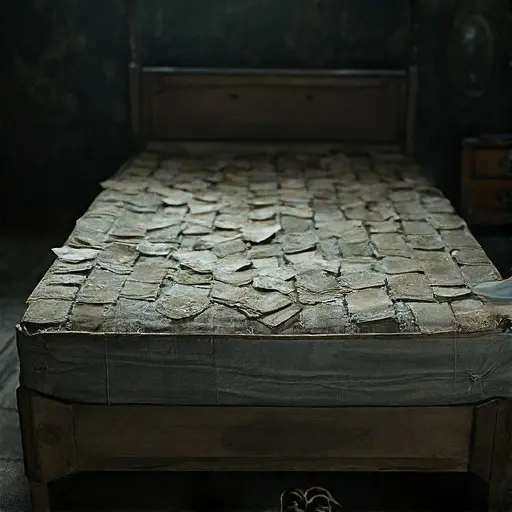
The master bedroom, usually a space of intimacy, was the site of Thorne’s final, desperate act of inventory. The massive four-poster bed was stripped bare, with the mattress resting on the floor. Scattered across the mattress were hundreds of small, identical, handwritten tags—the inventory tags he had used for every object in the house. His final journal entry, found underneath the mattress, revealed the chilling truth: Sarah, exhausted by his mania, had finally fled the house, leaving only a small, empty wooden box on the pillow. Thorne, unable to bear the uncounted loss, had concluded that the only way to complete the inventory was to count the non-existent items. The tags on the bed were all inventory numbers without corresponding objects, a massive catalog of all the things—and people—that were missing. The fading specter of Iron-Spar Row is the ghost of his final, obsessive count, a profound, chilling absence that resonates through the silence of the abandoned Victorian house, where the only remaining order is the meticulous documentation of loss.