The Estate on Willow Crest
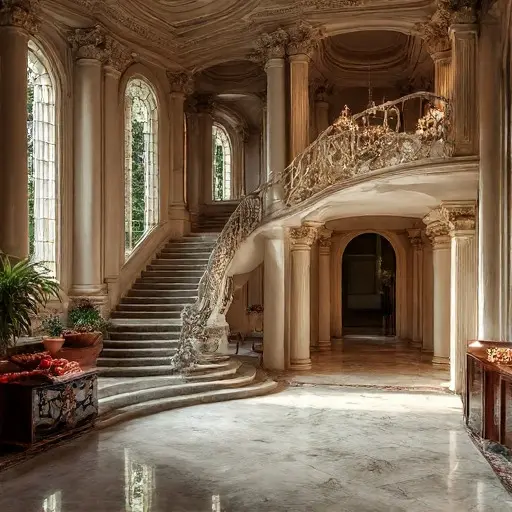
Construction of the Willow Crest estate was completed in 1906 for industrialist Nathaniel Mercer, whose family had accumulated considerable wealth through steel fabrication, bridge construction, and stone quarry operations throughout the Midwest. Rather than building on a secluded country property, Mercer chose a prominent suburban corner where the mansion would become part of an established neighborhood. He lived there with his wife Caroline, their three children, and Nathaniel’s older sister Margaret.
Although the residence rivaled the finest estates of its era, the family remained closely connected to the surrounding community, supporting schools, churches, and civic projects for decades.
The mansion reflected Nathaniel’s admiration for European architecture without sacrificing modern American comfort. Every room showcased remarkable craftsmanship, from polished marble fireplaces and carved oak ceilings to bronze light fixtures commissioned specifically for the estate. The sweeping curved gallery became the setting for family celebrations, while the cylindrical tower housed an observatory where the Mercer children spent evenings studying the stars. Despite its immense scale, the residence functioned first and foremost as a family home rather than a display of wealth alone.
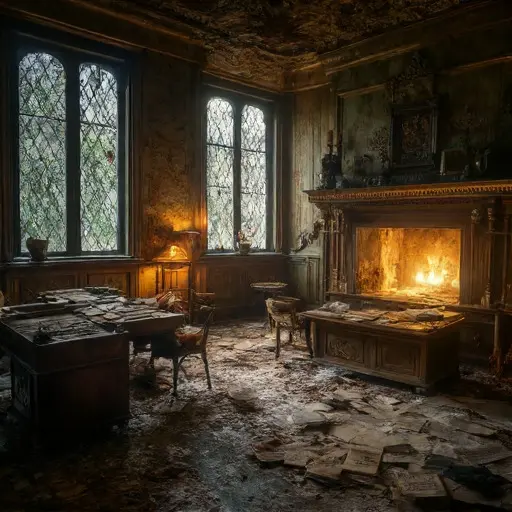
The family’s fortunes began changing during the early 1930s when public construction slowed dramatically and several large infrastructure contracts were canceled before completion. Mercer Construction continued operating for several years by borrowing heavily against company assets, but declining revenues eventually outpaced available capital. Nathaniel responded by reducing household expenses, dismissing much of the domestic staff, and closing entire wings of the mansion to conserve maintenance costs. Necessary repairs to the copper roof, elaborate stonework, and aging mechanical systems were postponed repeatedly as the business struggled to survive.
Nathaniel died unexpectedly in 1937 before negotiations with lenders could stabilize the company. His children had pursued careers elsewhere and showed little interest in assuming responsibility for either the failing business or its increasingly expensive residence. Probate proceedings became complicated by outstanding commercial debts, leaving ownership unresolved while taxes and maintenance costs accumulated. The estate remained locked for years, untouched except for occasional inspections, as water slowly entered through damaged roofing and winter weather accelerated deterioration.
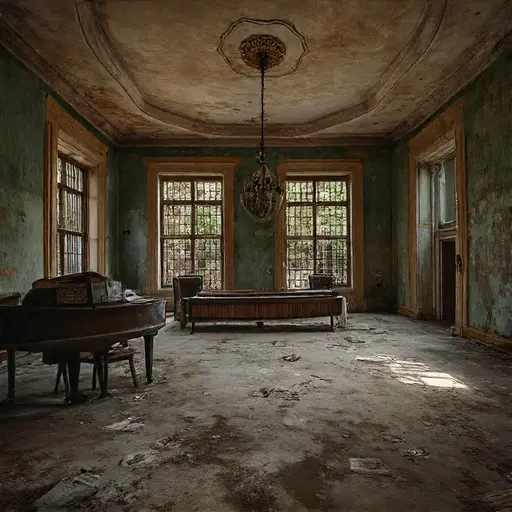
Today, the Estate on Willow Crest continues to dominate its suburban corner despite decades of abandonment. The marble peacock still overlooks the empty reflecting basin, weeds spread across the narrow brick driveway, and the faded cast-iron bench remains beneath the old maple tree where generations of the Mercer family once gathered during summer evenings. Preservation organizations have periodically explored restoring the mansion, but the extraordinary cost of stabilizing its stone structure and handcrafted interiors has kept every proposal from moving beyond the planning stage. The estate survives as one of the neighborhood’s most remarkable landmarks, quietly preserving the memory of a family whose ambition became inseparable from the home they built.