The Eerie Valdés Dining Room Where the Canvas Stayed Wet
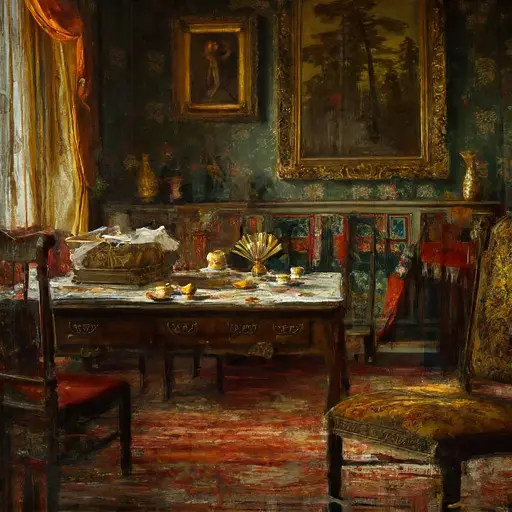
A muted warmth lingers in the dining room, carrying a suggestion of dried wine and drifting grain of wood varnish. Colors cling to the air—dull greens, brittle vermilion—like echoes of decisions not quite erased. The lamps stand unlit, their chimneys clouded, as if someone’s concentration had outpaced the night and then simply vanished.
Traces of an Artist’s Measured Pursuit
Sofía Camila Valdés, born 1882 in Seville, worked as a portrait painter for provincial patrons. A folded mantilla from her aunt Aurora hangs on a chair back, near sketch pads marked by practiced, confident strokes. Sofía’s habits surface in small arrangements: brushes aligned by stiffness, plates set as makeshift palettes, a pewter cup where she cooled her temper with sips of watered sherry. Social modesty and disciplined training speak through each precisely cut canvas scrap.
Craft Redirected Into Domestic Corners
Shipping crates stamped with Cádiz merchants lie under the table. One holds charcoal stubs used for tentative outlines; another, letters praising her likenesses yet urging faster commissions. An unfinished portrait leans against the sideboard—eyes rendered exquisitely, mouth still a blank pause.
A Quiet Discord Beneath the Composition
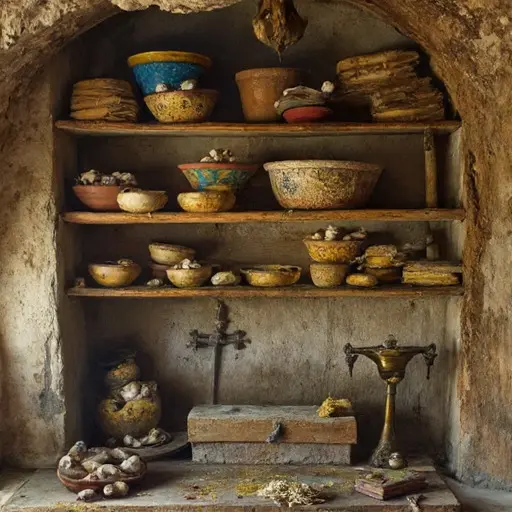
Inside a drawer, an unsigned notice hints at a disputed commission, implying Sofía “altered a likeness without consent.” A smudged fingerprint mars a portrait sketch, and a wineglass cracked along its stem lies cushioned in linen. A gilt frame, newly delivered, stands unopened—its twine cut but left in place, as if reconsidered.
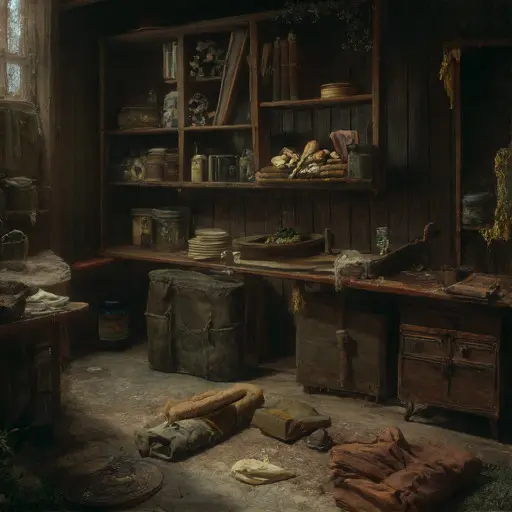
Back in the dining room, a lone pearlescent highlight glimmers on the unfinished portrait’s cheek—perfect, fragile, final. No other stroke followed it.
The house remains abandoned.
