The Eerie Plaster Casts of Håkansson’s Sculpting Nook
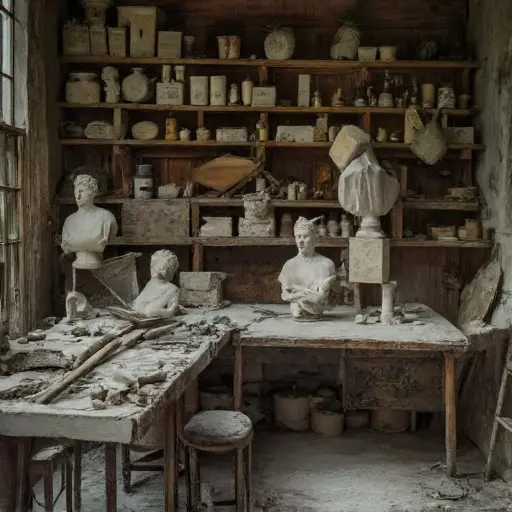
The Sculpting Nook hums with frozen intention. Here, the cast was central to daily practice: clay shaped, plaster poured, details refined. Every tool rests mid-motion; molds stand stacked, and busts await finishing touches.
The absence of movement creates a quiet tension, as if the space remembers the weight of hands now gone. A faint imprint of a fingertip remains in a soft clay figure, a silent trace of interrupted labor.
Craft and Form
This nook belonged to Erik Håkansson, sculptor (b. 1878, Göteborg), trained in Swedish academies and through mentorship with regional masters. His inscriptions and notes on plaster surfaces show careful study of anatomy and proportion. A folded note mentions his brother, Lars Håkansson, reminding him to “prepare pigments for the next session.” Erik’s temperament was methodical, patient, and meticulous; ambition lay in capturing precise human form for private commissions and municipal monuments. Every plaster chip and brushstroke preserves a quiet record of disciplined artistry.
Molds Suspended
On the worktable, half-finished cast busts sit beside tools used to carve fine details. Powdered pigment jars are open but untouched, brushes stiffened with dried residue. A partially modeled clay figure remains on its stand, fingers carefully shaped yet unrefined. Dust has settled into each groove and imprint, preserving the moment of sudden abandonment and interrupted creation. Light from the small window glances off hardened plaster, illuminating small cracks in models left unrefined.
Traces of Decline
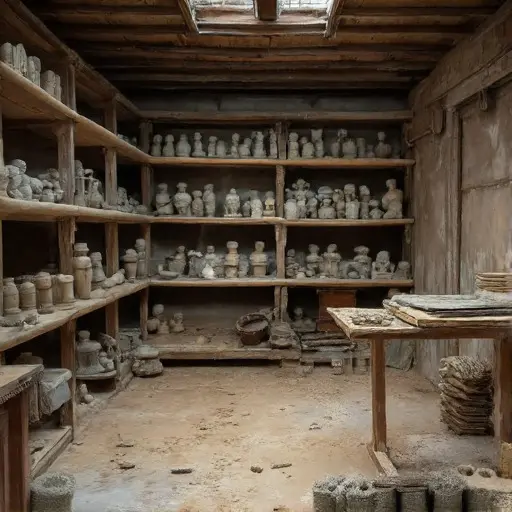
Ledger pages note incomplete commissions; margins contain calculations of scale and balance. Some plaster models were repeatedly recast, edges smoothed and then scraped away. Erik’s decline was physical: worsening tremors and stiffening joints prevented him from shaping details. Each unfinished cast embodies halted intention, meticulous practice arrested by bodily limitations, a skill suspended in mid-gesture. Every brush, every chisel mark, and every dust layer records hesitation and mounting difficulty.
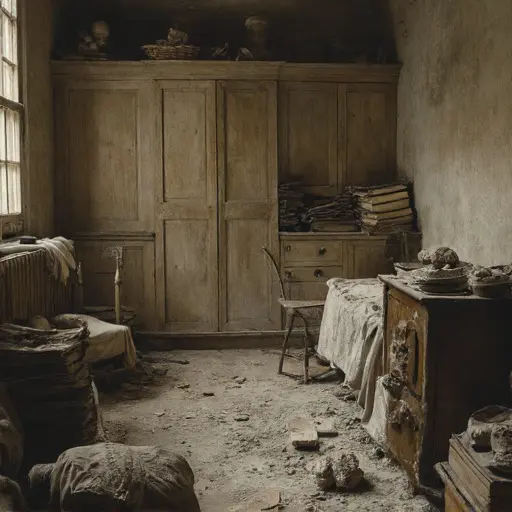
In a drawer beneath the worktable, Erik’s final cast remains partially completed, edges sharp yet unfinished.
No notice explains his absence. No apprentice continued the work.
The house remains abandoned, its plaster busts, molds, and cast a quiet testament to interrupted sculpture and unresolved artistry.