The Eerie Nakamura Inkroom Where the Strokes Broke Apart
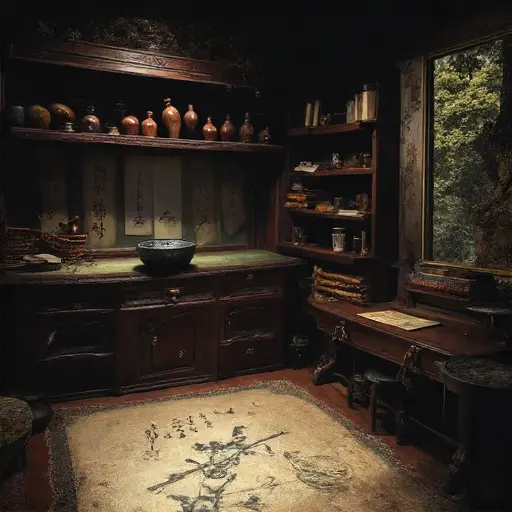
The air is steeped in soot, paper, and a faint hint of incense long extinguished. Shadows gather in the corners where unused brushes hang from hooks, their tips stiff with dried pigment. Dust clings to the rim of a bronze water basin.
Nothing is overturned exactly, yet nothing rests in true order. The inkroom seems caught in a silence layered by pauses—each one marking a moment when intention dissolved.
A Life Scripted in Ink and Restraint
This inkroom preserves the painstaking work of Hiroshi Masato Nakamura, calligrapher and occasional inscription artist, born 1878 in a small town outside Kyoto. Though he traveled widely after settling here, he kept the temper of a quiet craftsman. His tools—bamboo pens, lacquer trays, fine horsehair brushes—are arranged with methodical care. A small ceramic bell belonging to his younger sister, Aiko Nakamura, rests atop a bundle of aged rice paper, its chime muted by dust.
Hiroshi’s routine was spare: mornings spent grinding ink; afternoons composing character sets for merchants; evenings practicing strokes by lamplight. His temperament appears in each sheet spread across the desk—confident beginnings, balanced forms, pressure controlled down to the breath. At his height, he produced signage for shops and solemn inscriptions for family shrines, earning quiet respect.
Craft Ascendant, Then Unsettled Edges
In more prosperous years, the inkroom filled with scrolls packed in cedar boxes, some bearing elegant seals of clients from distant ports. A folding screen depicting mountain pines stands partly unfurled, its scene disrupted where the panels have separated. Wooden drawers hold pigment chips in reds and golds, imported from across the sea.
But subtle disruptions intrude. Several brushes sit tip-down in a water bowl, bristles splaying—an error Hiroshi never permitted. A calligraphy scroll is pinned at uneven angles, its borders stained by an accidental water splash. His practice sheets show harsher pressure near the end, strokes deepening where they should taper. A merchant’s order slip, written in elegant kanji, bears a name crossed out, rewritten, then blotted away. Something unsettled his measured calm: perhaps a dispute over authenticity, or dissatisfaction with a commissioned seal he was tasked to remake.
The TURNING POINT That Frayed His Line
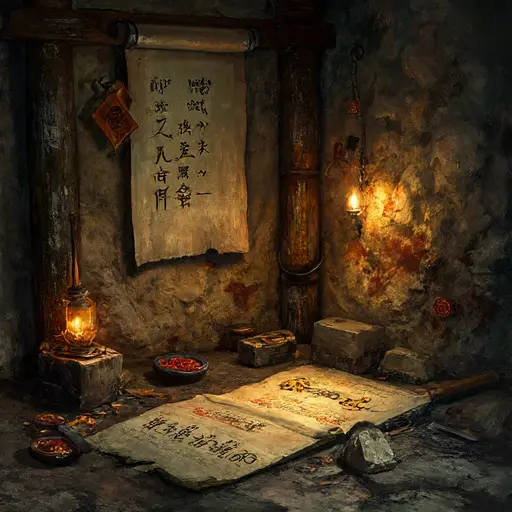
One evening left indelible signs of disruption. A stone seal lies split cleanly, its fracture glimmering under dust. The inkstone bears a long scratch inconsistent with cautious use, as though pushed aside abruptly. A brush handle has snapped near the ferrule. A scroll, half-written in bold characters, ends in a blot of ink trailing off the desk.
Rumors filtered through local circles: a wealthy client accused Hiroshi of copying a signature style not his own; another claimed a ceremonial inscription arrived flawed, misaligned by a hair’s breadth. For an artist who lived by exactness, such accusations struck with force. Near the water basin lies a folded slip of rice paper that reads: “Not a forgery—misread intent,” written in hurried strokes.
A bowl of cinnabar ink has been overturned, staining a bundle of unfinished scrolls. Several characters on the top sheet blur together into unrecognizable forms. Even the ceramic bell of Aiko’s sits crookedly, its once-clean chime hushed by a clot of vermilion dust.
Beneath the Loose Floorboard
A narrow board beneath the writing desk shifts under gentle pressure. Inside the hollow space rests a bundle wrapped in linen. Within lies a small scroll of such fine paper it appears translucent. Only two characters are inked on it, both abandoned halfway through their curves. A note is tied around the scroll: “For Aiko—left unfinished until truth returns.” The kanji for “truth” is incomplete, halted mid-brush.
Beside the scroll is a seal blank with its first carved line veering off center—an impossible error for Hiroshi. Whether the miscut happened by distraction, doubt, or something more distressing cannot be known. The line cuts at an angle that feels more like apology than mistake.
Final Quiet Gesture
Inside a folded practice book near the writing stand, one last remnant hides: a page bearing a single character repeated three times, each attempt fainter than the last. Beneath them, Hiroshi wrote: “The line wavers.” No elaboration, no name.
The inkroom releases a long, breathless silence, its tools refusing to speak further.
And the house, holding its abandoned inkroom, remains abandoned.
