The Eerie Library of Hargrove’s Vanished Codices
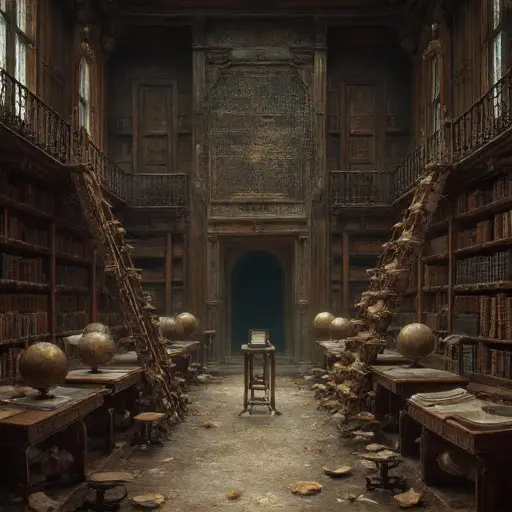
The library carries a muted grandeur: maps of distant lands, charts of celestial paths, and the scent of aged paper permeating every shelf. Notes scribbled in margins, bookmarks wedged between pages, and folding chairs left askew mark the remnants of precise study left unfinished, a quiet narrative of halted intellectual labor.
Life of a Scholar
The library was curated by Edmund Hargrove, lexicographer and historian, born 1870 in Oxford, England.
Educated at Balliol College, Hargrove’s meticulous mind cataloged rare manuscripts and compiled multilingual glossaries. His mother, Beatrice Hargrove, provided early access to classical literature, nurturing his lifelong obsession with language. Daily routines involved dawn transcription sessions, afternoon cross-referencing, and evenings spent cataloging new acquisitions. Marginalia, ink smudges, and careful page markers reveal a methodical temperament: obsessive, precise, and increasingly isolated as ambition grew. Every object in the library—open ledgers, stacked volumes, and ink-stained desks—reflects a life structured around study and the relentless pursuit of knowledge.
Decline and Evidence
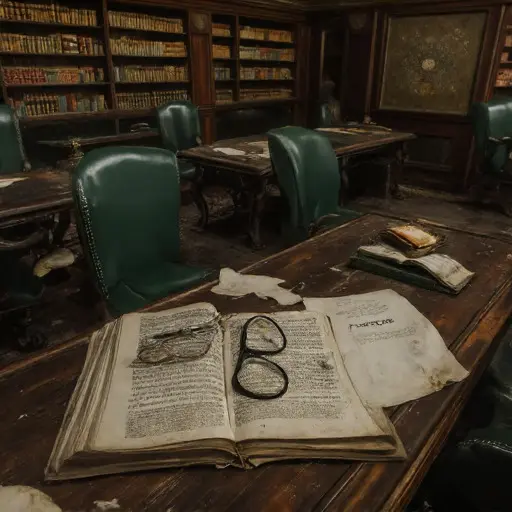
Hargrove’s decline arose from progressive tremors in his hands and deteriorating vision, which rendered delicate manuscript work impossible. Notes trail off mid-sentence, ink smears obscure entries, and some codices remain unopened. The library preserves these evidences: an academic life abruptly constrained by frailty, experiments incomplete, and a meticulous routine left indefinitely suspended. Faded bookmarks, leaning stacks, and half-filled ledgers document a mind halted, a vocation abandoned through circumstance rather than will.

No final words were left behind.
Edmund Hargrove never returned to his library.
The house remains abandoned, library volumes untouched, manuscripts incomplete, and ledgers unclosed. The library preserves the memory of a life devoted to scholarship, halted by physical decline, leaving knowledge uncompleted, silent, and haunting in absence.