The Eerie Ledger of Van Houten’s Apothecary
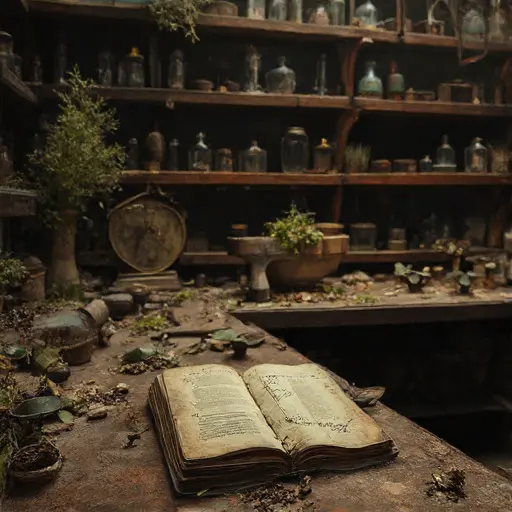
The Apothecary resonates with suspended purpose. Here, the ledger recorded every prescription: herbs measured, tinctures prepared, remedies noted. Tools rest mid-use, jars left half-filled, scales unbalanced.
The absence of movement leaves a tense stillness, each object preserving the memory of careful work abruptly halted.
Mastery in Remedies
This apothecary belonged to Cornelius van Houten, apothecary and herbalist (b. 1874, Amsterdam), trained in Dutch pharmaceutical guilds and through family apprenticeship. His skill is evident in the precise labeling of tinctures, careful grinding of roots, and balanced preparations. A small note pinned to a shelf references his mother, Hendrika van Houten, reminding him to “complete the camphor elixir for the summer shipments.” Cornelius’s temperament was meticulous, methodical, and sober; ambition focused on preparing remedies for local patrons, creating herbal mixtures, and maintaining strict records of doses.
Prescriptions Left Mid-Measure
On the counter, a partially completed ledger shows entries abruptly halted mid-line. Mortars rest with powdered herbs half-crushed, pestles abandoned mid-motion. Jars and vials remain capped or tipped, dust settled over every object. Small handwritten notes lie scattered, evidence of repeated verification abandoned mid-process. Each unfinished record reflects suspended intention, halted with no explanation.
Signs of Decline
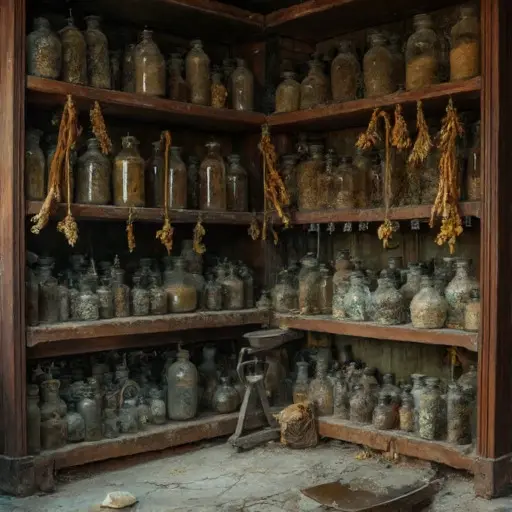
Notes, scales, and partially completed tinctures reveal repeated corrections; measurements recalculated, labels re-inspected. Cornelius’s decline was physical: arthritis in his hands and weakening eyesight made precise grinding and weighing increasingly impossible. Each unfinished ledger embodies halted intention, professional skill curtailed by bodily limitation, leaving pharmaceutical labor permanently suspended.
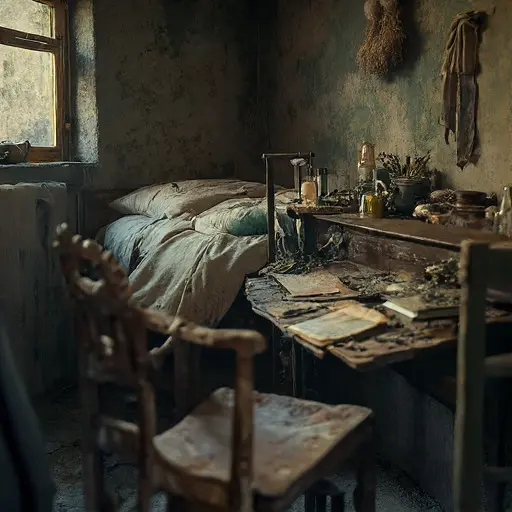
In a drawer beneath the counter, Cornelius’s final ledger remains half-filled, quills and balances poised yet idle.
No explanation exists for his disappearance. No apprentice returned to continue the work.
The house remains abandoned, its jars, tools, and ledger a quiet testament to interrupted apothecary labor and unresolved devotion.