The Eerie Ledger of the Sokolov Clockmaker’s Room
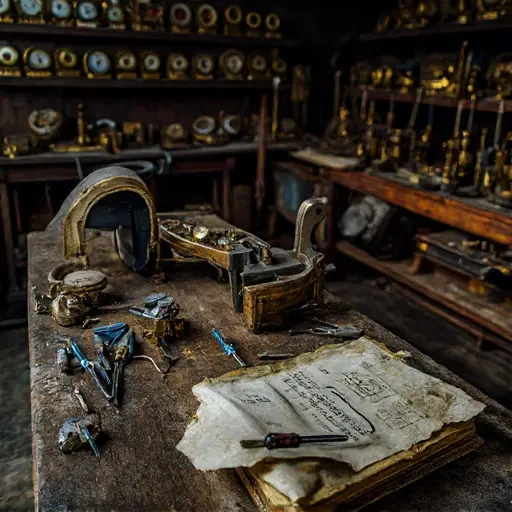
The Clockmaker’s Room exudes stillness, clocks and tools frozen mid-maintenance. A partially assembled cuckoo clock leans against the bench, its tick sequence left incomplete.
Crafting Time
These implements belonged to Viktor Sokolov, clockmaker (b.
1873, Prague), trained in a family workshop yet producing both domestic and ornamental clocks for urban clients. His precise Czech notes document gear ratios, pendulum lengths, and escapement calibration. A small slip referencing his apprentice, Lukas Sokolov, “collect clocks Thursday,” implies structured routines with a strong emphasis on precision and daily repetition.
Instruments of Precision
On the central bench, gears, springs, and small screwdrivers lie meticulously arranged. Partially assembled clock mechanisms rest on stands. A ledger beneath folded cloth sheets lists commissions, clock types, and tick sequences. One partially completed timepiece shows careful calibration halted mid-adjustment, suggesting a sudden and unplanned interruption.
Decline in Rhythm
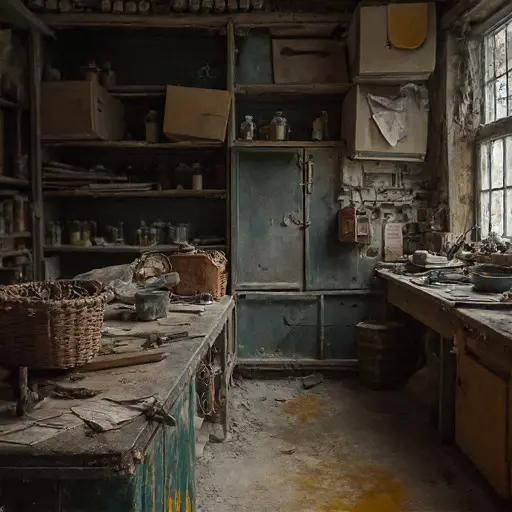
Later ledger entries show inconsistent escapement adjustments and uneven tick counts. Some clocks fail to chime properly; a note—“client complaint pending”—rests beneath a partially assembled mantel clock. Failing eyesight and increasing tremor undermined Sokolov’s careful craft, leaving mechanisms incomplete, pendulums untested, and calibrations abandoned mid-cycle.
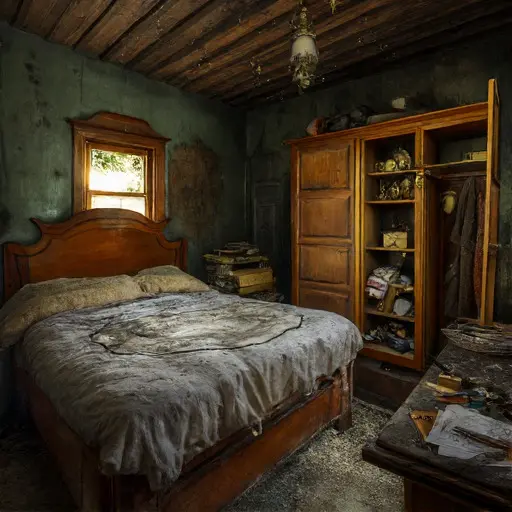
In the Clockmaker’s Room’s final drawer, Sokolov’s last tick record ends abruptly, calibration notes and gear measurements left unfinished. A penciled note—“finish for Lukas”—stops mid-word.
No record explains why he abandoned his craft, nor why Lukas never retrieved the timepieces.
The house remains abandoned, gears, tools, and clocks frozen in quiet incompletion, every pendulum suspended in stillness, awaiting hands that will never return.