The Eerie Ledger Leaves of the Kaczynski Botanical Study
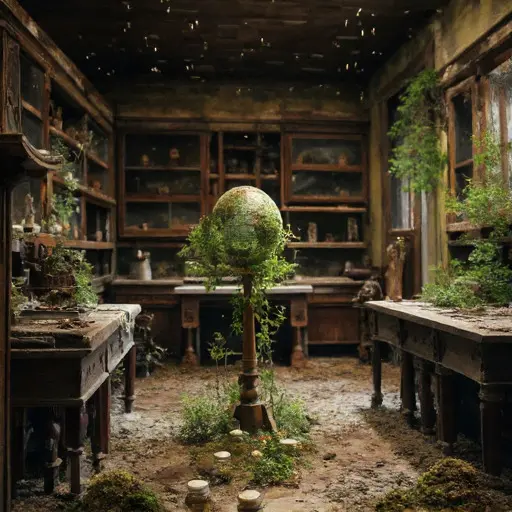
A hushed, fragrant stillness fills the Botanical Study, where a penciled specimen notation trails off mid-entry in a ledger, leaving the cataloging of plants forever incomplete.
The Life of Observation
These instruments belonged to Katarzyna Kaczynski, botanist (b. 1874, Kraków), trained at a university herbarium.
Her Polish notes—small, deliberate, precise—document species names, collection dates, and growth conditions. A folded slip referencing her brother, Tomasz Kaczynski, “deliver moss samples Thursday,” hints at a disciplined routine: gathering, pressing, and cataloging plants, interwoven with careful domestic oversight.
Tools of the Herbarium
On the main table, pinned specimens lie partially labeled. Jars of seeds and small vials of liquid preservatives are lined up by size. A ledger beneath a folded cloth lists species, collection locations, and observations. Several terrariums show miniature ferns and mosses halted mid-growth, paused in their glass confines as though waiting for Katarzyna’s careful hand to return.
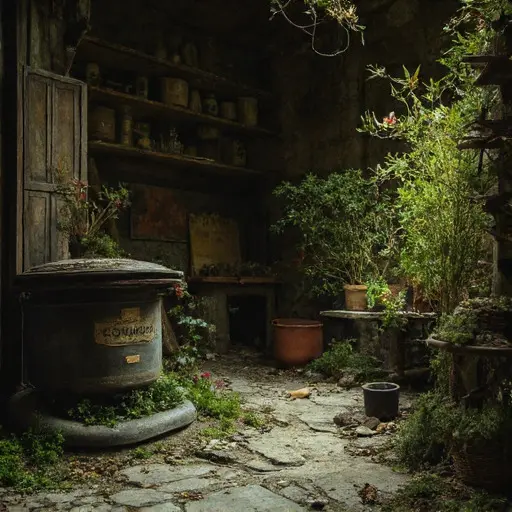
Evidence of Strain
Later ledger entries reveal repeated corrections to species names and growth notes. Several herbarium sheets are misaligned or incompletely labeled. A margin note—“samples rejected by curator”—is smudged. Small forceps lie scattered, one bent, showing signs of growing fatigue and anxiety. Pressed ferns remain stacked in trays, their edges browned, the regular rhythm of cataloging broken.
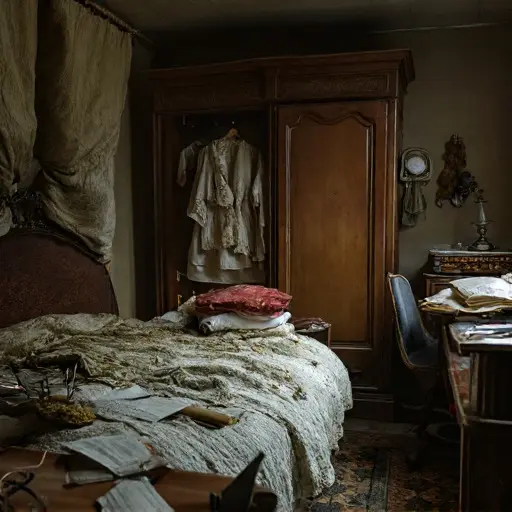
In the Study’s final drawer, Katarzyna’s last specimen entry trails into unfinished identifications. A penciled note—“verify with Tomasz”—cuts off abruptly.
No record explains her sudden halt, nor why Tomasz never retrieved the remaining samples.
The house remains abandoned, its specimens and tools suspended in quiet anticipation, preserving the interrupted rhythm of botanical observation that will never resume.
