The Eerie Ink Registers of the Liang Calligraphy Studio
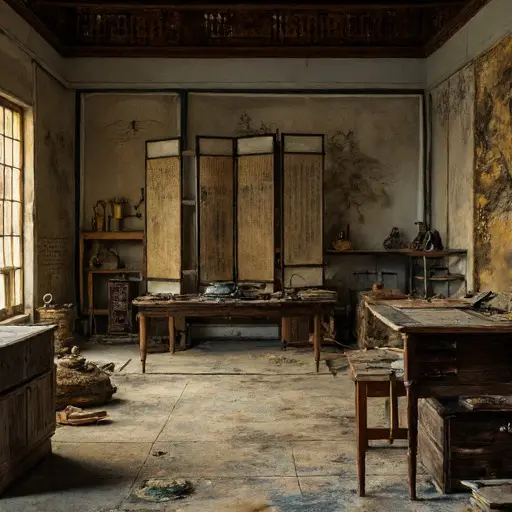
A dense quiet shadows the Calligraphy Studio, where a tipped brush rests near an unused inkstone, the pooled residue hardened into a dull, unyielding crust. Nothing appears broken, yet each untouched surface implies a halted routine.
The Hand Behind the Characters
These tools belonged to Liang Renwei, calligrapher (b.
1870, Suzhou), trained by a retiring teacher but serving local merchants. His brushwork—visible in several mounted scrolls—reveals a steady, introspective temperament. A folded scrap referencing his niece, Liang Meilin, “deliver poem on Tuesday,” hints at a contemplative rhythm of copying, drying, and sealing that once shaped his days.
Materials and Method
Rosewood brush rests, arranged by stroke width, show careful hierarchy. Ink sticks, ground smooth at their ends, lie in a shallow tray beside weighed paper. A narrow ledger, its columns in Chinese, catalogs modest commissions completed with patient exactitude.
Where Precision Began to Waver
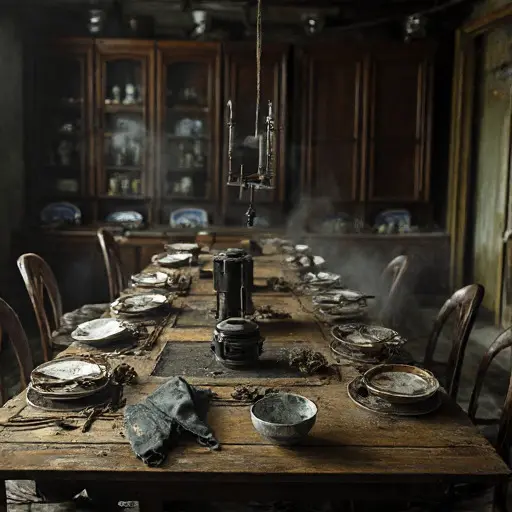
Later entries in Renwei’s ledger stutter: dates crossed out, measurements of paper sizes contradicted. Several practice sheets show wavering verticals, ink pooling at stroke ends. A torn note—“client disputed verse”—is folded beneath a jade seal, its edge darkened by damp.
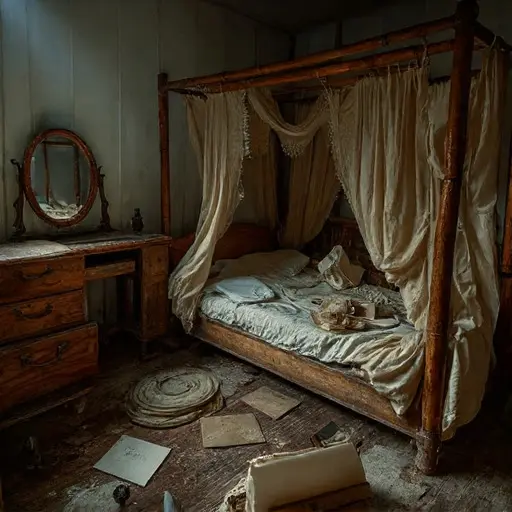
In the Studio’s final drawer, Renwei’s last scroll remains only faintly sketched: characters begun, then abandoned, their balance uncertain. No trace clarifies why he ceased his work, nor why Meilin never arrived.
The house, surrendered to abandonment, keeps its muted pages, every stroke unfinished and echoing into stillness.
