The Eerie Herbarium of Whitmore’s Greenhouse Study
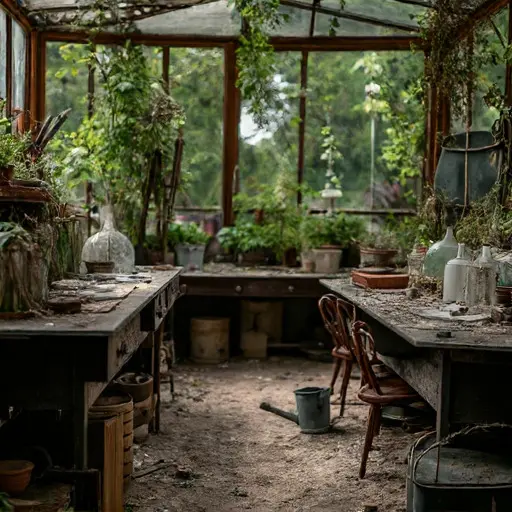
The Greenhouse Study exudes quiet neglect, pressed plants still pinned, microscopes untouched, and observation journals left open mid-entry. Shelves of jars and vials remain precisely ordered, yet the air carries only dust. Silence conveys the absence of the botanist’s careful daily routines: watering, labeling, and cataloging.
Each object reflects ongoing curiosity abruptly halted, every specimen and tool poised in anticipation of a return that never comes.
Botanical Scholarship
The study belonged to Edmund Whitmore, botanist and horticulturalist, born 1880 in Edinburgh, Scotland. Educated at the University of Edinburgh, Whitmore specialized in rare and exotic plants, often receiving specimens from colonial collectors. His profession shaped the interior: shelves lined with specimen jars, detailed herbarium sheets, botanical illustrations pinned to cork boards, and magnifying instruments arranged for immediate study. A framed miniature of his mentor, Professor Alistair McLeod, sits atop a table. Whitmore’s temperament was meticulous, patient, and quietly obsessive; his days consisted of tending, cataloging, observing, and drawing plant forms. Every pressed leaf, every labeled jar speaks to habitual precision and restrained care.
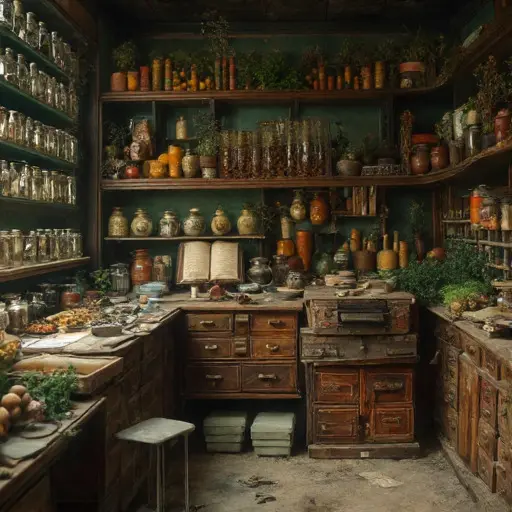
Collections Left Untended
Whitmore’s last observations show incomplete sketches, faded annotations, and half-filled herbarium sheets. Decline came from progressive arthritis, gradually preventing him from delicate handling of specimens and accurate illustration. Plants were left unwatered, presses incomplete, and sketches abandoned. One cabinet of rare imported specimens remains unopened, labeled yet untouched. Work ceased quietly, leaving the greenhouse study charged with absence rather than disarray. Even glass terrariums remain carefully aligned, objects frozen mid-study.
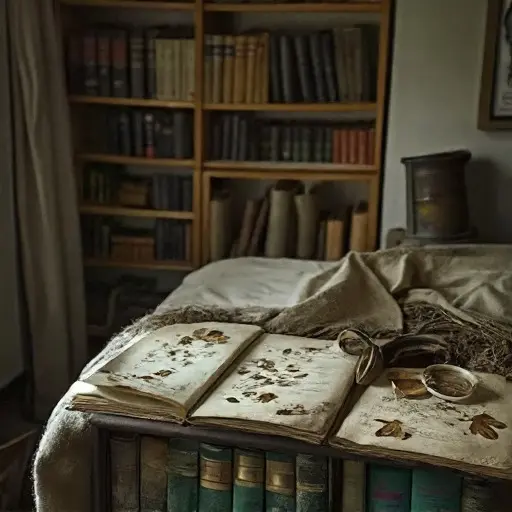
No explanation accompanies Whitmore’s retreat.
Edmund Whitmore did not return to the greenhouse study.
The house remains abandoned, herbarium sheets unexamined, tools unused, and specimens untended. The study preserves the memory of a life devoted to plant scholarship, ended when arthritis intervened, routines indefinitely suspended, leaving botanical work unresolved, eerie, and haunting through absence.