The Eerie Conservatory of Fairchild’s Vanished Specimens
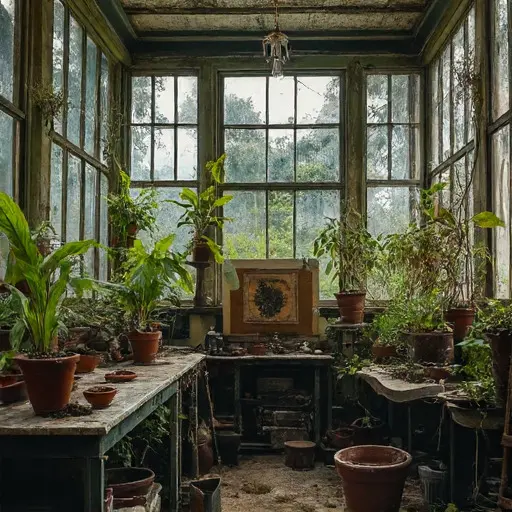
The conservatory whispers of halted growth. Leaves brittle and brown, sketches of flora half-annotated, and soil crusted in trays reveal daily habits abruptly interrupted. Botanical samples, glass vials of extracts, and pressed flowers tell of precise cataloging, watering, and observation routines left incomplete.
Every chair nudged aside, every notebook left open, hints at a meticulous life now abruptly stilled.
Life of a Botanist
This conservatory belonged to Eleanor Fairchild, botanical illustrator and horticulturalist, born 1883 in Edinburgh, Scotland. She trained at the Royal Botanic Garden Edinburgh, her family of minor gentry supporting scholarly pursuits. Her brother, Henry Fairchild, occasionally assisted with field collection. Eleanor’s routine involved early morning plant studies, mid-day sketching, and evening cataloging of specimens. Clues of her life remain: ink-stained sketchbooks, soil on marble floors, pressed botanical sheets, and tweezers frozen beside seed packets. Her temperament balanced curiosity and careful precision, driving a life of observation, artistic recording, and cultivation.
Decline and Evidence
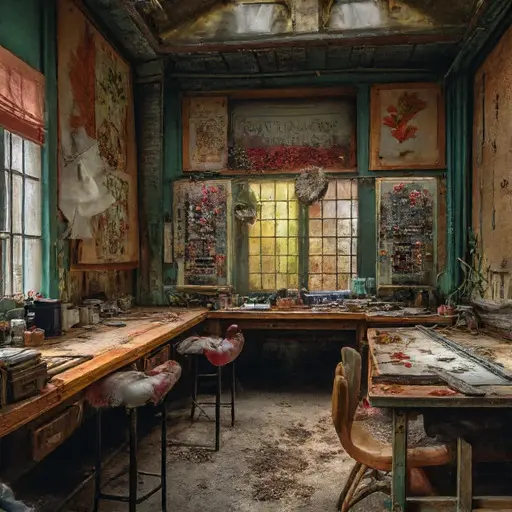
Eleanor’s decline was due to worsening rheumatism, limiting her mobility and the ability to handle delicate plants. Specimens remain unmounted, sketches incomplete, and watering tools left where last used. Evidence of interrupted labor fills the conservatory: half-filled plant presses, dried soil in trays, and annotation notebooks unfinished. The conservatory holds these traces, preserving the precise labor of observation frozen in time, intentions left incomplete, and work left unresolved.
No explanation was ever recorded.
Eleanor Fairchild never returned to her conservatory.
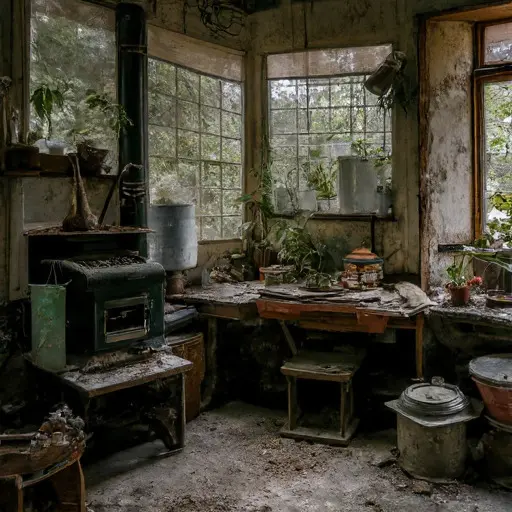
The house remains abandoned, the conservatory intact with plants, notes, and tools frozen mid-use. The conservatory preserves the memory of a life dedicated to cultivation, halted by illness, leaving observation, labor, and ambition suspended, silent, and haunting in absence.