The Eerie Codex of Langford’s Clockmaker Room
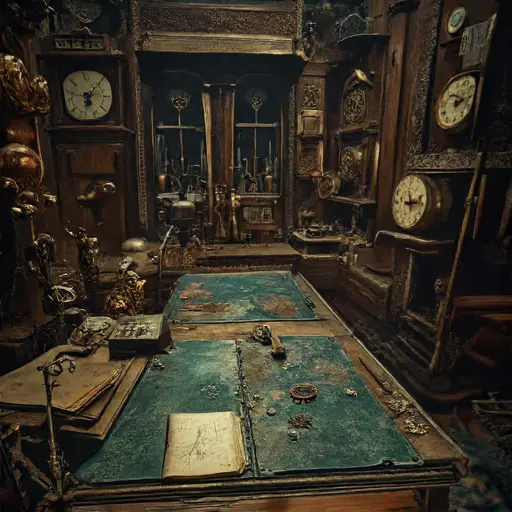
The clockmaker room holds the stillness of halted precision. The codex documents repairs, gear arrangements, and commissions, yet stops mid-diagram. Clocks of every size stand frozen, pendulums stiff, faces showing different times.
Tools remain as though a hand had lifted them and never returned. Silence dominates, filled only with imagined ticks of clocks that will never move.
Marks of a Careful Life
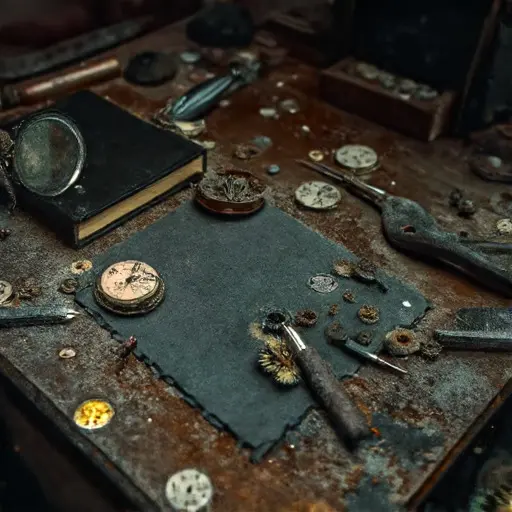
This workspace belonged to Alfred Langford, master clockmaker (b. 1875, Birmingham), who served a growing clientele of local gentry. Evidence of his life is scattered: a folded letter from his cousin Edwin Langford warning of unpaid bills, a loupe left on the table, small jars of brass screws tipped on their side, and a delicate pocket watch half-disassembled. His routine was exacting—inspecting gears, oiling movements, and recording every detail in the codex. Dedication was his hallmark, yet relentless precision, declining eyesight, and tremors in his hands gradually undermined his work.
Abrupt Silence
Alfred’s decline followed trembling hands, poor vision, and mounting debts. The codex shows erased notes, unfinished schematics, and incomplete repair logs. Watch parts are scattered, clamps left mid-use, and oil stains mark the table. Every surface tells of sudden cessation: work interrupted, labor abandoned mid-motion. The room preserves a precise moment when routine, skill, and life collapsed into stillness.
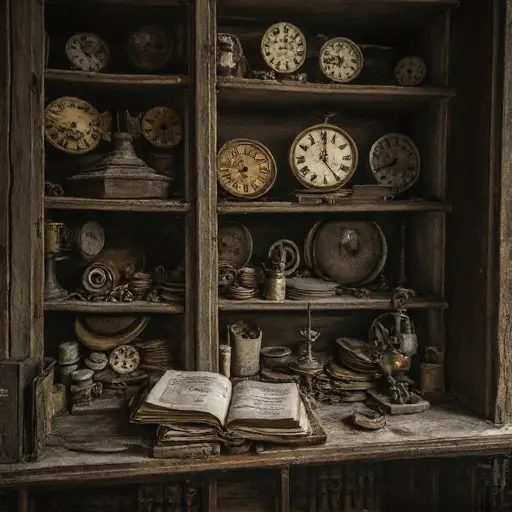
The codex remains open, entries incomplete, repairs unfinished, and clocks unassembled.
No apprentice took over his work. No explanation exists for Alfred’s sudden disappearance.
The clockmaker room remains abandoned, its timepieces, tools, and codex a quiet testament to interrupted skill, sudden absence, and a mystery lingering amid cogs, oil, and the frozen rhythm of halted labor.