The Eerie Chalkboard of Van Dijk’s Counting Room
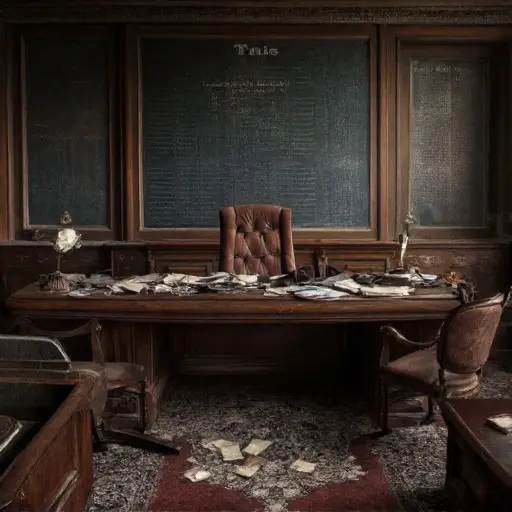
The Counting Room feels deliberately sealed, as though its last occupant expected to return before nightfall. The chalkboard dominates the space, numbers halted mid-column, totals never drawn. Ledgers lie open, corners weighted with rulers.
The room’s stillness is not peaceful; it feels like an accusation left standing.
Figures Without Closure
This room belonged to Hendrik van Dijk, insurance clerk (b. 1869), whose work revolved around maritime cargo policies and private accounts. The furnishings suggest a Dutch household of modest prosperity: Delft tiles stacked near the hearth, sea charts rolled beneath a side table. A note in careful hand mentions his wife, Anna van Dijk, reminding him to “balance the western accounts.” Hendrik’s routine was rigid—same hours, same figures, same methodical habits.
Totals Left Hanging
On the desk, an account book stops mid-line. Ink has blotted where a pen paused too long. Coins sit sorted in shallow trays, never transferred to the strongbox. On the chalkboard, one column has been erased repeatedly, leaving a gray smudge beneath fresh numbers. Dust has settled unevenly, suggesting movement that ended abruptly. A coat hangs on the chair, pockets still heavy with folded receipts.
Signs of Pressure
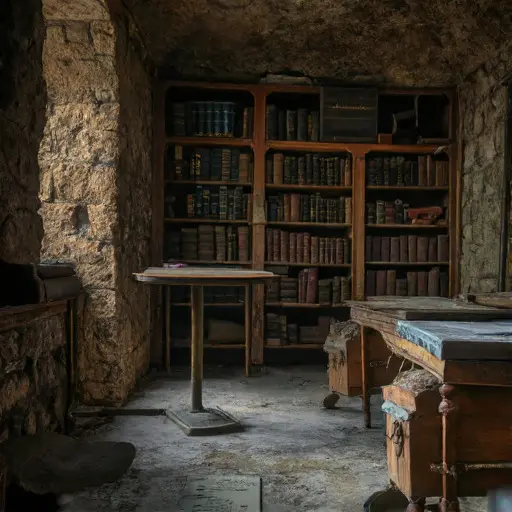
Margins of the books show recalculations and crossings-out, figures adjusted again and again. Hendrik’s decline was not physical but financial. One account appears altered, then altered back. The chalkboard bears a faint outline where a sum was scrubbed away too forcefully. Whatever discrepancy he uncovered—or created—remains unresolved. No explanatory note was left, no correction finalized.

The final total on the chalkboard was never confirmed.
No ledger was closed. No claim settled.
The house remains abandoned, its figures exposed, its silence shaped by numbers that were never meant to remain visible.