The Eerie Basin in Calder’s Scullery
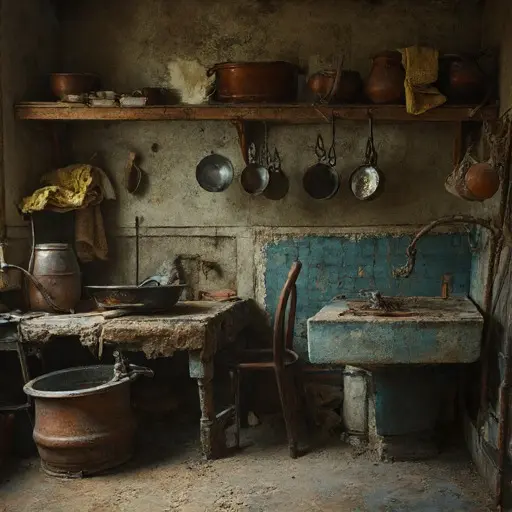
The Scullery bears the weight of halted habit. On the scrub table lies a single receipt, creased and softened by water, dated only with a month and year. It sits beside a ledger spine and a chipped teacup, as though laid down deliberately.
The basin shows signs of recent use—darkened stone, a faint ring where water once stood—but no further trace of its keeper.
Accounts Kept in Quiet
These marks belonged to Thomas Calder, municipal water inspector (b. 1864, Halifax), whose profession shaped the house inwardly rather than publicly. His work demanded vigilance: measuring flow, inspecting pipes, documenting waste. The scullery was adapted to his needs, with calibrated buckets, chalk marks on the wall, and shelves holding wrapped gauges. A wool blanket with a striped trade pattern is folded beneath the table. Letters addressed to his wife Eleanor Calder remain unopened, their edges softened by damp. His education was practical, his manner restrained. Each evening ended here, washing, recording, filing the day away.
A Single Paper Left
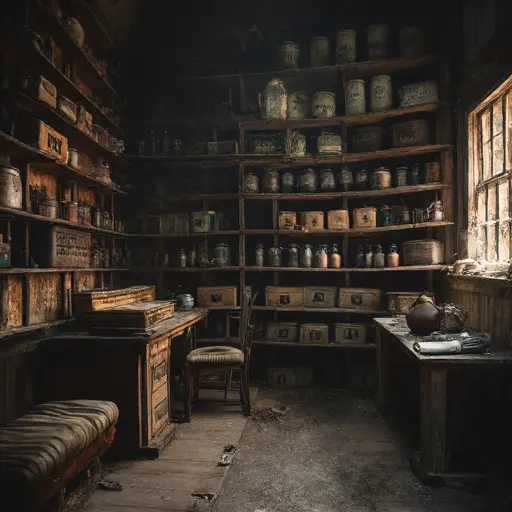
The receipt records a minor expense: replacement washers, chalk, twine. Nothing urgent. Yet later pages in the ledger show irregular gaps, inspections skipped, numbers trailing off. A pipe diagram is pinned crookedly, its corner torn. The pump handle in the scullery is locked in place, as if forced once and abandoned. No tools are missing. No valuables taken. The decline was not sudden panic but fatigue—pressure from unnoticed faults, complaints unanswered, responsibility compounding quietly.
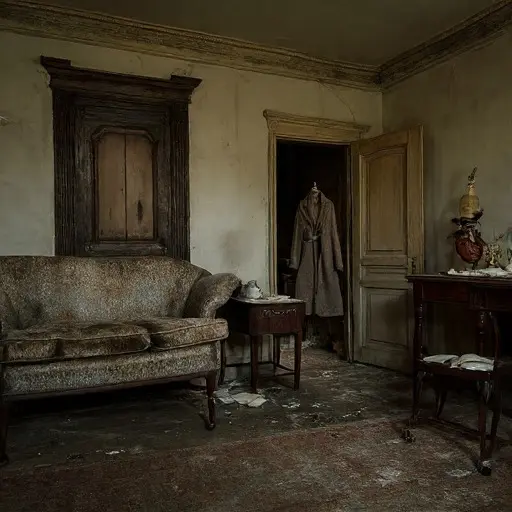
The receipt remains where it fell, never filed, never explained.
No report records Calder’s dismissal or death. The house emptied without ceremony.
The scullery stays abandoned, its basin dry, its measures fixed, holding the silence of a routine that ended without witness and never resumed.