The Eastwick Platform House Left Silent After Line Closure
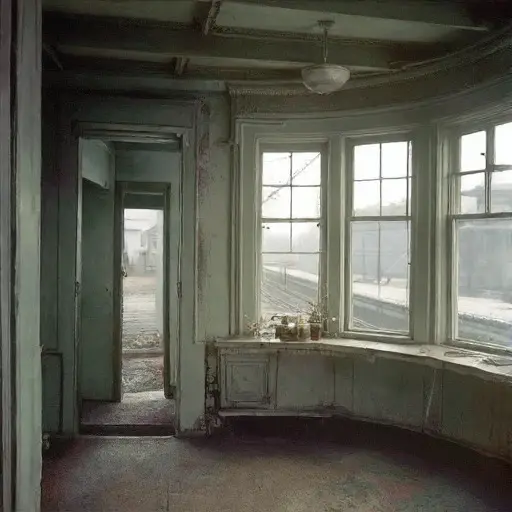
The Eastwick Platform House was constructed in 1881 as part of a small rural railway stop serving agricultural freight and limited passenger service in a sparsely populated farming region The structure was built directly adjacent to a single-line platform, combining domestic living space with railway operational facilities in a unified architectural system The intention was to house both a station attendant and their family, ensuring continuous oversight of the line while maintaining immediate access to signaling equipment and platform operations
The main residence occupied a compact two-story structure aligned parallel to the wooden platform boards, with a small enclosed waiting-room extension attached to the side wall The most distinctive feature was the signal-tower-like room rising one level above the roofline, used to monitor track conditions and control simple rail signals manually The house and platform were constructed together, resulting in a tightly integrated system where domestic and industrial functions overlapped within the same footprint
The Carter family lived at Eastwick for several decades, maintaining both the household and the operational duties of the station Life was defined by the rhythm of passing trains, maintenance checks, and seasonal freight schedules The bay window facing the tracks served as a constant observation point, while the upper signal room allowed direct control of railway communication equipment
Gradual Decline of Rural Rail Operations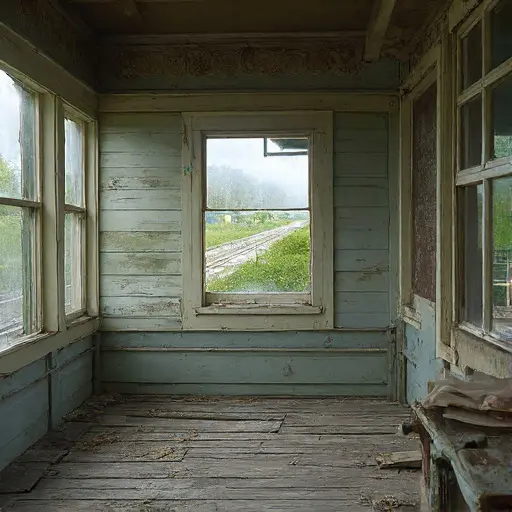
By the early 1930s, railway traffic along the Eastwick line began to decline as regional transport systems were consolidated and more efficient routes were developed Passenger services became infrequent, and freight operations were gradually rerouted to larger stations The role of small rural platform houses diminished significantly, leaving structures like Eastwick increasingly isolated
As train frequency decreased, maintenance of the platform structure became less consistent Wooden boards began to warp slightly under exposure to constant moisture, and iron supports developed light rust along joints The signal tower remained structurally sound, but its operational use declined as manual signaling was replaced by centralized systems
The Carter family remained in residence for several years despite reduced railway activity, but the station gradually transitioned from an active transport hub into a quiet rural stopping point Eventually, the enclosed waiting room ceased regular use, and portions of the platform were left unattended
Final Abandonment of the Platform Line
<img src=”https://beyondvisit.
com/wp-content/imagecontent/uploads/abandoned victorian house 82293620.webp” alt=”” />
By 1946 the Eastwick Platform House was fully vacated following the official closure of the rural railway line No further train services were recorded, and the station was decommissioned as part of broader regional transport restructuring The Carter family relocated inland, and no subsequent occupants were assigned to the property
In the following years the railway infrastructure remained physically present but unused The tracks continued through the countryside, slowly overtaken by grass and weathering, while the platform structure aged under uniform overcast conditions without maintenance The signal tower remained upright but inactive, its purpose reduced to architectural remnant rather than operational necessity
By 1950 the Eastwick Platform House remained standing beside the silent railway line, fully abandoned and structurally intact No collapse occurred, no demolition was undertaken, and no return was recorded The structure persisted in quiet isolation, its platform, house, and signal tower preserved in stillness along the empty rural track