The Crescent Ravine House Left Vacant After Inheritance Delays
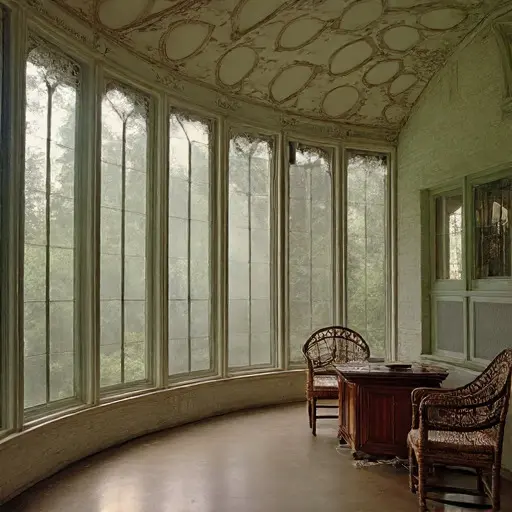
The Crescent Ravine House was completed in 1901 on the edge of a fern-covered escarpment overlooking a deep wooded ravine. Commissioned by the Harcourt family, the residence was designed around an unusual crescent-shaped plan that followed the contour of the cliff rather than imposing a conventional rectangular footprint upon the landscape. The result was a house that seemed to wrap itself around the view, creating a continuous relationship between interior spaces and the mist-filled forest below.
Constructed from pale glazed brick in muted tones of dusty celadon, faded cream, and cool stone gray, the house reflected the subdued colors of its surroundings. Its defining architectural feature was an enclosed gallery stretching across much of the curved façade. Framed by slender cast-iron supports and large panes of glass, the gallery functioned as both corridor and observation space, allowing residents to move through the house while remaining connected to the landscape.
For nearly two decades, the property remained occupied by three generations of the Harcourt family. Household records indicate a stable existence supported by investments, timber leases, and agricultural land elsewhere in the region. The house was never a grand estate but a carefully maintained family residence shaped by continuity and routine.
The first signs of decline
Following the death of the family patriarch in 1923, ownership of the property became divided among several heirs. The house itself remained occupied, but disagreements concerning maintenance costs and future use quickly emerged. Financial responsibility was shared unevenly, resulting in delays for repairs that would previously have been handled immediately.
At first the changes were subtle. Condensation damage within sections of the gallery roof remained unaddressed. Minor leaks appeared near several ventilation turrets. Paintwork and glazing maintenance were postponed as family members debated expenditures.
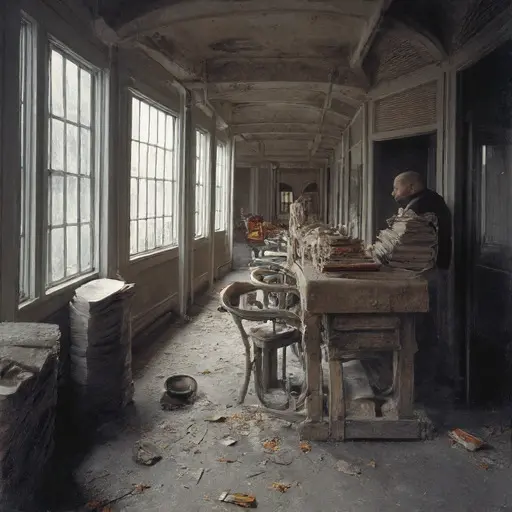
Throughout the 1930s, family members gradually departed. Younger generations relocated to cities for employment opportunities, leaving only a small number of elderly relatives within the large curved residence. Entire sections of the house were closed to reduce heating expenses. The enclosed gallery, once used daily, became partially inaccessible as leaks damaged portions of the flooring and roof structure.
Household ledgers from the period reveal increasing unpaid bills. Roof repairs were postponed repeatedly. Taxes accumulated. Several attempts to sell the property failed due to complications surrounding shared ownership rights among distant heirs.
Abandonment beside the ravine
By the beginning of the Second World War, the house was occupied by only one remaining family member. After her death in 1942, legal disputes concerning inheritance intensified. No heir wished to assume responsibility for the expensive repairs required to preserve the highly specialized curved structure.
Without residents, deterioration accelerated. Moisture entered through damaged sections of the gallery roof. Condensation stained interior walls and warped timber fittings. The once-continuous relationship between architecture and landscape became one of exposure rather than observation.
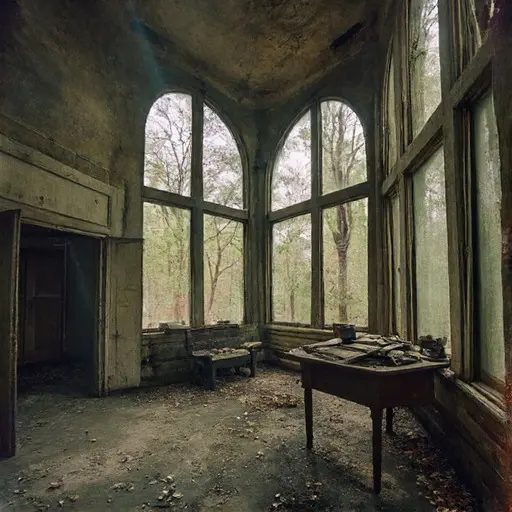
By 1950 the Crescent Ravine House stood completely abandoned. Ownership disputes remained unresolved, no restoration was undertaken, and no family member returned to occupy the property. The building continues to overlook the fern-covered escarpment, its curved gallery slowly weathering beneath moisture, mist, and time. The house remains vacant today, standing quietly above the ravine with no successful recovery and no clear future beyond continued deterioration.