The Crescent Pond House Left Vacant After Family Loss
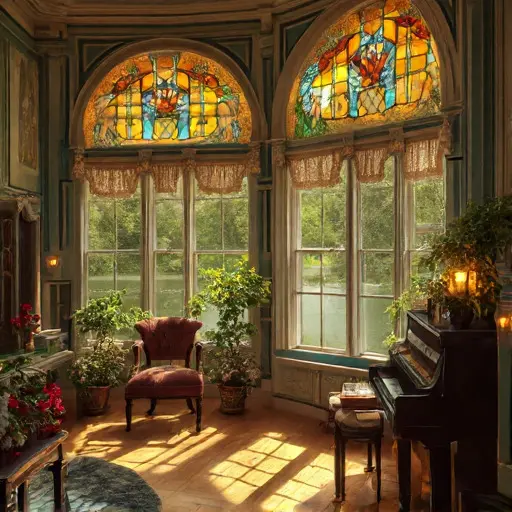
The Crescent Pond House was completed in 1906 on the edge of a narrow ornamental pond in rural Somerset. Commissioned by merchant Edwin Mercer, the unusual residence was designed to follow the exact curve of the water, creating a sweeping crescent-shaped façade that embraced the landscape rather than dominating it.
Edwin moved into the house with his wife Charlotte and their three children.
The family quickly became known for maintaining the property’s extensive gardens, which surrounded the pond with flowering shrubs, roses, and carefully cultivated pathways.
The house was built not as a display of wealth but as a permanent family residence. Large windows overlooked the pond from nearly every room, while the veranda connected daily life to the surrounding gardens. Family photographs, letters, and account books later recovered from the property suggested a household centered on routine, stability, and close ties to the local community.
For more than twenty years, the residence remained carefully maintained. Seasonal gatherings took place on the veranda, children played along the pond’s stone bridge, and the attached octagonal pavilion housed rare plants collected by Charlotte Mercer.
DECLINE ALONG THE CURVED SHORE
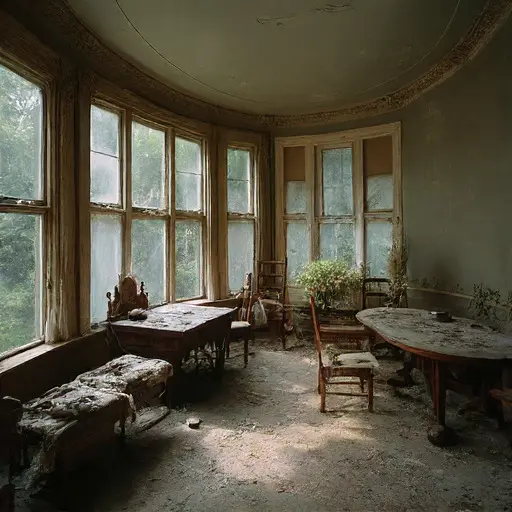
The first major disruption occurred in 1929 when Edwin Mercer died unexpectedly from illness. Responsibility for the property fell entirely upon Charlotte, who struggled to manage both the estate and declining household finances.
Agricultural rents from nearby landholdings decreased during the economic downturn of the early 1930s. Income that had once supported gardeners, maintenance workers, and household staff steadily disappeared. Records indicate that repair work was postponed repeatedly as expenses accumulated.
The family responded by closing portions of the house. Guest rooms remained locked for months at a time. Heating was restricted to a handful of occupied spaces during winter. Conservatory glass damaged during storms was patched rather than replaced.
By 1934, Charlotte’s eldest son had moved away seeking employment. Within several years, the remaining children had also left the area. Correspondence preserved inside the house revealed growing concern over unpaid taxes, insurance premiums, and maintenance costs associated with the aging curved structure.
The gardens remained beautiful, but increasingly because nature sustained them rather than careful planning. Roses climbed higher along veranda columns. Flower beds expanded beyond their original boundaries. The property slowly became quieter each year.
A HOUSE PRESERVED BY MEMORY
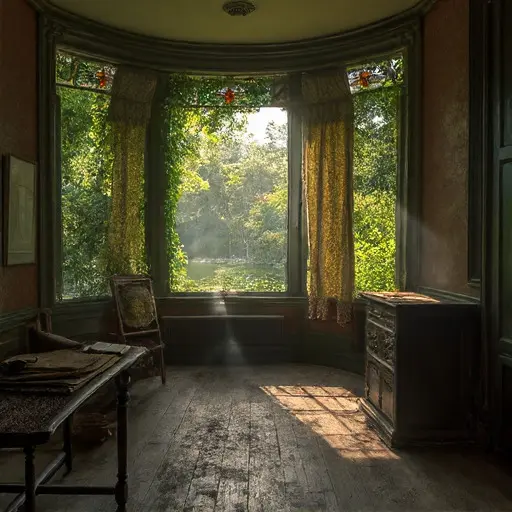
Charlotte Mercer left the house in 1945 after deteriorating health made independent living impossible. She moved to reside with relatives in another county, intending the departure to be temporary.
It never was.
Following her death two years later, ownership became divided among surviving heirs who could not agree on the future of the property. Some favored selling the land, while others hoped to preserve the house. No agreement was reached.
As legal matters lingered unresolved, taxes remained unpaid and maintenance ceased entirely. The structure suffered no dramatic catastrophe. Instead, it entered a slow and nearly invisible decline. Rooms remained furnished, windows remained intact, and the pond continued reflecting the curved façade exactly as it had for decades.
By the close of the 1940s, the Crescent Pond House was officially recorded as vacant. No restoration project followed. No heir returned to occupy it. The ownership dispute remained unresolved, and the residence slowly surrendered to time. Today the house still stands beside the crescent pond, abandoned yet remarkably preserved, its curved rooms empty while gardens and water quietly endure around it.