The Corner Manor Left Empty After Family Departure
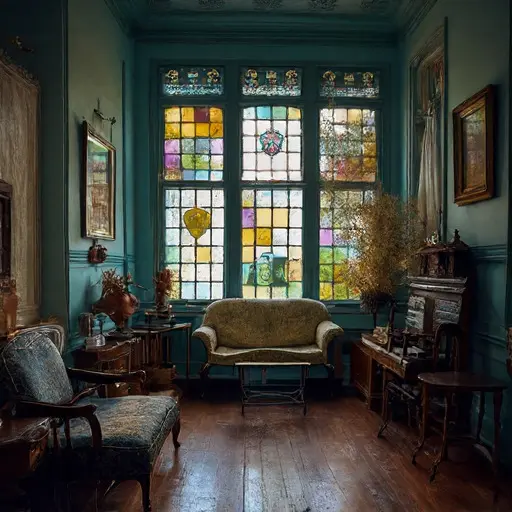
Built in 1908 on a prominent corner lot within a growing residential district, the manor was intended as a comfortable family residence rather than a grand estate. Its rounded bay tower overlooked tree-lined streets, while a broad veranda wrapped around the front elevation and connected the house to its carefully maintained garden. The home belonged to the Whitmore family, a household of six whose income came from a successful local hardware business.
For nearly two decades the property remained stable. Family records describe seasonal gatherings on the veranda, meals served in the dining room overlooking the garden, and children using the bay tower as a reading room. The house reflected the prosperity of a household that expected permanence.
The first signs of decline emerged during the economic difficulties of the late 1920s. Business revenues decreased steadily, forcing the family to reduce household expenses. Garden staff were dismissed. Exterior painting was postponed. Minor repairs that once would have been handled immediately were recorded in ledgers but left unfinished. The property remained occupied, yet maintenance had begun to lag behind the needs of the aging structure.
As financial pressure continued through the 1930s, rooms were gradually closed to reduce heating costs. The upper floor received less use, and portions of the wraparound veranda fell into disrepair. Family correspondence preserved from the period reveals concern over unpaid bills, mortgage obligations, and growing debt tied to the declining business.
The House Begins to Withdraw
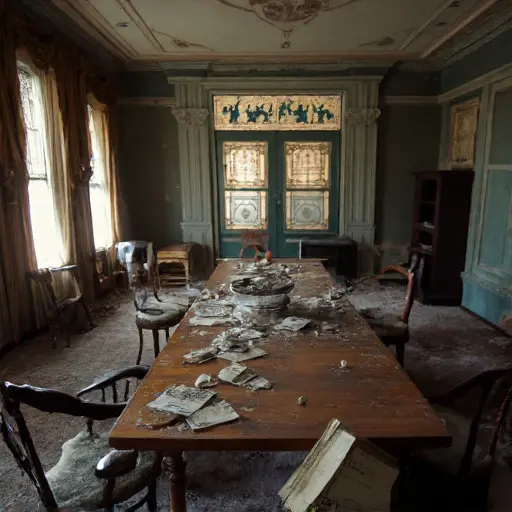
By the early 1940s, younger family members had relocated in search of work elsewhere. The remaining occupants concentrated their lives within a shrinking portion of the house. Entire sections of the upper floor stood unused. Furniture was covered to protect it from dust. The rounded tower room, once a favorite family space, was emptied entirely.
Maintenance records ceased altogether after 1944. Roof repairs were delayed despite repeated leaks. Water intrusion damaged plaster ceilings and stained interior walls. The once-orderly garden became overgrown as flowerbeds disappeared beneath tall grass and weeds. The broken cast-iron birdbath near the front steps became a visible symbol of the property’s decline.
When the family patriarch died in 1947, inheritance complications prevented a clear transfer of ownership. Surviving relatives lived in different regions and showed little interest in assuming responsibility for the increasingly costly property. Taxes went unpaid. Legal notices accumulated unopened inside the house.
Over the following years, remaining furnishings were left exactly where they stood. The house was not formally abandoned in a single moment. Instead, it was gradually vacated through absence, financial exhaustion, and administrative neglect.
A Landmark Forgotten
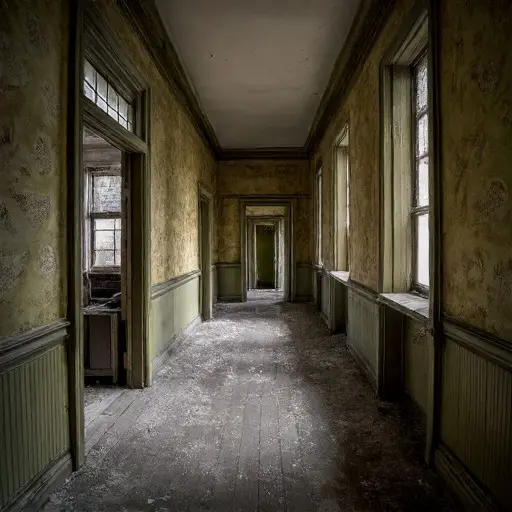
By the early 1950s, the manor stood completely vacant. Grass consumed former garden paths, vines climbed the veranda columns, and weather slowly wore away the vibrant royal-papaya siding and peacock-cyan trim. Neighbors remembered the family but could not identify any heir willing to reclaim the property.
The house remains abandoned today. No restoration project was undertaken, no ownership dispute was fully resolved, and no descendant returned to occupy the residence. The rounded tower still overlooks the quiet street, the broken birdbath remains near the front steps, and the once-proud family manor continues to deteriorate slowly, standing empty as time steadily erases the life that once filled its rooms.