The Cobalt Enamel House by the Quiet Marsh Channels
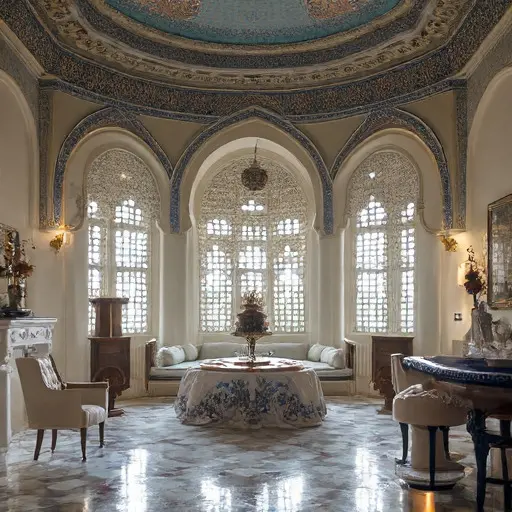
The house was constructed in the final decade of the 19th century by a merchant family involved in river trade along the marsh waterways. Built from glossy white enamel brick imported from coastal kilns and decorated with cobalt-blue ceramic tile inlays, the residence was designed to reflect both wealth and the cultural influences of Moorish Revival architecture. Its horseshoe arch windows and delicate lattice stonework were intended to echo distant Mediterranean precedents, adapted for a humid riverside climate.
The building’s softly undulating façade, which bends inward at its center, was originally praised as an experimental approach to airflow and light distribution. For several decades, the house functioned as both residence and seasonal trading post, receiving goods transported through the slow water channels that bordered the property.
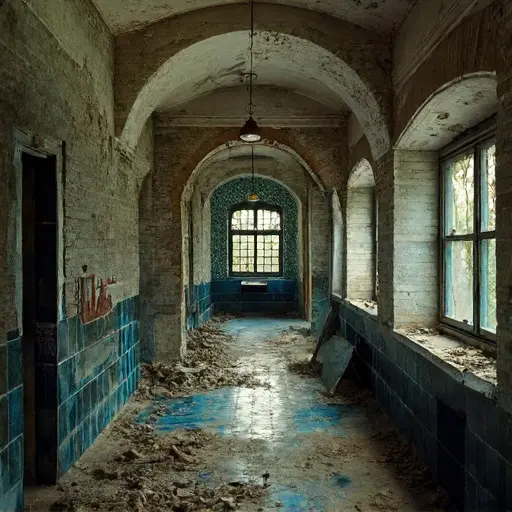
Decline began when river trade routes shifted and commercial activity along the marsh steadily diminished. Reduced income led to deferred maintenance of the mixed-material roof system, where teal copper sections oxidized unevenly and terracotta panels began to loosen at irregular edges. Persistent humidity from the nearby wetlands slowly affected the enamel brick glazing, dulling its once reflective surface. The inward-bending façade, initially considered an architectural innovation, began to complicate structural drainage, allowing moisture to accumulate in concealed joints. As business operations ceased, rooms were progressively closed off, and the family relocated inland. Without consistent upkeep, legal ownership disputes further delayed any intervention, leaving the property in prolonged neglect.
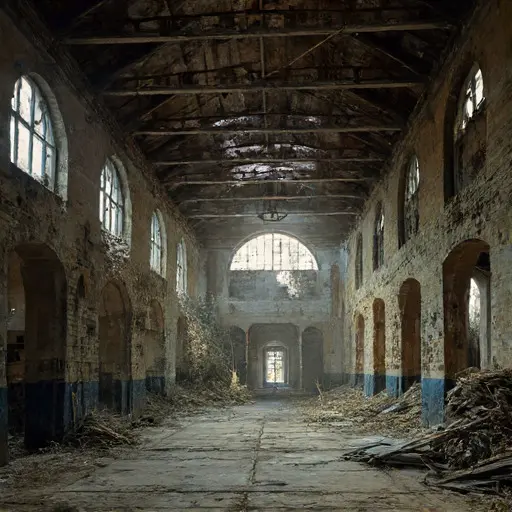
By the mid-20th century, the Moorish Revival riverside house had become fully abandoned. No restoration was undertaken due to persistent wetland exposure and the high cost of stabilizing the hybrid enamel-and-ceramic construction. The collapsed fence line continues to sink into marsh grass, while the faded birdhouse remains tilted on its post above encroaching reeds. Today the house stands quietly beside the slow water channels, its cobalt inlays dulled by moisture and time, steadily deteriorating with no confirmed plans for repair, reuse, or return.