The Chestnut Row House Left at the End of the Cul-De-Sac
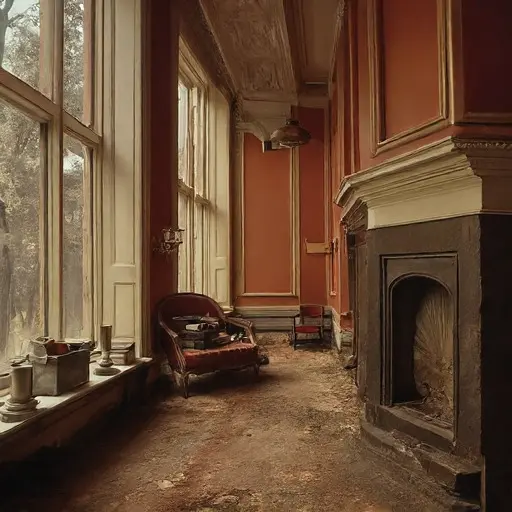
The Chestnut Row House stood at the end of a quiet cul-de-sac lined with mature chestnut trees, their canopies forming a loose arch that filtered sunlight into soft, shifting patterns across the street. Built in 1892 for the Harwood family, the residence was designed as a tall but narrow Victorian structure, emphasizing vertical order and architectural restraint rather than ornament or expansion. Its warm red brick exterior had mellowed over time into a deep terracotta tone, giving the building a softened, aged presence within its tree-lined setting.
The façade was carefully composed in three main vertical tiers, each marked by evenly spaced sash windows. Pale cream stone detailing framed the windows and corners, providing gentle contrast without visual harshness. Over decades, these materials aged in parallel: brickwork deepened in tone, while stone softened slightly in texture, and the overall composition remained visually calm and balanced despite its height.
Window frames were painted a faded ivory that had weathered into a chalky warmth, blending subtly into both brick and stone. The glass panes themselves had softened with age, slightly distorting reflections of sky, leaves, and passing light into layered impressions rather than sharp imagery. The effect gave the façade a quiet visual softness despite its strict structural rhythm.
A small entrance porch centered the base of the house, supported by slender stone columns that emphasized simplicity over ornamentation. A dark wooden door with a dulled brass knocker formed the threshold, leading into a narrow hallway that extended the vertical logic of the building. Above, a modest iron balcony projected from the second floor, providing a subtle interruption in the otherwise disciplined elevation.
Inside, the Harwood household maintained a steady domestic rhythm shaped by modest professional and civic obligations. Edward Harwood worked in local administrative services, while his wife Clara managed household organization and correspondence. The house functioned primarily as a stable family residence, with each room assigned clear purpose and maintained in careful order.
Early financial strain
By the late 1920s, broader economic shifts in municipal employment and local trade reduced household income stability. While the Harwood family was not in financial crisis, discretionary spending on maintenance and aesthetic upkeep gradually decreased. Exterior features remained structurally sound, but minor repairs were postponed, allowing subtle weathering patterns to accumulate across brick and stone surfaces.
Gradual decline within the cul-de-sac residence
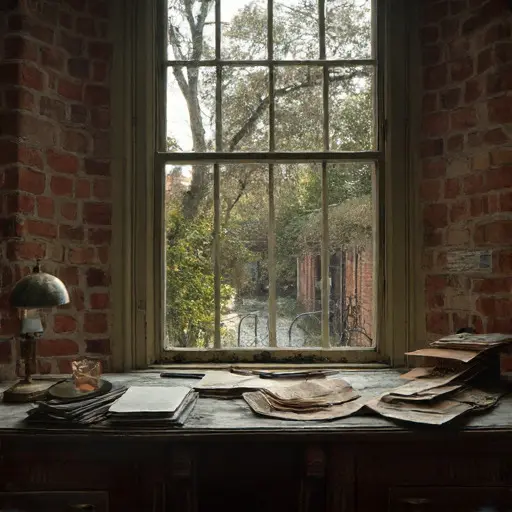
As financial strain increased, the house began to experience subtle shifts in its rhythm of use. Certain rooms were closed off seasonally to reduce heating and maintenance costs, while decorative upkeep was gradually minimized. The building itself remained structurally stable, but the cadence of daily life slowed as fewer resources were allocated to its full maintenance.
Over time, family presence diminished as younger members relocated for education and employment in larger towns. The house transitioned into intermittent occupancy, with long stretches of quiet between visits. By the early 1940s, it was used primarily for occasional seasonal stays and administrative clearing of remaining household matters.
Final abandonment phase
By 1947, the Chestnut Row House was no longer permanently inhabited. Utility services were gradually reduced and eventually discontinued after extended non-use. Despite this, the structure remained sound, its masonry and slate roof retaining stability under mild seasonal weather. The surrounding cul-de-sac remained orderly and unchanged, with chestnut trees continuing their slow cyclical growth.
The house left in quiet permanence
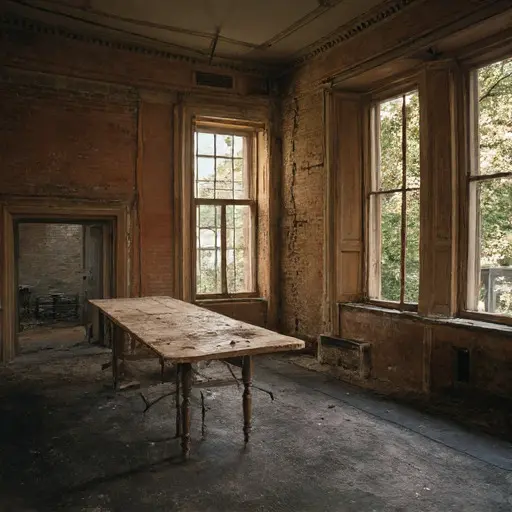
By the late 1940s, no formal ownership disputes or restoration efforts altered the Chestnut Row House. Legal responsibility remained inactive, and no party returned to inhabit the property. The house stands at the end of the cul-de-sac, preserved in structural calm beneath the chestnut canopy, slowly weathering in quiet continuity as the neighborhood remains unchanged around it.