The Catastrophic Bouchard Villa: The Vanished Sound of a Clockmaking Empire
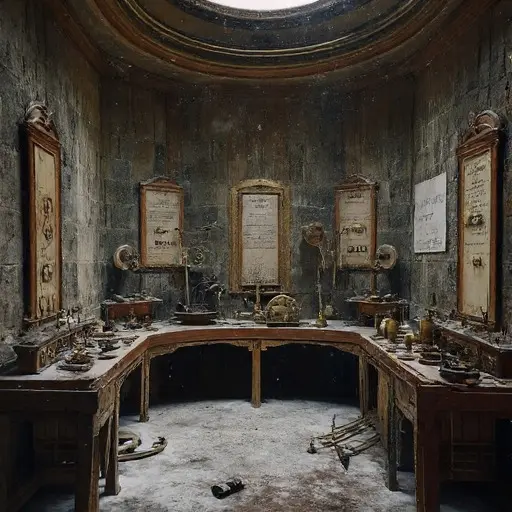
The Bouchard Villa was constructed in 1898 above a remote Jura mountain valley for Henri Bouchard (1864–1912), a master horologist contracted by European railway syndicates and private banking houses to design ultra-precise timekeeping instruments for transit coordination and financial clearing schedules. His wealth derived from bespoke regulator clocks, railway synchronization systems, and precision escapement patents used across Swiss and French industrial networks.
The villa functioned as both residence and calibration laboratory, where Bouchard refined temperature-compensated pendulums and tested long-duration timing stability for institutional clients.
His household included his wife Adèle and his son Lucien, both assisting in cataloging mechanical parts, regulating oil mixtures, and maintaining correspondence with railway timing bureaus in Bern and Lyon.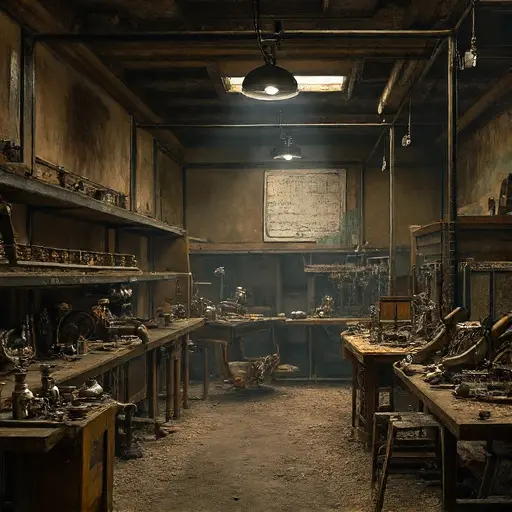
The turning point came in 1909 when the European railway consortium implemented centralized electrical time signaling systems, replacing mechanical synchronization networks with telegraph-based clock correction signals. Bouchard’s mechanical regulators were abruptly rendered obsolete across all contracted routes.
At the same time, a critical audit revealed cumulative timing deviations in several of his installed systems, causing documented scheduling errors across freight and passenger lines. The resulting liability claims triggered mass contract termination and legal disputes over performance guarantees.
Creditors seized his unfinished regulator inventory, while installation crews removed surviving clock systems from railway stations across multiple regions.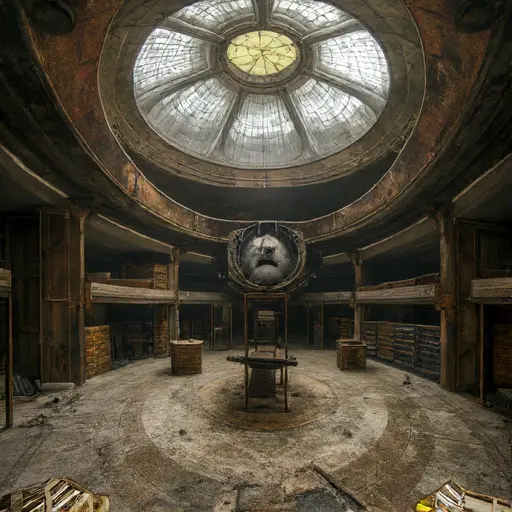
By 1912, Henri Bouchard was formally declared insolvent following the collapse of all railway timing contracts and the dissolution of his horological workshop. He died shortly afterward in isolation, with no surviving institutional affiliation or successor appointed to preserve his mechanical systems.
Inside the final calibration desk, inspectors found a master timing ledger recording progressive synchronization failures across multiple railway lines, its final entry left incomplete.
The Bouchard Villa remains abandoned in the alpine valley, its pendulums silent, its mechanisms dismantled, and its rooms slowly fading into stillness beneath the weight of obsolete precision.