The Casa Valverde Andalusian Courtyard House Left in Still Air
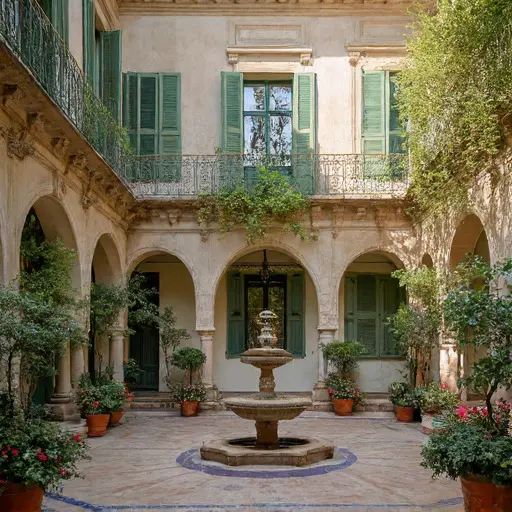
The Casa Valverde was built in the early twentieth century at the edge of a forested valley in southern Spain by a modest landowning family whose livelihood depended on olive groves, small-scale farming, and seasonal trade routes connecting nearby villages. Designed in the traditional Andalusian courtyard style, the house was organized entirely around a single open-air patio that regulated light, air, and daily movement through the residence. The household consisted of multiple generations living closely together, supported by a small number of domestic workers responsible for cleaning, cooking, and garden maintenance.
Life centered on the patio, where meals, conversations, and administrative tasks were carried out in the shade of arcaded walkways. The architecture reflected practical adaptation to climate and family structure rather than grandeur, and for many years the property remained stable, sustained by consistent agricultural yields and careful household management.
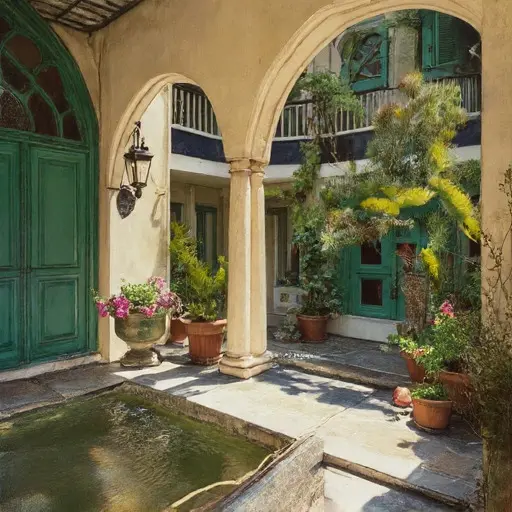
By the late 1920s, the Casa Valverde began to experience financial strain as agricultural income declined and maintenance costs rose beyond the household’s limited means. Repairs to shutters, roofing, and plasterwork were postponed, allowing gradual weathering to affect both structure and appearance. Portions of the upper floor were used less frequently to conserve resources, and the household began concentrating daily life into fewer rooms surrounding the courtyard. Gardening, once a defining element of the patio, became irregular as labor was reduced and attention shifted toward essential maintenance. Financial correspondence accumulated without timely response, while emotional attachment to the home persisted even as practical ability to sustain it weakened. Over time, the residence transitioned from a fully active family home into a partially maintained structure marked by quiet, slow neglect.
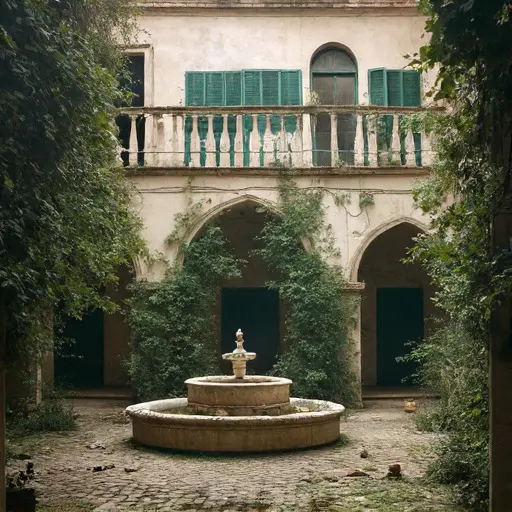
By the early 1940s, following prolonged economic hardship and unresolved inheritance disputes, the Casa Valverde was fully abandoned. No restoration efforts were undertaken, and the property remained in legal uncertainty that prevented any sale or redevelopment. Vegetation from the surrounding forest gradually encroached upon the courtyard, while seasonal weather and moisture accelerated structural decay. Household furnishings and personal items were left in place, preserving the final years of decline in quiet detail. No residents returned, and the house continues to stand empty at the forest edge, slowly being reclaimed by time and nature while its courtyard remains a silent record of former domestic life.