The Calder Row House and the Ledger of Split Floors
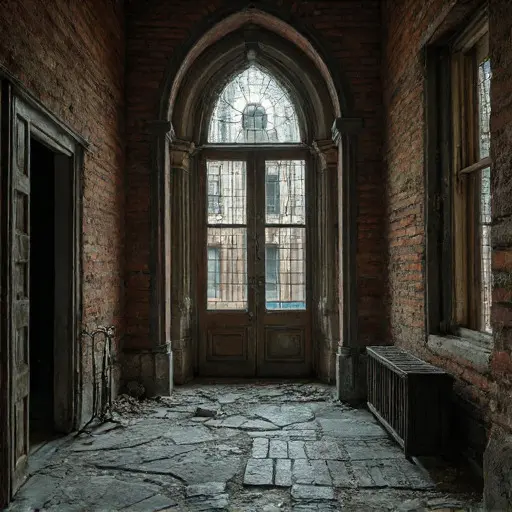
The Calder Row House was built in 1897 by Thomas Ellery Calder, born 1869 in Manchester, a municipal property inspector assigned to oversee structural compliance in dense urban housing districts along the riverfront industrial corridor. His duties included evaluating building stability, fire escape accessibility, and long-term settlement patterns in rapidly constructed brick townhouses subject to damp river air and soil subsidence.
He purchased the property in 1899 as both residence and observational post, intending to document “progressive structural drift in layered residential masonry under continuous occupancy load.
”
By 1905, Calder’s inspection notes began documenting “floor-to-floor desynchronization,” where identical measurements taken on separate levels of the house yielded conflicting structural alignments despite unchanged conditions in surrounding buildings.
Correspondence from municipal offices initially dismissed his findings as instrument calibration errors, though repeated surveys confirmed persistent misalignment localized exclusively to the Calder residence.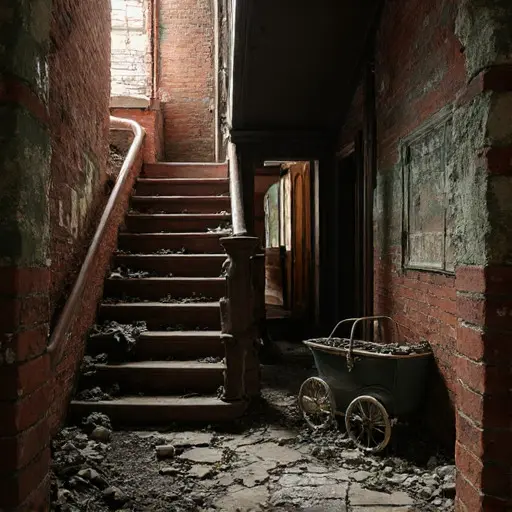
By 1910, household occupancy records cease listing individual rooms and instead refer to “zones of usable continuity,” suggesting that internal navigation had become inconsistent across floors.
The Calder Row House was vacated in 1912 following structural condemnation for “non-unified vertical settlement behavior.” No demolition order was carried out. The building remains standing on the riverfront street, its three drifting sections still slightly out of alignment, as if the house continues to live in separated pieces that never fully rejoin.