The Buttercream House at the End of Lilac Lane
Along a peaceful neighborhood lane shaded by mature birch and chestnut trees stands a quiet Folk Victorian family house that has long since fallen silent. Constructed from pale buttercream painted wood siding, warm red brick chimneys, light grey sandstone foundations, and a weathered forest-green metal roof finished with simple copper flashing, the abandoned three-story residence still carries the welcoming proportions of a comfortable family home. Though years have passed without occupants, the house remains remarkably intact, preserving the warmth and modest elegance that once defined everyday life within its walls.
The architecture reflects the charm of late Victorian domestic design without unnecessary grandeur. A broad covered front porch stretches across the façade, decorated with delicate spindle trim and simple handcrafted details.
Tall sash windows bring rhythm to the exterior, while decorative gable brackets and a modest square corner bay add quiet character. Toward the rear, a glass garden room opens gracefully onto the backyard, suggesting afternoons once spent overlooking blooming flowers and family gatherings.
Time has weathered the home with remarkable gentleness. The buttercream paint has faded beneath countless seasons, porch boards bow softly beneath years of exposure, shutters hang slightly out of alignment, and climbing ivy slowly embraces one corner of the house. Moss gathers along the roof edges, while the brick chimneys remain standing proudly above the peaceful neighborhood.
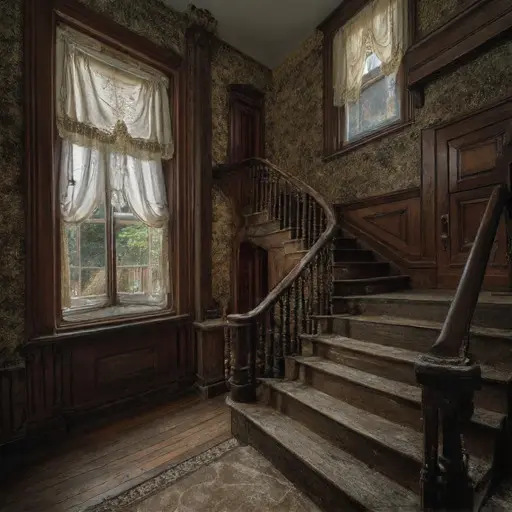
Crossing the front porch reveals an interior filled with quiet familiarity. The entrance hall welcomes visitors with worn hardwood floors, a graceful wooden staircase, and simple handcrafted trim that reflects the home’s modest craftsmanship. Dust softens every surface, yet the rooms retain an unmistakable feeling of warmth, as though the family who once lived here had only recently stepped away.
The parlor remains furnished with aging wooden chairs, a brick fireplace, and shelves lined with forgotten books. Nearby, the dining room still looks toward the garden through tall windows, while the adjoining kitchen preserves faded cabinetry and well-used countertops that speak to decades of ordinary family routines rather than grand occasions.
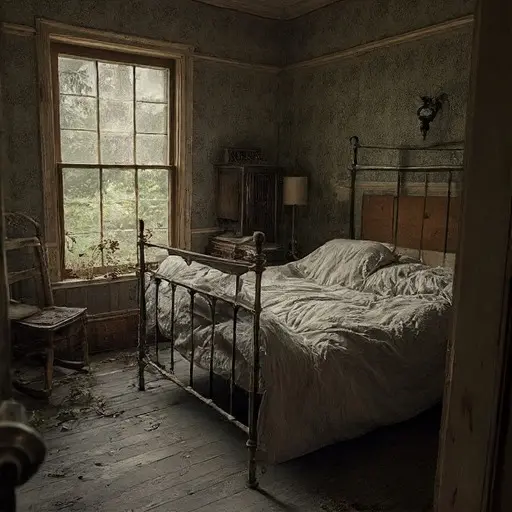
Upstairs, the bedrooms remain peaceful and untouched. Simple furnishings, handcrafted wardrobes, and worn quilts suggest generations of everyday life lived within these quiet rooms. The windows frame views of birch trees, lilac bushes, and the untended yard, while gentle daylight filters across faded wallpaper and polished wooden floors that have aged with quiet dignity.
The third floor offers smaller attic rooms tucked beneath the gently sloping roof. Once used for storage, hobbies, or guest accommodations, these spaces now hold forgotten trunks, old family furniture, and scattered keepsakes left behind when the house was finally abandoned.
Outside, the property retains the comforting atmosphere of a neighborhood home rather than an isolated estate. An untended lawn stretches around the house, dotted with wildflowers and bordered by blooming lilac bushes whose fragrance still fills the spring air. Cracked flagstone paths wander through the garden, leading toward quiet corners reclaimed by grasses and climbing vines.
A faded pale-green wooden porch bench still rests beside the front door, offering a silent place to sit beneath the sheltering roof. Nearby, an old white garden arbor stands partially hidden beneath climbing roses, marking the entrance to a side garden that has slowly blended back into nature over the passing decades.
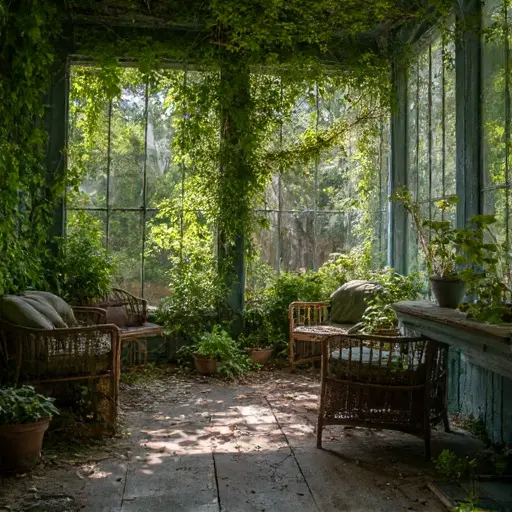
Today, the Buttercream House at the End of Lilac Lane remains a gentle reminder that not every abandoned home was once a grand mansion. Its modest proportions, welcoming porch, fading paint, and peaceful gardens tell the story of an ordinary family whose daily life quietly became history. Rather than appearing dramatic or haunted, the residence feels comforting even in abandonment, preserved by time and surrounded by the familiar beauty of a neighborhood that slowly continued without it.
Photorealistic documentary-style full-frame photography, eye-level wide three-quarter perspective from the front walkway, natural lens rendering, true-to-life color grading, subtle film grain, moderate depth of field.