The Brookstone House and Its Abandonment
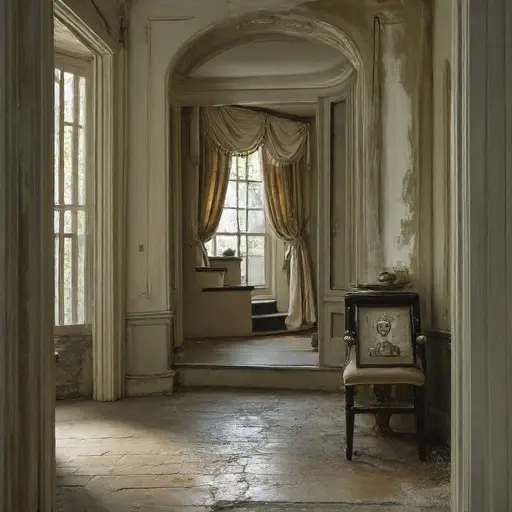
Brookstone House was completed in 1898 for Henry Julian Carrington, born 1852 in Sheffield, a regional estate solicitor and property trustee who managed land transfers, inheritance settlements, and municipal housing agreements across expanding suburban districts. His income came from legal oversight of property development contracts and long-term stewardship of family estates transitioning into residential subdivisions. After years of working between court offices and hillside land surveys, he built the house as a permanent residence for his family, intended to remain close to the clients and properties he administered.
He lived there with his wife Louise Carrington and their son Arthur, who later assisted with correspondence and document archiving.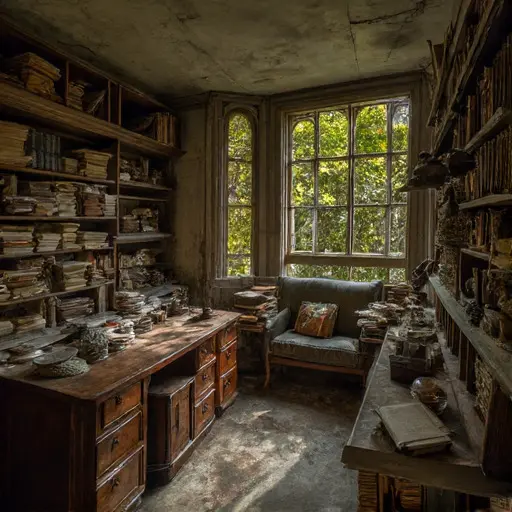
The decline began in 1909 when suburban development disputes and delayed municipal payments caused a chain reaction of unpaid legal fees across several estate portfolios Carrington had overseen. Though individually modest, the accumulated delays strained his liquidity as he had personally guaranteed several transitional property contracts. Correspondence shifted from routine deed filings to urgent settlement notices and creditor inquiries. By 1912, portions of managed estates were reassigned to other trustees, and Arthur’s involvement in legal work quietly ceased as pressure mounted.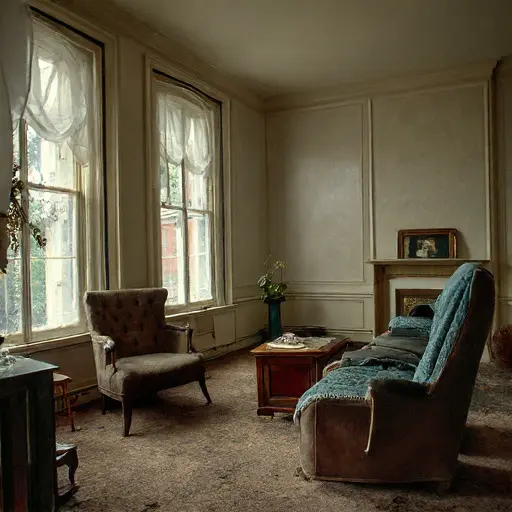
By 1913, Henry Carrington had relocated to a rented office in the town center to manage unresolved property disputes, leaving Brookstone House under minimal care. Louise’s correspondence ceased shortly afterward, and Arthur appears only once more in a legal filing concerning unsettled estate accounts. The Brookstone House remained fully furnished but unmanaged, its legal records locked in the study and its greenhouse left to grow unchecked. No sale was completed, no return was recorded, and the property stood quietly on the hillside, abandoned without resolution.