The Broken House Near the Cedar Steps Still Hides Mateo’s Final Pattern
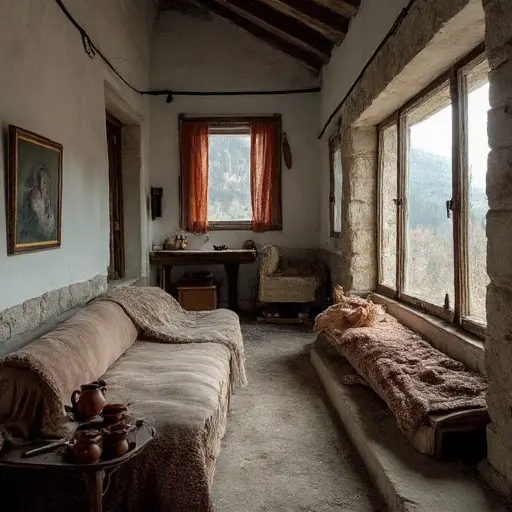
The shutters were nailed from inside.
Not out of fear.
Out of habit.
Mateo had done that every winter.
Wind descended hard through the cedar pass, and the old house carried drafts through its walls long before snow arrived.
The house stood above a narrow stairway cut into the mountainside and belonged to Mateo Idrizi.
He lived there alone for nearly twenty years after his father died and worked in a profession almost nobody under fifty recognized.
Mateo was a shepherd cloak pattern grader.
He did not weave the cloaks.
He prepared and graded traditional cutting patterns used by regional wool makers—adjusting proportions, preserving inherited measurements, and repairing templates passed between families for generations.
His work lived in paper more than cloth.
Inside the upper room, curled pattern sheets still rest beneath smooth stones. Tailor chalk stains remain across the floorboards. Wooden rulers and shears lie beside folded wool samples that never left the worktable.
The Cedar Template Gallery
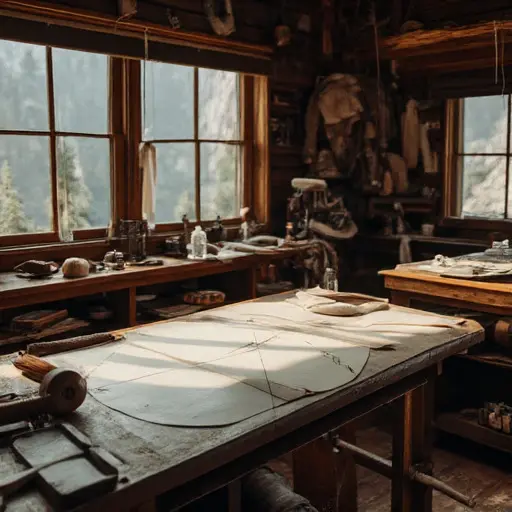
Mateo called the far shelving wall the Cedar Template Gallery.
It held the oldest pieces.
Family-sized measurements, ceremonial cloak cuts, and repairs carrying handwritten notes from makers long gone.
One unfinished grading pattern still hangs there.
Its edges pinned.
Its measurements incomplete.
Mateo never married.
He spoke little and spent much of his time walking between nearby settlements where elderly wool makers still requested his help.
For decades, the work survived quietly.
Then fast fashion reached the mountains.
Factory garments, synthetic outerwear, and shrinking pastoral communities steadily erased demand for traditional shepherd clothing. Younger generations stopped commissioning handmade cloaks. Workshops closed or simplified their work beyond recognition.
Mateo refused to modernize the patterns.
He said measurements carried memory.
Then the roads changed.
A major highway bypass redirected traffic and trade away from surrounding settlements, accelerating abandonment and cutting many older craft networks apart. Mateo’s remaining clients disappeared one by one.
He worked less.
Walked more.
One spring brought repeated slope blasting connected to quarry expansion near the valley roads. Dust settled over nearby villages for months and disturbed already unstable terrain.
Mateo suffered fatal injuries while returning home along a mountain stair route weakened by rockfall.
The funeral passed quietly.
His cousins secured the house but removed very little beyond legal papers and family photographs.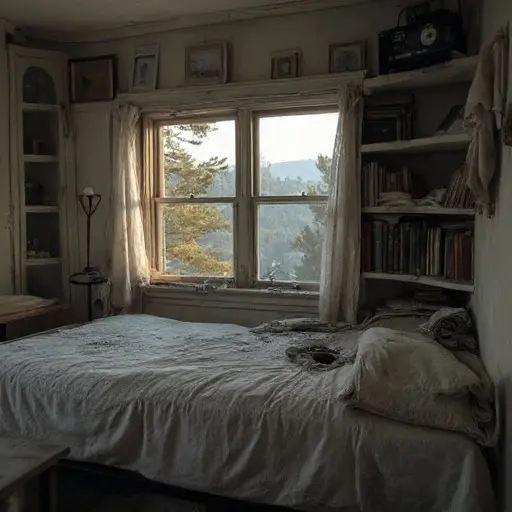
Years later, snow still reaches the shutters first.
The rulers remain beside the wool.
The chalk stains still mark the floor.
And inside the Cedar Template Gallery, Mateo’s unfinished cloak pattern continues to hang where the measurements suddenly stopped.