The Brindle Isle House Left Vacant After Family Dispersal
Brindle Isle House occupied a small wooded island at the center of a secluded forest lake, connected to the mainland by a narrow wooden causeway. Constructed in 1902 by the Harrow family, the house began as a modest cream-white Victorian residence before expanding steadily through a series of additions built over four decades. Each generation contributed new rooms according to its needs, resulting in an irregular arrangement of bays, verandas, enclosed porches, and projecting wings that reflected family history more than architectural convention.
The original house served as a year-round residence for Edwin Harrow, who managed timber transport contracts around the lake district. His wife Margaret maintained extensive household records, while their children and later grandchildren gradually expanded the property. New wings appeared as families grew, painted in whatever colors were fashionable or available at the time. Teal-green siding, terracotta panels, pale lemon gables, and muted raspberry shingles emerged alongside the original cream clapboard, giving the house its distinctive appearance.
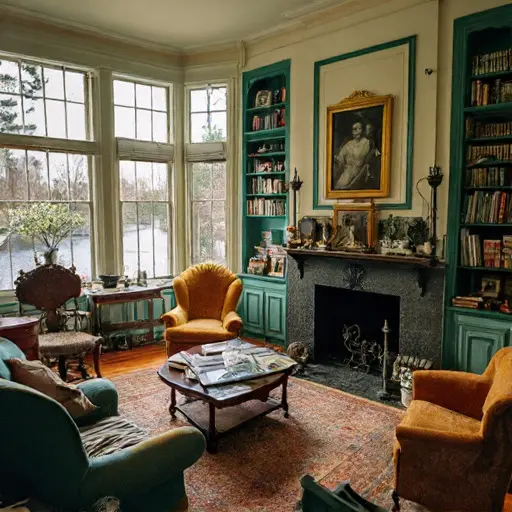
Inside, the atmosphere reflected continual occupation. Rooms were adapted rather than replaced, and furniture from multiple generations remained in use. Family correspondence, financial records, and gardening journals accumulated in cabinets and desks throughout the residence. The house became less an estate than a living archive of family continuity.
Early financial strain
By the late 1920s, the economic foundation supporting the Harrow family began to weaken. Timber transport shifted toward larger commercial routes, reducing demand for local contractors. Income declined gradually rather than suddenly, making the financial strain less dramatic but more difficult to reverse. Maintenance of the expanding house became increasingly expensive, particularly on the isolated island where materials and labor had to cross the causeway.
Growing neglect within the house
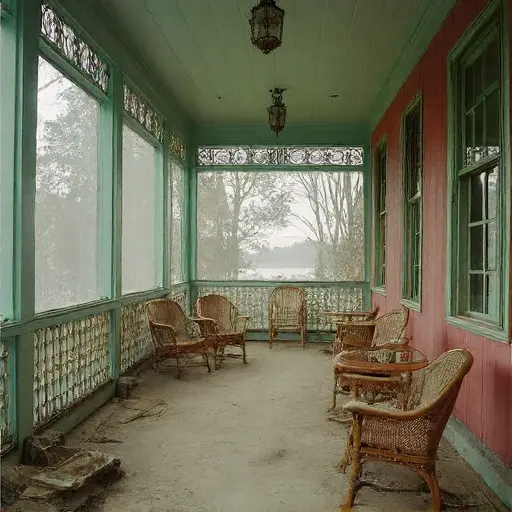
As costs rose, unused portions of the house were closed off. Heating was restricted to a handful of central rooms during winter months, leaving later additions unoccupied for extended periods. Repairs to roofing and veranda framing were postponed repeatedly. Household ledgers from the late 1930s show increasing expenditures for emergency repairs alongside declining income from timber contracts and land agreements.
At the same time, younger family members increasingly left the island. Employment opportunities in nearby towns and cities proved more attractive than maintaining an aging lakeside property. By 1940, several wings of the house stood largely unused except during occasional visits.
Final abandonment phase
The final decline occurred gradually during the 1940s. Following the death of Edwin Harrow and the illness of Margaret Harrow, responsibility for the house became fragmented among distant relatives. No single heir wished to assume the costs of maintaining such a complex structure. Utility services became intermittent, and sections of the roof began leaking during seasonal storms. Water intrusion damaged upper rooms and weakened decorative woodwork throughout the residence.
The house left empty
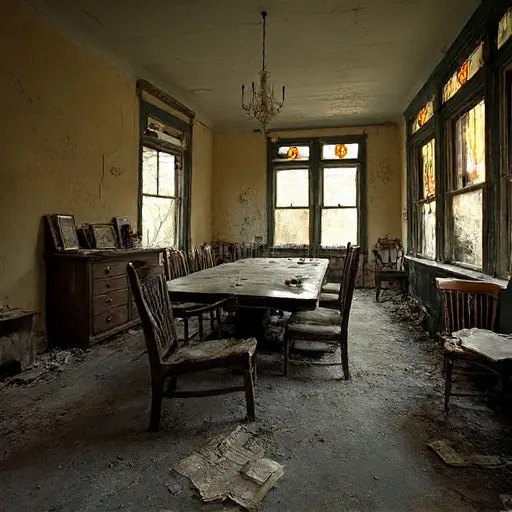
By 1949, Brindle Isle House was effectively abandoned. Ownership became legally fragmented among multiple heirs, none of whom returned to occupy or restore the property. Tax notices continued to arrive but went unanswered, and the causeway deteriorated without maintenance. No restoration effort was ever undertaken, and no family member reclaimed the residence. Today the house remains standing on its secluded island, slowly deteriorating among birch and cedar trees, its colorful rooms fading into silence while the surrounding lake and forest continue their quiet reclamation.