The Briarhollow Mansion Left Vacant After Woodland Isolation
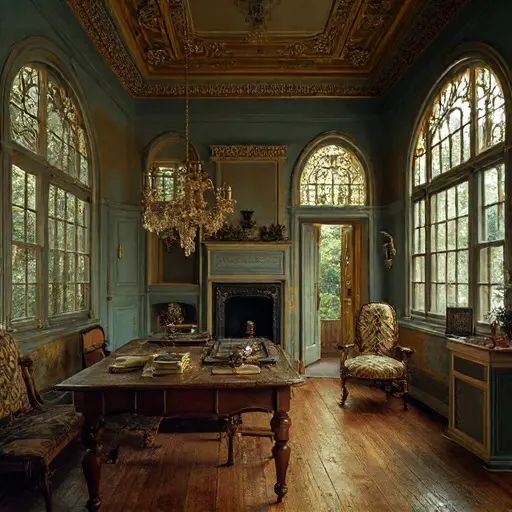
The Briarhollow Mansion was built in 1906 by the Fletcher family, who settled in a woodland clearing several miles from the nearest market town. Though influenced by Victorian architectural trends, the house was intentionally modest, designed as a comfortable family residence rather than a display of wealth. Its sapphire-marigold exterior and orchid-teal trim reflected the colors of the surrounding forest through changing seasons.
Positioned at the center of the glade, the mansion served as both home and administrative center for a small timber and maple syrup enterprise operated across nearby woodland acreage.
For nearly two decades, the household remained stable. Thomas Fletcher managed timber contracts and seasonal syrup production, while his wife Eleanor maintained records, correspondence, and household finances. The clearing around the mansion was carefully maintained, with paths connecting work areas to the home. Inside, rooms reflected orderly routines built around seasonal labor and predictable local commerce.
Early financial strain
By the late 1920s, demand for small-scale timber operations declined as larger industrial suppliers gained control of regional markets. Transportation costs increased, and maintaining profitable woodland production became increasingly difficult. Income gradually diminished, forcing the Fletcher family to postpone repairs and reduce expenditures. Portions of the mansion that were once used daily became infrequently occupied, and maintenance was concentrated only on essential rooms.
Gradual decline in the household
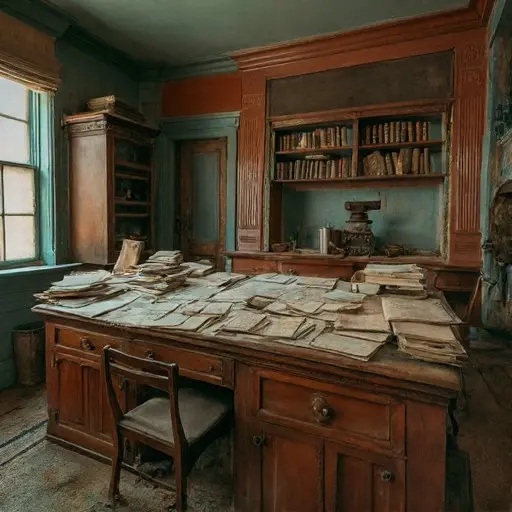
As financial pressure increased, woodland operations contracted further. Timber harvesting became sporadic, and syrup production was reduced to levels insufficient to sustain the property. Correspondence from creditors accumulated across desks and side tables. Utility bills went unpaid for increasing periods, and sections of the house were closed entirely to reduce heating costs. The upper floor became largely unused, with furniture covered and doors locked against winter drafts.
The Fletcher children left the woodland clearing during the 1930s, relocating to larger towns where industrial employment offered greater stability. Their departures accelerated the mansion’s decline. What had once been a lively family residence slowly became occupied by only two aging residents attempting to preserve a property larger than their means allowed.
Final abandonment phase
By the early 1940s, the final stage of decline had begun. After Thomas Fletcher’s death, Eleanor remained alone in the house for several years. Property taxes fell into arrears, repairs ceased entirely, and utility services were disconnected after repeated nonpayment. Woodland growth advanced toward the clearing as paths became overgrown and maintenance stopped. Interior moisture increased as roof leaks went unaddressed, damaging plaster and woodwork throughout the structure.
Final deterioration
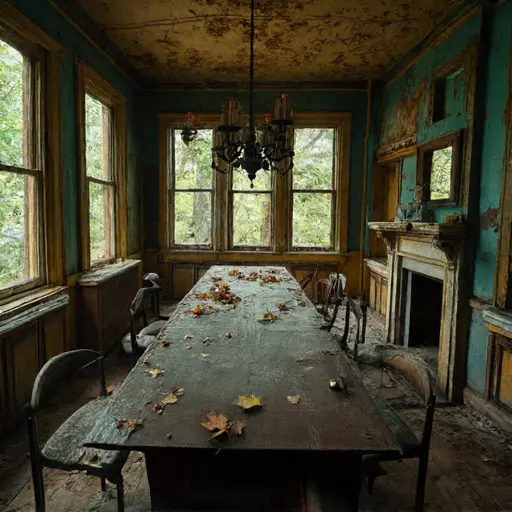
Eleanor Fletcher left the property in 1947 to live with distant relatives, and no subsequent owner took responsibility for the estate. Legal disputes concerning inheritance remained unresolved, while mounting debts discouraged prospective buyers. No restoration was ever undertaken, and no family member returned to reclaim the mansion. Today the Briarhollow Mansion remains abandoned within its woodland clearing, standing quietly among maples and ferns as deterioration continues year after year. The house persists as an empty relic of a family enterprise that gradually faded into isolation, debt, and eventual abandonment, with its future still unresolved and its rooms slowly yielding to time.