The Brackenshore Estate and the Quiet Dissolution of a Canyon Survey Dynasty
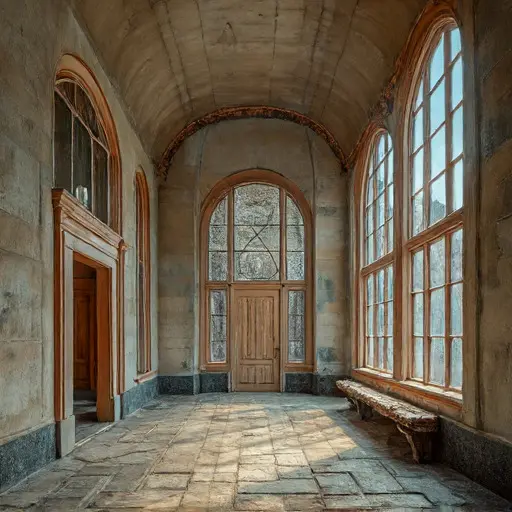
The Brackenshore Estate was completed in 1892 for Edward Callow Brackenshore, born 1838 in northern England, a civil survey engineer and canyon infrastructure consultant whose work focused on mapping unstable river-cut landscapes for railway expansion and settlement planning. His wealth was derived from large-scale topographical contracts that translated canyon geology into usable land divisions for transport companies and mining interests. The mansion was built at the edge of the river canyon to serve as both residence and field coordination center for geological surveys.
He lived there with his wife Marianne Havelock Brackenshore and their son Arthur, who later assisted in compiling layered topographic records and structural mapping logs tied to canyon stabilization projects.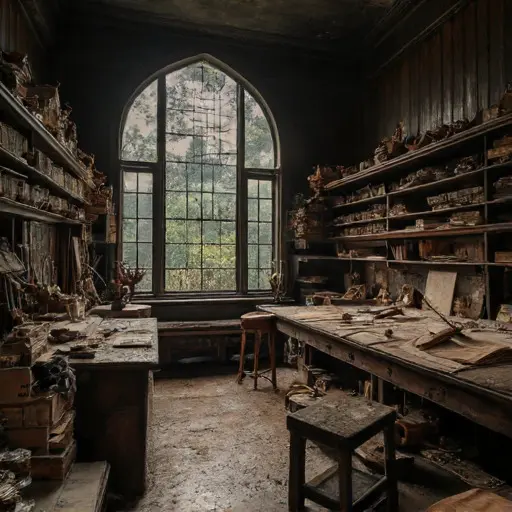
The decline began in 1907 after inconsistencies emerged between canyon survey maps and railway construction benchmarks, as erosion patterns and seasonal flooding altered rock formations faster than existing measurement frameworks could reconcile. Engineering partners began disputing the validity of Brackenshore’s layered mapping system when identical canyon segments produced conflicting spatial readings across successive surveys. Edward had personally guaranteed portions of the infrastructure contracts, assuming geological stability would remain within modeled tolerances, but progressive micro-shifts in canyon walls introduced recursive discrepancies that accumulated across datasets. By 1913, railway authorities suspended reliance on Brackenshore’s mapping archives, and correspondence shifted from routine geological updates to formal disputes over measurement authority and structural validity. Arthur’s field involvement ceased following a final audit that identified unresolved contradictions across multiple overlapping topographical systems.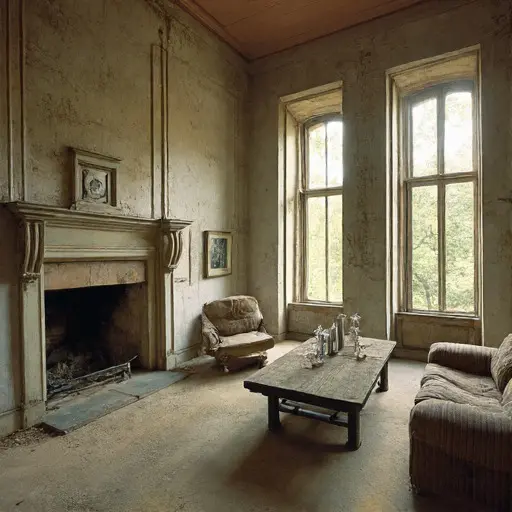
By 1914, Edward Brackenshore had withdrawn from active surveying and relocated to a regional engineering bureau, leaving the estate under minimal caretaker oversight. Marianne’s correspondence ceased shortly thereafter, and Arthur’s name appears only once more in a final institutional file concerning contested canyon mapping standards. The Brackenshore Estate remained fully furnished but unmanaged, its geological archives locked within the study and its canyon-facing rooms left untouched. No transfer of ownership was finalized, no family returned, and the property was recorded as vacant, standing intact above the river canyon while quietly continuing to align itself with the shifting geometry of the landscape below.