The Brackenridge Terraced Hillside House Left Unoccupied After Slope Migration
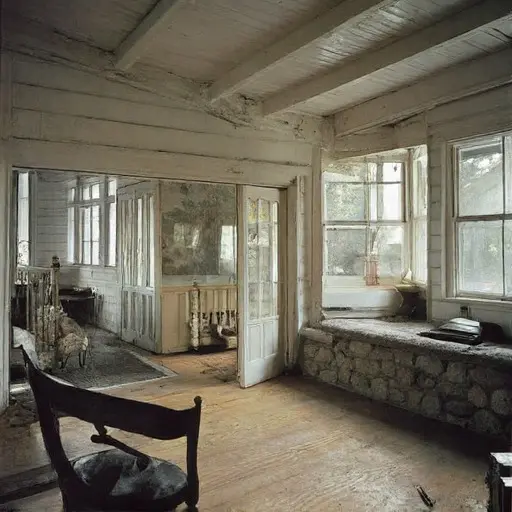
The Brackenridge House was constructed in 1882 on a steep rural hillside above a narrow valley settlement The location was chosen for its elevated position and proximity to grazing land, though the terrain required significant adaptation during construction Unlike standard Victorian domestic builds, the structure was designed as a split-level residence, embedded directly into the slope with retaining walls supporting each staggered level of habitation
The main two-story structure occupied the upper portion of the hillside, while a smaller side extension stepped downward in controlled increments following the natural grade of the land The lower floor was partially excavated into the slope, creating interior spaces that were half-submerged within earth and stone This resulted in a layered architectural system where rooms were vertically offset rather than aligned, producing a continuous but segmented interior flow
The Dawson family lived in the house for several decades, maintaining a modest rural existence shaped by agricultural work and seasonal hillside maintenance The terraced walkways and retaining walls required constant attention, as rain and soil movement gradually tested the stability of the structure Despite this, the house remained structurally sound, with only minor settling evident in the uneven roofline and slightly tilted façade orientation relative to the hillside
Gradual Instability of the Terraced Foundation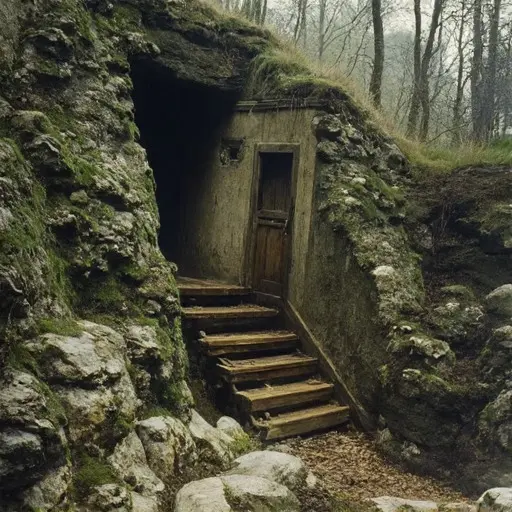
By the early 1930s, the Brackenridge House began to experience increased structural stress due to long-term hillside movement Seasonal rain patterns caused gradual soil shifting, placing pressure on retaining walls and lower foundation segments Maintenance efforts continued, but increasing difficulty in accessing lower terraces led to delays in repairs
The Dawson family gradually reduced occupancy of the lower levels, concentrating activity in the upper two-story structure where conditions remained more stable The split-level kitchen and storage areas embedded in the slope saw reduced use, and some sections were closed off entirely to avoid instability concerns Financial records from the period indicate rising maintenance costs associated with stone reinforcement and drainage improvements along the hillside
Despite these challenges, no catastrophic structural failure occurred The house remained intact, supported by a combination of brick foundation systems and stone retaining walls, though visible signs of long-term settlement became more pronounced along the terrace transitions and exterior stairways
Final Abandonment Along the Slope
<img src=”https://beyondvisit.
com/wp-content/imagecontent/uploads/abandoned victorian house 61220580.webp” alt=”” />
By 1946 the Brackenridge House had been fully vacated following the relocation of the remaining Dawson descendants to lower-elevation housing in nearby towns The hillside instability and increasing maintenance demands made continued occupation impractical, and no subsequent family return was recorded
In the following years the structure remained standing, held in place by its embedded foundation system despite continued slow soil movement Moss accumulated along retaining walls, and wooden terrace elements weathered under uniform overcast conditions without maintenance or repair intervention No collapse occurred, and no structural reconstruction was attempted
By 1950 the Brackenridge Hillside House remained empty, suspended across its terraced slope in quiet abandonment The building persisted as a layered Victorian structure adapted to unstable terrain, now fully unoccupied yet still intact, its split-level geometry preserved against the slow pressure of the hillside