The Brackenridge Plateau House Left Vacant After Heathland Decline
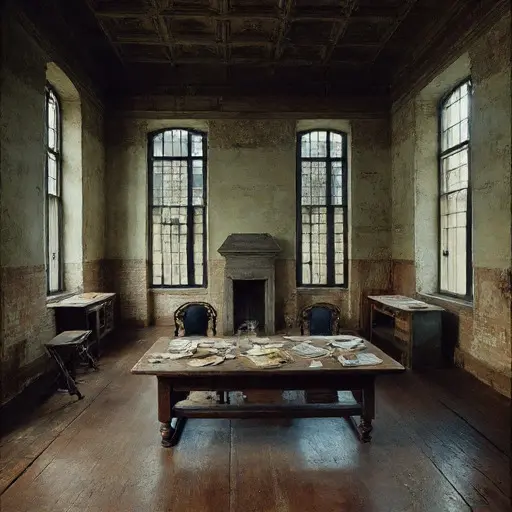
The Brackenridge Plateau House was constructed in 1894 as a remote inland residence for the Harrowfield family, who managed small-scale pastoral activity and seasonal grazing across the surrounding heathland plateau. Unlike more decorative Victorian estates of the period, the house was designed with restraint and permanence in mind, prioritizing structural resilience against constant wind exposure and fluctuating moisture conditions typical of the open upland terrain.
Its architectural composition reflected this pragmatic intent.
Darkened red brick formed the primary structure, interlaced with horizontal bands of pale sandstone that visually anchored the building to the plateau’s stratified geology. Over time, these materials softened into muted oxblood, burnt umber, and dusted clay, while sandstone elements developed a cool, chalky gray-beige patina that blended with the overcast sky and surrounding vegetation.
The house’s central entrance was recessed beneath a shallow stone pediment, framed by paired pilasters with simplified Victorian floral capitals that weathered into abstract relief forms. Above the doorway, a narrow transom window filtered soft plateau light into the interior, its cast-iron grille forming a restrained geometric pattern that remained legible despite decades of exposure.
Early financial strain
By the late 1920s, the Harrowfield pastoral operations began to decline due to reduced demand for upland grazing land and increased consolidation of agricultural production in more accessible regions. Transporting goods from the plateau became less economically viable, and revenue from livestock gradually diminished. Maintenance of the house and surrounding land infrastructure was reduced in response to these financial pressures.
Stone pathways leading to the house were repaired less frequently, allowing heath vegetation to slowly encroach upon their edges. While the structure itself remained sound, decorative maintenance was deprioritized, and subtle weathering of brick and sandstone became more pronounced under continuous wind exposure.
Gradual decline in the household
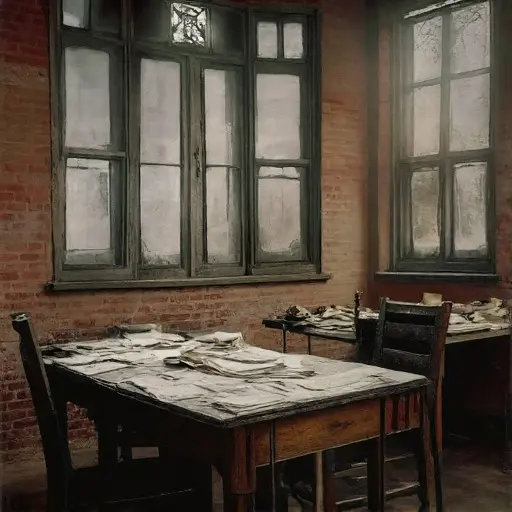
As agricultural profitability continued to decline through the 1930s, the Harrowfield family reduced their presence on the plateau. Portions of the house were left unused during colder seasons, and interior maintenance became increasingly minimal. The slate roof, already compact in design, began to show subtle shifts in its overlapping tiles, with graphite and moss-green tones blending unevenly under persistent weather exposure.
The surrounding heathland slowly reasserted itself around the structure. Low shrubs and fine grasses pressed gently against the flagstone path, softening its edges without fully obscuring its form. The house remained visually dominant within the landscape, but its functional role diminished steadily as external economic pressures intensified.
Final abandonment phase
By the early 1940s, the Brackenridge Plateau House was no longer actively inhabited. Formal operations ceased, and no successors assumed responsibility for continued agricultural management. Without maintenance, the chimneys darkened further with soot accumulation, and minor structural weathering became more visible across exposed brick surfaces.
Final deterioration
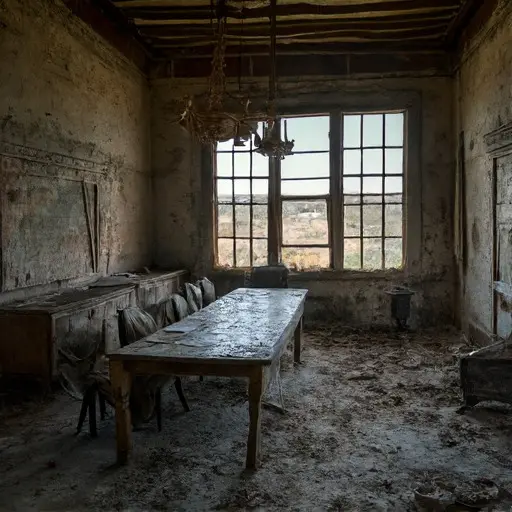
By the mid-1940s, no formal ownership or active stewardship of the Brackenridge Plateau House remained. Legal and agricultural records were left unresolved, and no heirs returned to reestablish residence on the plateau. The structure persists in quiet isolation within the heathland, slowly weathering under wind, moisture, and time. No restoration or reoccupation followed. The house remains empty today, standing as a grounded architectural presence within the open landscape, gradually merging with the rhythm of the plateau environment.