The Bluewater Tower House Left Empty After Family Decline
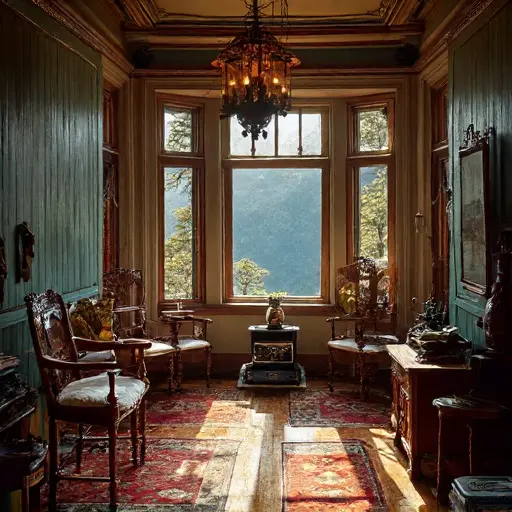
The Bluewater Tower House was built in 1895 on a rocky forest shelf overlooking a quiet mountain lake. Constructed by the Fairchild family, the residence served as both a permanent home and the center of a modest timber-management enterprise operating in the surrounding woodland. The house stood apart from neighboring properties because of its distinctive three-story tower, steep slate roofs, and gradual series of additions that expanded the structure over several decades.
Its asymmetrical design reflected the family’s growth. The original residence occupied only a portion of the present structure, but new rooms, enclosed verandas, and projecting bay windows were added as the household expanded. By 1910, three generations of the Fairchild family lived under one roof. The tower contained bedrooms and storage, while the lower interconnected wings held parlors, dining rooms, offices, and family quarters.
The mountain lake provided access to nearby settlements and supported small-scale logging operations. Financial records preserved from the period indicate stable income during the first two decades of the twentieth century. Household ledgers documented repairs to slate roofing, repainting of timber siding, and regular maintenance of the broad lakeside veranda.
Economic pressures emerge
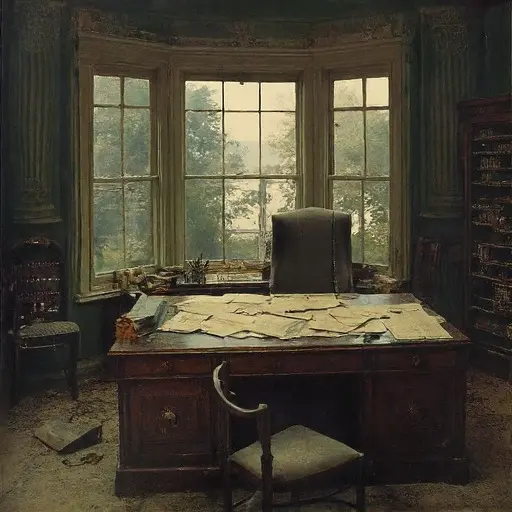
The decline began gradually during the 1920s. Larger timber companies increasingly controlled regional forestry operations, reducing opportunities for smaller family enterprises. Transportation improvements elsewhere also diminished the importance of isolated lake properties. Revenue from the Fairchild business steadily declined.
As income decreased, repairs were postponed. Exterior paint weathered unevenly across the dusty blue and muted cream siding. Maintenance of the extensive roof system became more difficult, allowing minor leaks to develop around several dormers. The family responded by closing seldom-used rooms and concentrating activity within a smaller section of the house.
The situation worsened after the onset of the Great Depression. Two Fairchild sons relocated to cities seeking employment. Their departure left large portions of the residence vacant. Property taxes became increasingly difficult to pay. Surviving records indicate repeated delays in settling utility accounts and insurance obligations.
By the late 1930s, several upper-floor rooms in the tower were no longer heated during winter. Furniture was covered and stored. Curtains were removed from little-used bedrooms. Household correspondence shifted from discussions of expansion and maintenance to concerns about debt and ownership.
Final abandonment
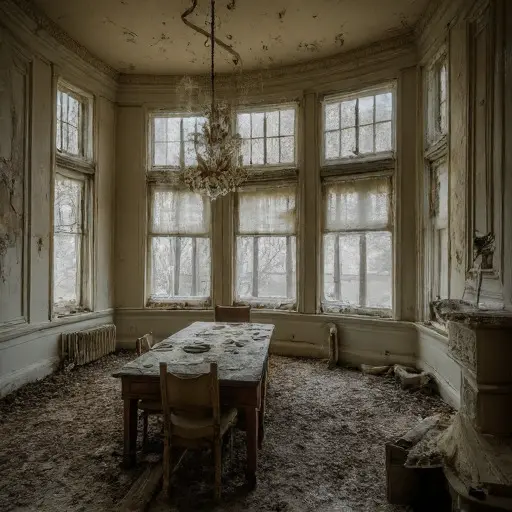
Following the death of the family patriarch in 1943, ownership became increasingly complicated. Surviving heirs lived elsewhere and showed little interest in returning to the isolated property. Legal disputes delayed any sale, while unpaid taxes accumulated. Essential maintenance stopped entirely.
Within a few years, the house stood empty. Moisture from the lake and surrounding forest accelerated deterioration. Roof leaks spread gradually through upper floors. Sections of the veranda became unsafe. The once-active rooms overlooking the mountain lake fell silent except for the sounds of wind, rain, and distant water against the rocky shoreline.
No restoration efforts followed. No family member returned to reclaim permanent residence. The ownership questions remained unresolved, and the property slowly disappeared from local records. Today the Bluewater Tower House still stands above the lake, vacant and deteriorating, its tower rising over the forest while the abandoned residence continues its long decline into silence.