The Blackwood Gothic Revival Manor at the Forest’s Edge
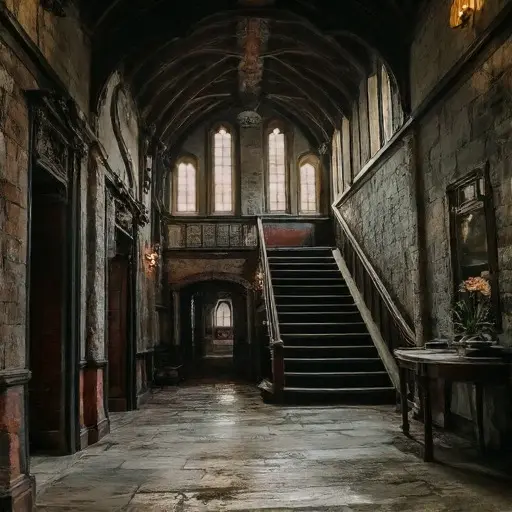
The Blackwood Manor was completed in 1884 for the Harrington estate family, established at the boundary where cultivated land gave way to dense forest. Designed in the Victorian Gothic Revival tradition, the manor emphasized vertical drama and material contrast, combining obsidian-black stonework with pale limestone bands and crimson brick accents. The household included three generations living under one roof, along with estate staff responsible for forestry management and garden maintenance.
Life within the manor followed structured routines: formal gatherings in the great hall, administrative planning in the study overlooking the side garden, and quiet evenings spent in upper-floor rooms overlooking the surrounding woodland. The estate functioned both as residence and administrative center for the surrounding lands.
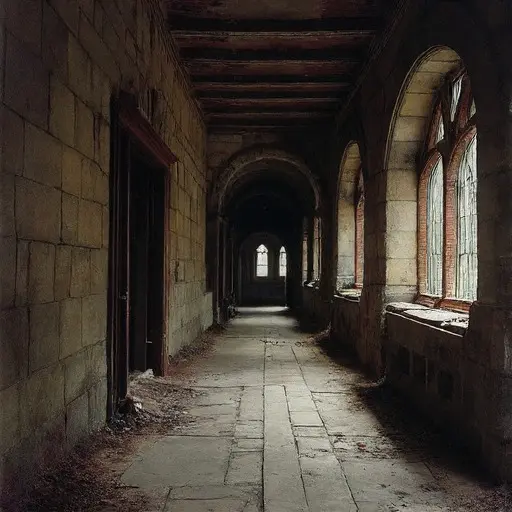
By the early 1930s, the Harrington estate began to decline as forestry revenue diminished and the cost of maintaining the expansive Gothic structure increased beyond sustainable levels. Essential repairs to the roof and drainage systems were delayed, allowing moisture to penetrate upper floors and accelerate interior decay. The side garden, once carefully maintained, gradually returned to a more natural state as white hydrangeas, foxgloves, and wild roses spread beyond their intended borders. The wrought-iron gazebo became increasingly overgrown with ivy, and the marble statue in the garden began to show visible cracking from repeated exposure to frost and moisture. Household activity contracted steadily into fewer rooms, signaling a transition from active residence to partial abandonment.
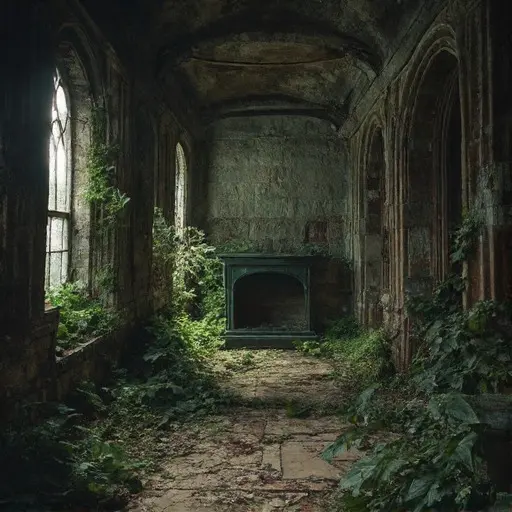
By the mid-1940s, following financial foreclosure and the final departure of its remaining occupants, the Blackwood Gothic Revival Manor was permanently abandoned. No restoration efforts were undertaken, and ownership disputes prevented redevelopment of the estate for decades. The side garden fully merged with the surrounding forest, with paths dissolving beneath moss and leaf litter, and the gazebo reduced to a skeletal iron frame wrapped in ivy. The cracked marble statue remained standing but increasingly obscured by vegetation, while the stone well filled with rainwater and debris. Inside, all objects were left in their final positions, untouched since abandonment. The manor still stands at the forest edge today, its silhouette slowly being reclaimed by time, weather, and encroaching woodland.