The Blackwell House on the Slope and Its Abandonment
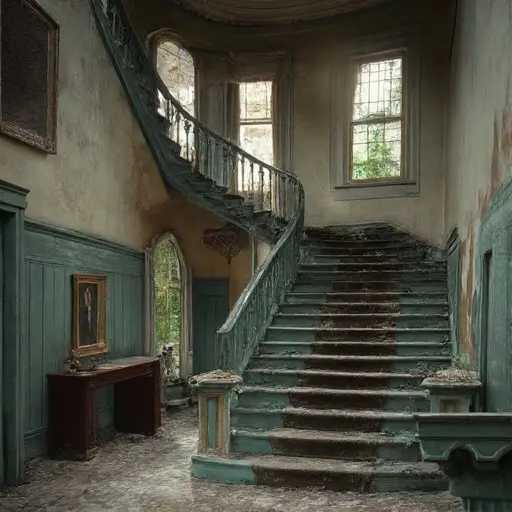
Blackwell House was completed in 1895 for Edward James Blackwell, born 1846 in Albany, a civil land registrar responsible for documenting hillside property boundaries and managing regional land transfers in developing rural districts. His wealth was stable and administrative, built through government surveying contracts and legal validation of property claims across uneven terrain.
He built the house directly into the slope above a narrow valley road, intending it as a permanent residence for his family and a base for ongoing land record work.
He lived there with his wife Margaret Anne Blackwell and their son Henry, who assisted in organizing surveys, deeds, and correspondence stored throughout the house.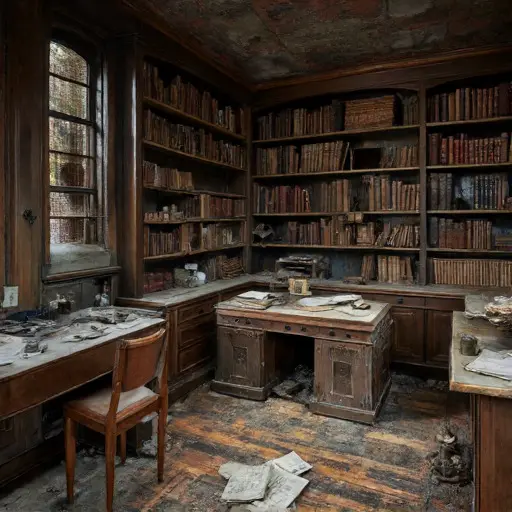
The decline began in 1908 when several contested land boundary rulings on sloped terrain led to widespread disputes between county offices and private landholders. Blackwell’s earlier surveys were repeatedly re-evaluated under new measurement standards that accounted for elevation discrepancies more strictly than before. As cases accumulated, his workload expanded while his authority over prior assessments weakened.
By 1911, he had begun spending most of his time in administrative offices in the valley town below, returning to the house only intermittently. Financial stability remained intact, but professional reputation became increasingly entangled in unresolved disputes. Margaret maintained the household during these years, though correspondence suggests growing isolation as the house itself became harder to fully “occupy” in a consistent way.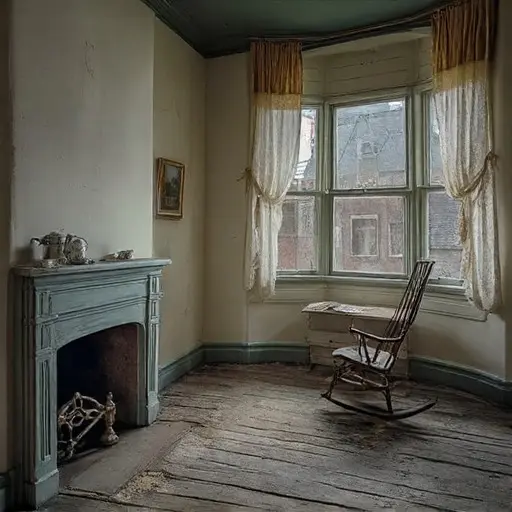
By 1913, Edward Blackwell had effectively withdrawn from field surveying entirely, focusing on resolving accumulated disputes from office records. Henry’s name appears only once more in a final property reconciliation document before disappearing from official filings. The Blackwell House remained fully furnished but unoccupied, its records still arranged in the study and its rooms quietly holding their layered misalignment.
The house still stands on the hillside, intact but subtly separated from itself, as if each floor never fully agreed to remain in the same place.