The Blackwater Canal Mansion Left in Industrial Silence
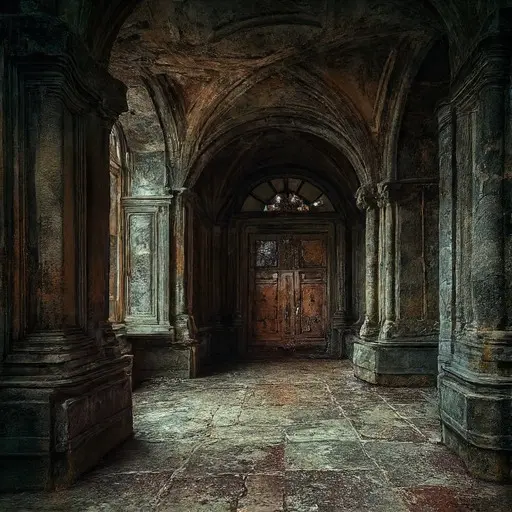
The Blackwater Mansion was constructed in the late nineteenth century during a period of rapid industrial expansion along the canal districts, commissioned by a shipping magnate who required both a residence and a symbolic architectural statement overlooking the waterway. Built in the Richardsonian Romanesque style, the structure emphasized mass, permanence, and defensive solidity, with deeply recessed arches, heavy stone masonry, and a squat central tower that overlooked industrial traffic along the canal. The household included the magnate’s family and a small administrative staff managing trade correspondence and logistics tied to canal shipping routes.
For several decades, the mansion functioned as both private residence and operational hub, its proximity to the waterway central to its economic purpose.
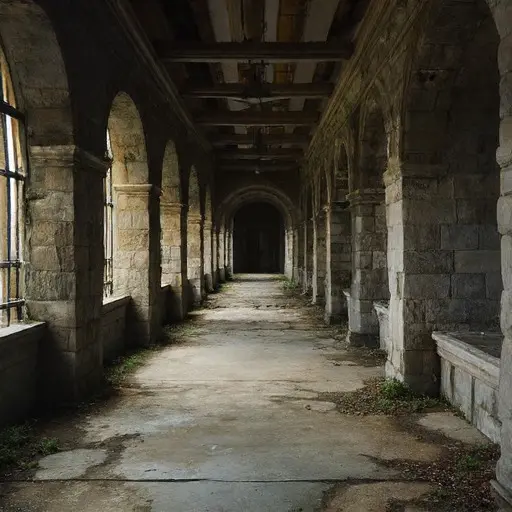
By the early twentieth century, the Blackwater household began to experience financial and operational decline as shipping activity along the canal decreased and freight routes shifted to rail and road transport. The mansion’s dependence on canal-based commerce made its upkeep increasingly unsustainable, particularly given the extensive stonework, water-exposed foundations, and heavy iron fittings requiring constant maintenance. Staff were gradually reduced, and portions of the service wings were closed off entirely. The once-active administrative rooms fell silent as trade correspondence ceased. Moisture intrusion from the canal side accelerated surface staining and mortar erosion, while the surrounding industrial district began to lose activity, leaving the mansion increasingly isolated within a fading economic landscape.
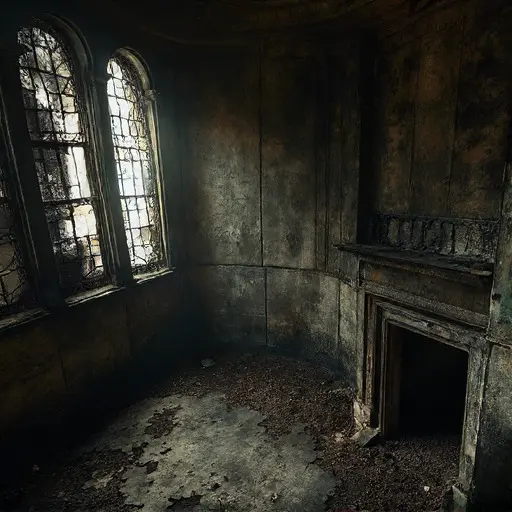
By the mid-twentieth century, the Blackwater Richardsonian Romanesque mansion had been fully vacated following the collapse of canal-based industry and the dispersal of its original owners. No restoration efforts were undertaken, as the building’s scale, material weight, and location within a declining industrial district rendered redevelopment impractical. Ownership records became fragmented, and the structure remained without active stewardship. The mansion continued to stand along the canal edge, slowly weathering under persistent moisture, seasonal flooding, and industrial abandonment. Interior spaces were left intact, preserving the final arrangement of its operational past. The building endures in quiet abandonment, neither restored nor demolished, serving as a heavy stone remnant of a vanished industrial era.