The Black Briar Carpenter Gothic House
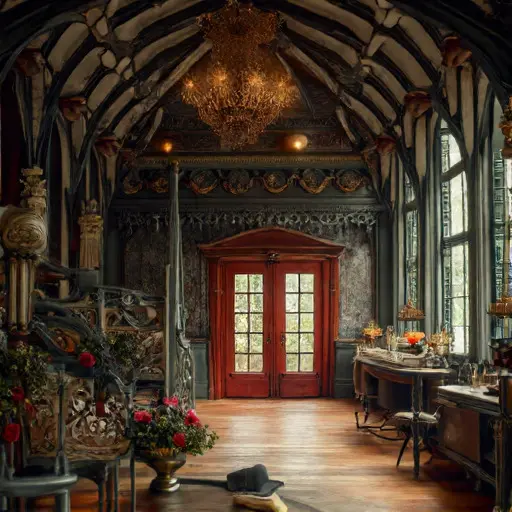
Black Briar House was completed in 1893 for the Whitmore family, whose appreciation for craftsmanship shaped every detail of the residence. Rather than pursuing grandeur through size alone, the family invested in extraordinary woodworking, elegant Gothic proportions, and gardens that evolved naturally with each passing season. The pointed windows, carved bargeboards, and slender stair turrets reflected the romantic ideals popular during the late Victorian era, while the surrounding landscape expressed a more intimate vision of domestic life.
Roses climbed every fence, herbs filled carefully edged beds beside the kitchen, and fruiting vines stretched across handmade pergolas where family meals often continued well into warm summer evenings.
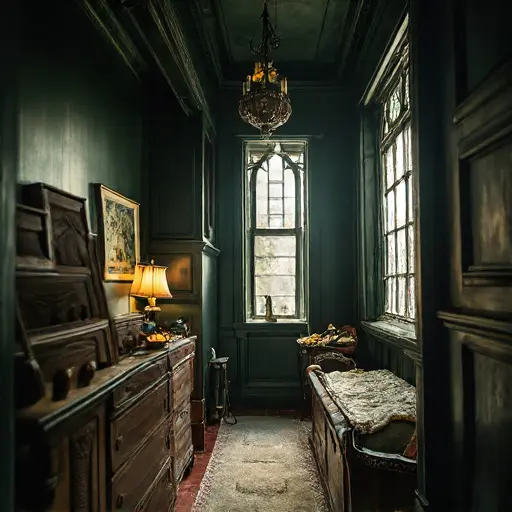
Economic hardship arrived gradually rather than suddenly. As family members moved away in search of work, fewer rooms remained occupied and maintenance became increasingly difficult. Roof repairs were postponed, allowing moisture to weather the patterned cedar shingles and slowly weaken ornamental woodwork. Outside, the carefully balanced cottage garden began reclaiming itself. White climbing roses overtook the iron fencing, blackberry canes spread into forgotten herb beds, and the pergola sagged beneath thick grapevines that no longer received seasonal pruning. The marble sculpture beside the dry octagonal fountain became wrapped in ivy until only portions of the dancing figures remained visible beneath the foliage. Even so, the property never appeared neglected in spirit; it simply reflected the quiet passage of years.
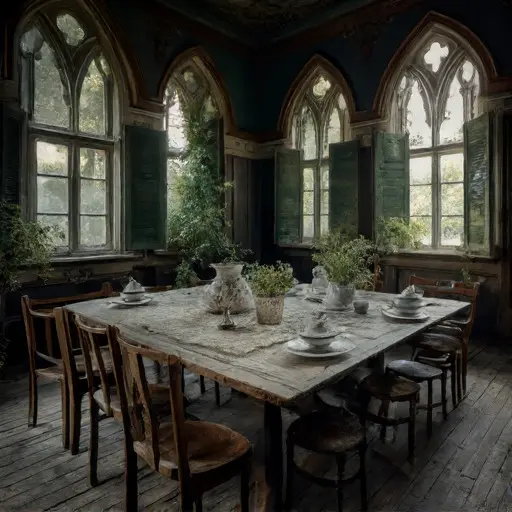
The final chapter of Black Briar House unfolded without drama. Following the death of its last resident in the late 1940s, the property remained in the family’s ownership but was never occupied again. Furnishings, photographs, books, gardening tools, and personal belongings were left where they had always belonged. The wrought-iron gate gradually settled permanently ajar, the old oak continued supporting its weathered swing, and each spring the roses, lupines, peonies, and delphiniums returned without invitation. Today the Carpenter Gothic house still stands beneath quiet gray skies, its remarkable craftsmanship softened by weather, its gardens shaped by nature, and its atmosphere preserving the enduring memory of a family home lovingly lived in before it was slowly surrendered to time.