The Belcour Second Empire Mansion Left in Formal Stillness
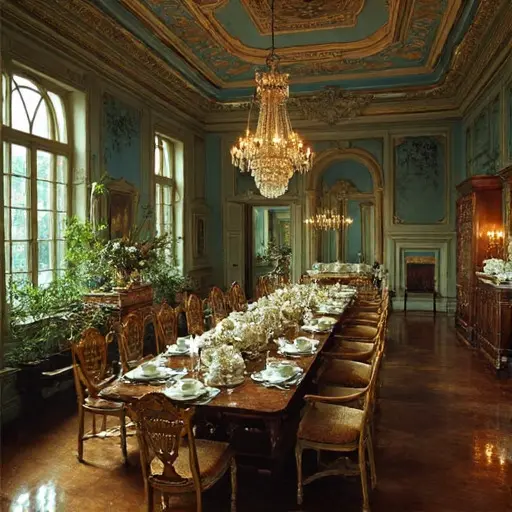
The Belcour Mansion was constructed in the late nineteenth century as a statement residence for a financially powerful family engaged in international trade and banking. Designed in the Second Empire style, the estate emphasized symmetry, grandeur, and controlled ornamentation, with a mansard roof and central pavilion intended to convey stability and permanence. The household included multiple generations of the Belcour family, supported by a large domestic staff responsible for maintaining both the mansion and its highly structured formal gardens.
Daily life was governed by strict schedules of meals, correspondence, and social obligations, with the dining salon serving as the central space for both hospitality and estate administration. For several decades, the mansion functioned as a highly efficient private institution where wealth, order, and ritual were tightly interwoven.
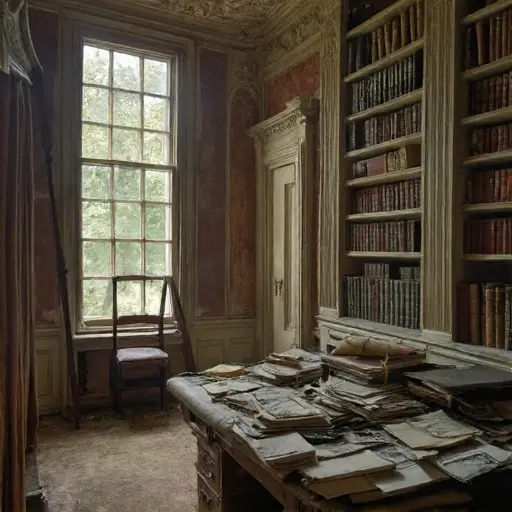
By the late 1920s, the Belcour estate began to experience financial pressure as global markets fluctuated and investment returns declined. Maintaining the mansion’s elaborate Second Empire detailing, including its ironwork balconies, patterned slate roof, and extensive formal gardens, became increasingly expensive. The household reduced staff and closed off secondary wings to conserve heating and maintenance costs. Administrative correspondence accumulated without consistent review, and estate management slowed into irregular cycles of oversight. In the gardens, geometric planting schemes remained intact but were less frequently maintained, allowing subtle overgrowth to soften the precision of the original design. Moisture from the surrounding environment began to affect interior finishes, dulling the crisp contrast between alabaster stone, ultramarine roof tiles, and emerald ironwork.
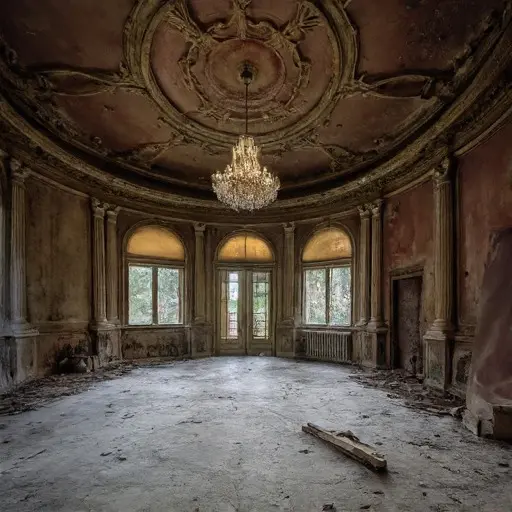
By the early 1940s, following prolonged financial collapse and unresolved inheritance disputes, the Belcour Mansion was fully abandoned. No restoration or redevelopment efforts were undertaken, and legal complications prevented any unified ownership resolution. The estate remained structurally intact but gradually deteriorated under seasonal weathering and encroaching vegetation. Interior spaces were left in their final state of use, preserving furnishings, records, and ceremonial arrangements beneath layers of dust and time. The mansion endures as an uninhabited relic of formal wealth and architectural discipline, slowly dissolving into quiet decay without return or restoration.