The Beech Circle Estate
A wide low-angle three-quarter view from the entrance of a circular gravel drive reveals an abandoned Victorian Second Empire country estate standing with composed dignity at the center of a mature landscape. The three-and-a-half-story structure rises beneath a graceful mansard roof wrapped in patterned slate, punctuated by tall arched dormers framed in carved stone surrounds. A projecting central pavilion is crowned with an elegant iron crest, while two slightly recessed wings extend outward to form a broad U-shaped plan. The exterior is built from pale honey limestone with soft cream brick accents, sage-green shutters, matte black wrought-iron balconies, and warm terracotta chimney pots rising in measured rhythm above the roofline. Gentle overcast light softens the entire composition, allowing every detail to read clearly without harsh contrast.
The estate’s grounds feel deeply inhabited by memory rather than absence. A broad gravel carriage circle wraps around a mature copper beech tree whose expansive branches stretch outward like a natural canopy over the front approach. Beneath it, a faded wooden wheelbarrow rests beside dense hydrangea clusters in blue, lilac, and white, still thriving despite time. A long clothesline strung between two old pear trees sags gently under the weight of forgotten linen sheets, caught in a still, suspended moment between use and pause.
One wing of the house opens toward a vine-covered pergola where climbing roses and heavy grapevines intertwine above a weathered oak dining table. Scattered flowerpots, empty glass bottles, and gardening tools remain loosely arranged as though someone stepped away only briefly. Nearby, a small stone memorial dedicated to a Labrador rests quietly among blooming lavender, smooth river stones, and delicate white daisies, adding a deeply personal layer to the landscape’s story.
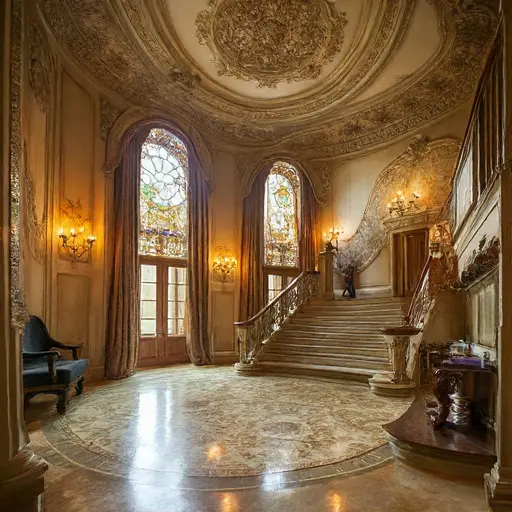
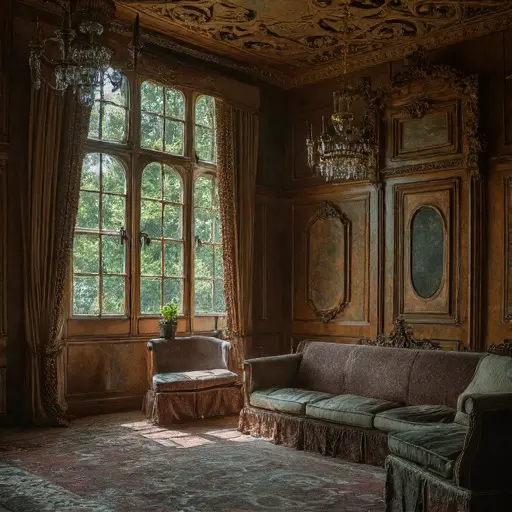
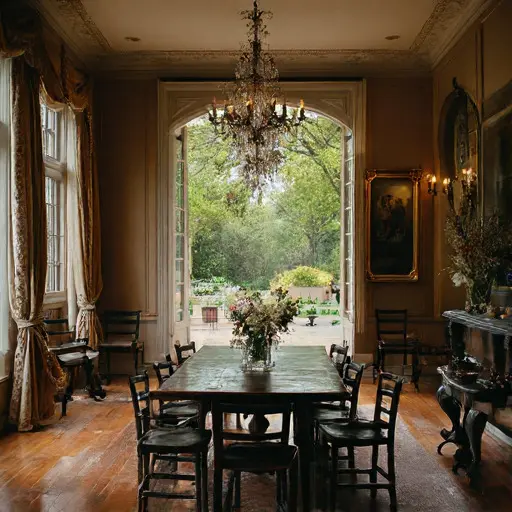
Tall windows throughout the mansion remain intact, their glass reflecting the soft daylight while faint embroidered curtains still hang within, slightly parted in places. The entire property conveys a sense of continuity rather than abandonment, where daily rituals, seasonal gatherings, and family traditions once shaped every corner of the estate and still seem to echo faintly through its stillness.