The Beaumont Manor Left Vacant After Aristocratic Estate Dissolution
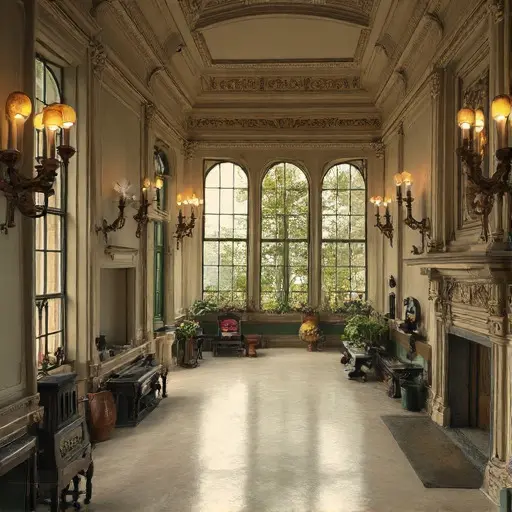
The Beaumont Manor was completed in 1874 for the Deveraux family, provincial aristocrats who managed regional land estates and forestry taxation rights during the late Second Empire period. Positioned within a secluded forest glade, the manor was designed as a compact yet imposing architectural statement, its vertical emphasis reinforced by a slate mansard roof crowned with decorative cresting and sculptural chimneys. Pale limestone walls contrasted with dark roofing and bronze detailing, producing a refined balance between solidity and ornamentation.
Inside, the estate functioned as both residence and administrative hub. Henri Deveraux oversaw land records, inheritance disputes, and agricultural leasing across surrounding territories, while his wife Madeleine maintained household governance and formal correspondence with other noble families. The manor operated within a structured rhythm of seasonal administration and social reception, sustained by inherited wealth and regional influence. For decades, it remained a stable symbol of provincial aristocratic continuity.
The slow unraveling of estate authority
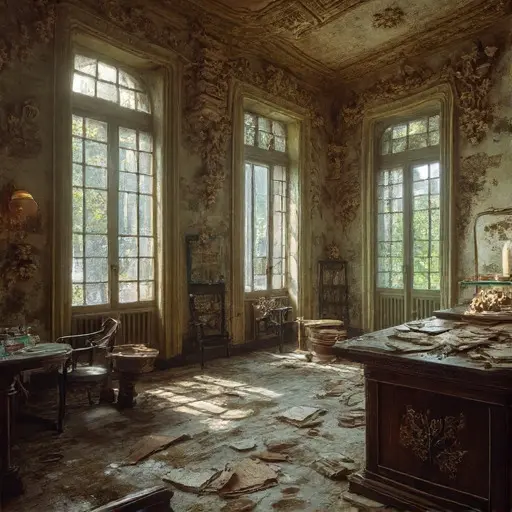
By the early 1930s, structural reforms in land taxation and administrative centralization significantly reduced the authority of provincial aristocratic estates like Beaumont Manor. Revenue streams that once sustained the property began to shrink as agricultural land management shifted toward centralized bureaucratic systems. The Deveraux family, already reliant on inherited holdings, found themselves increasingly unable to maintain the extensive upkeep required by the estate.
Maintenance became sporadic. Roof inspections were delayed, ornamental stonework was left unrestored, and sections of the manor were gradually closed off to reduce heating and staffing costs. As financial pressure increased, correspondence shifted from governance matters to debt management and inheritance restructuring. The manor’s once-active administrative role diminished into occasional recordkeeping.
Following the death of Henri Deveraux in 1937, succession disputes emerged among distant relatives. With no unified heir capable of maintaining the estate, ownership became fragmented. Legal proceedings stalled, and the property entered a prolonged period of uncertainty, during which no significant maintenance was performed.
Silence returns to the forest glade
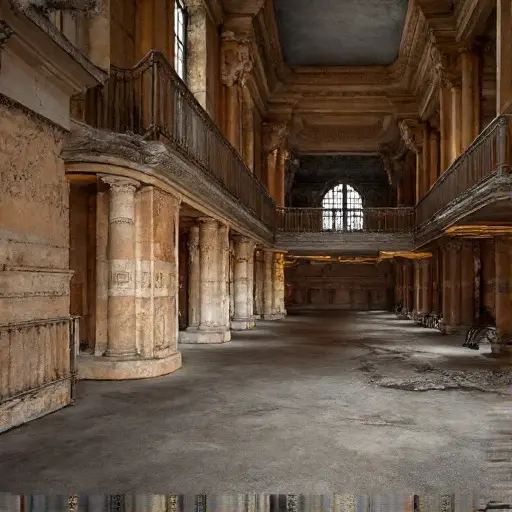
By the late 1940s, Beaumont Manor was no longer occupied. The remaining Deveraux descendants had relocated to urban centers, and no return to the estate was recorded. Legal ownership remained unresolved due to fragmented inheritance documentation and prolonged administrative inactivity. Utility services were discontinued, and the manor was left without maintenance or oversight.
The surrounding forest remained respectfully distant, preserving the clearing without overtaking the structure. Ivy and moss grew only in restrained patterns along lower stonework and select iron fixtures, never obscuring the architecture’s clarity. The manor persists as an abandoned Second Empire estate, still structurally dominant within its forest glade, its refined symmetry and aristocratic ornamentation slowly softened by time but never fully erased.