The Beaumont Estate Papers from Lavender Hill

The Beaumont family arrived at Lavender Hill in 1908 after Henri Beaumont purchased the estate with savings from a successful wine-importing business. Three generations lived there: Henri and his wife Elise, their three children, and Henri’s widowed mother, while Elise supervised the household. The family income later depended mainly on lavender cultivation, essential-oil production, and agricultural leases.
During the 1910s, the estate employed field workers and household staff, and county records show regular tax payments and maintenance. The family remained financially secure until falling agricultural prices began reducing the value of its harvest.

The first warning appeared in 1922 when Beaumont Lavender Works failed to pay a fertilizer supplier after a poor harvest and falling prices for essential oils. Two further weak seasons followed, while cheaper imported oils reduced demand. Henri dismissed several field workers, closed the western bedrooms, and postponed repairs to the slate roof and stone terraces. After his death in 1926, his children disputed control of the estate and production accounts. By 1928, unpaid bank loans, agricultural taxes, and supplier debts had accumulated beyond the family’s means. Elise moved with her youngest daughter to relatives in a nearby town, while her sons sought work elsewhere.
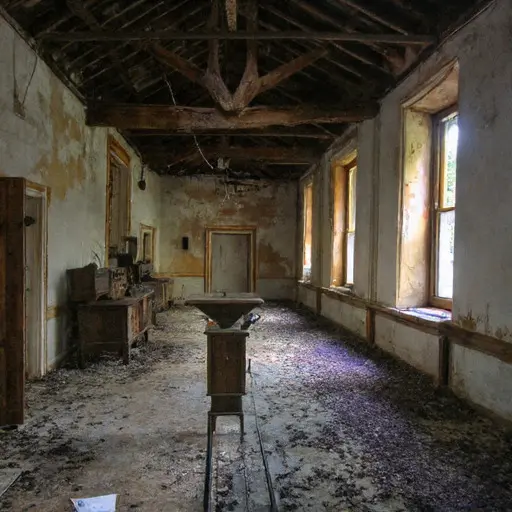
The Beaumont Estate was abandoned in 1929 after foreclosure followed agricultural losses, unpaid bank loans, supplier debts, and the inheritance dispute. Remaining farm equipment, furnishings, and stored lavender products were auctioned, but no purchaser accepted responsibility for the remote property. No restoration occurred, and no Beaumont family member returned. County records document failed attempts to lease the fields and repeated notices concerning unsafe terraces and roof damage. By the 1940s, several rooms had been sealed because of stru