The Basalt Shingle House on the Volcanic Moorland
On a high-altitude volcanic moorland plateau, a Shingle Style Victorian house stands isolated against a landscape of dark rock formations and sparse, wind-hardened grasses. The structure is built from a combination of dark basalt stone and weathered black cedar shingles, giving it a dense, grounded presence that blends into the surrounding terrain while still asserting a distinct architectural form.
The roofline is softly sagging and irregular, capped with oxidized copper that has turned a muted green over time.
It bends unevenly across the structure, reinforcing the sense of long exposure to harsh plateau conditions. The massing is intentionally asymmetrical, with a slightly bulging central bay and uneven dormers that break the silhouette in subtle, unbalanced intervals.
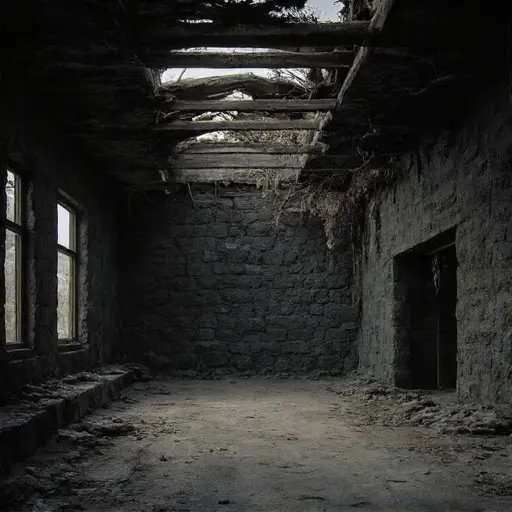
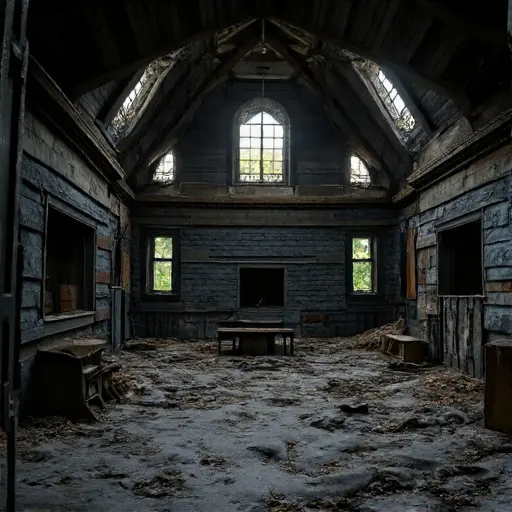
Windows are deep-set and irregularly spaced, their openings appearing dark and unlit from within. No interior glow is visible anywhere in the structure, reinforcing the abandoned state of the house. The openings allow only faint, diffused daylight to enter, breaking across rough stone and aged timber surfaces in subdued patterns.
The surrounding environment is stark and expansive. The volcanic moorland plateau stretches outward with scattered dark rock outcrops and patches of resilient grasses clinging to the soil. The air is clear under a soft overcast sky, lending the scene a quiet, distant stillness.
Near the house, a forgotten wicker chair sits warped by time and exposure, its structure sagging into the ground. A small faded birdhouse on a leaning post stands nearby, weathered and empty. These objects emphasize the absence of life and the slow reclamation of human presence by the harsh plateau environment.
The entire composition holds a restrained melancholy—an abandoned Shingle Style home shaped by wind, stone, and long geological silence.